Clergy and labor leaders in Minnesota are calling for a “Day of Truth and Freedom” on Jan. 23, during which Minnesotans do not shop, work, or go to school. The “pause,” leaders say, is intended to highlight the ongoing violence of Immigration and Customs Enforcement agents in the state. “What is happening here in Minnesota is a horror that we’re living through, but we’ve been organizing in preparation,” said Minister JaNaé Bates, co-executive director of ISAIAH, a faith-based collective organizing the day’s events. “It’s not completely a shock.”
An ICE agent’s Jan. 7 shooting of unarmed mother Renee Nicole Macklin Good has become a flashpoint that sparked protests around the country. Bates said the federal agency has been escalating aggression in the Twin Cities for months. On Jan. 18, CBS News reported that there were 3,000 ICE and Border Patrol agents deployed in Minneapolis—five times the size of the city’s police force—making it the nation’s largest ever deployment of immigration officials. Bates said that as the community has resisted ICE’s presence through patrols, social media awareness campaigns, mutual aid networks, and accompaniment of immigrants to work and school, the Trump administration has escalated retaliatory pressure, threatening to send active-duty Army troops. On Jan. 9, U.S. Department of Agriculture Secretary Brooke Rollins notified Gov. Tim Walz and Minneapolis Mayor Jacob Frey that her department would suspend $120 million in food assistance funds to the state, giving it less than a week to produce proof that it had not committed widespread fraud.
“I cannot overstate how much we are under siege here,” Bates said.
Calling on the expertise of labor and interfaith organizers, the Day of Truth and Freedom reflects the lessons learned after the murder of George Floyd when Minneapolis was, as it is again, the epicenter of a resistance movement. Since 2020, organizers of different organizations said they have learned how to work together more effectively, with less defensiveness over their own blind spots and more appreciation for the strengths of others. Multiple groups have joined together to create a two-day agenda of prayer, learning, and action. On Jan. 22, MARCH (Multifaith Antiracism, Faith, and Healing), a clergy-led group, issued a call for faith leaders from around the country to come to Minneapolis for a pilgrimage. The pilgrimage will begin at 8 a.m. and last throughout the day, with teaching sessions from local Indigenous groups and civil rights groups. So far, between 400 and 500 clergy have registered, organizers told Sojourners.
READ MORE: ICE Started a ‘Five-Alarm Fire’ in Minnesota, Say Refugee Aid Orgs
The learning opportunities on the 22nd will focus on the role of what multiple organizers called “faithful witness”—how clergy can support direct actions, nonviolent resistance, and civil disobedience, including those that will take place the following day. However, Peter Digitale Anderson, an organizer with Peace Catalyst International, says attendees from other cities should view this as preparation for what will inevitably happen in their own hometowns, with ICE continuing a city-by-city blitz like the ones already seen in Chicago, Los Angeles, Raleigh, and elsewhere. “Ideally we want them to witness what is happening here and take those stories back to their communities, and also skills for if and when this comes to their communities.”
Some pilgrimmage locations are still pending, as the number of registrants grows, but organizers with MARCH told Sojourners that the day will begin with a lesson and intention-setting led by an Indigenous speaker from Healing Minnesota Stories, and will include a pilgrimage from the George Floyd memorial to Renee Nicole Macklin Good’s memorial—a stark reminder of how many organizers in Minneapolis first came to the work. “Unfortunately we have had a lot of opportunity to build expertise in this area,” said Rev. Dr. Rebecca Voelkel, pastor for justice ministries at Lyndale United Church of Christ, who is organizing with MARCH.
While they share their knowledge with communities preparing for ICE surges yet to come, Voelkel said, the Twin Cities doesn’t have an end in sight. After months of neighborhood patrols and vigilance, the community is relying on sustainable, disciplined response instead of reaction, even as it absorbs the increased emotional intensity that has come with Good’s death. “We are all exhausted and traumatized, and the reports are that this is going to go on through the summer,” said Voelkel. “At the same time, the pro-queer, multi-faith resistance here is nothing short of miraculous.”
MARCH, which began as the Faith Organizing Roundtable in support of marriage equality, evolved into more of a “followership” role for racial justice movements after police shot and killed Michael Brown in 2014, Voelkel said. They changed their name to MARCH and have deployed clergy in support of Black Lives Matter actions. In 2016, they sent more than 500 clergy members to Standing Rock to support Indigenous efforts to block the Dakota Access Pipeline.
The Day of Truth and Freedom on Jan. 23 will also commence with an interfaith prayer at Shiloh Temple in North Minneapolis, Bates said. Mutual aid and prayer will be available at churches throughout the day. Organizers have planned a protest at the Minneapolis-St. Paul International Airport, where they say 1,830 people have been deported, including at least 16 airport employees. Then a rally will take place in downtown Minneapolis. Labor unions have joined with community groups to support the daylong pause in work, shopping, and school attendance. Together, they say, workers and faith leaders demonstrate the community’s moral responsibility to their immigrant neighbors.
Pastors, rabbis, imams, and priests have always been critical allies in social change, including the Civil Rights Movement, organizers said. When MARCH issued its call for pastors to join them in Minneapolis, it did so in the tradition of Rev. Martin Luther King Jr., who issued a telegram in March 1965 calling for clergy of every faith to join him in a march to Montgomery as protest against the state-sanctioned violence in Alabama. While religious influence has changed in the last six decades, people who have dedicated their lives to pastoral care and teaching “carry a clear moral weight that many people still recognize,” said Digitale Anderson. While many religious leaders will not engage in partisan activity, he said, their presence calls attention to the direction of the violence: from those with power onto the most vulnerable.
The image of priests in their collars being tear-gassed and knocked down in Chicago illustrated, for many, the extent of ICE’s violent tactics. During that same surge, Operation Midway Blitz, an ICE agent shot a man in the back while fleeing, and residents of an apartment complex were woken in the middle of the night to flashbangs—all warnings that ICE would use force against non-aggressors. For Minneapolis residents conducting neighborhood patrols and accompanying their immigrant neighbors to school and work, the video of Good’s final interactions with ICE agents carried the same ominous message: “That could have been any one of us,” said Todd Dahlstrom, organizing director with the Minnesota AFL-CIO.
READ MORE: Minneapolis Faith Leaders Amplify Demands for ICE to Repent
Labor unions in Minnesota, including teachers’ unions, cannot legally call for a strike. Nevertheless, these groups have lent their support to the Day of Truth and Freedom’s “pause,” Dahlstrom said. “We are not asking workers to go on strike. We’re asking for folks to participate at the level they feel comfortable participating.”
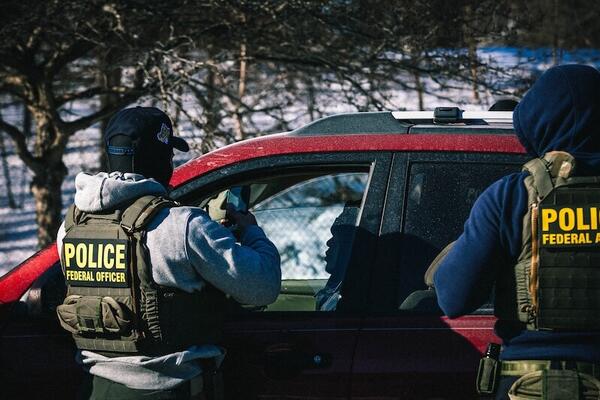
While not specifically a union issue, he said, the ICE actions have had profound effects on businesses and those they employ. “They’re stealing workers,” he said, and the effects on the entire labor force are detrimental. When workers are afraid to drive to work, the entire economy suffers. Nowhere seems to be safe, Dahlstrom said. Video had surfaced earlier that day of a man being taken from his home wearing just his underwear and a towel, as though he had just stepped out of the shower. Minneapolis residents daily drive past abandoned cars where motorists have been pulled over and taken on the spot. Workplace raids—not systematic “show me your papers” raids, but violent nabbings with no questions asked—have resulted in U.S. citizens, almost all Latino, being taken by force. Just days after Good was killed, ICE agents took two young employees from a Target store in suburban Minneapolis. Despite the employees’ insistence that they were in fact U.S. citizens, ICE agents forced them into SUVs, and later dumped them in a different parking lot miles away. Other U.S. citizens have similar stories of violent, inhumane, and possibly unconstitutional treatment, according to reports compiled by a Senate subcommittee.
The taking of the Target workers should have been a pivotal moment for the business community, said Bates. Minnesota is home to the corporate headquarters for the big-box chain, and in the week leading up to the day of Truth and Freedom, ISAIAH ramped up direct pressure for the $50-billion company to declare itself a “Fourth Amendment Business,” meaning that it would not allow ICE on its property without a warrant. “Their silence has been deafening,” she said.
READ MORE: ‘Abolish ICE’ Is the Cry of the Prophets
Faith leaders organized a seven-hour sit-in at the Target corporate headquarters on Jan. 15, ultimately persuading CEO Brian Cornell to agree to a meeting. Across the country, clergy have been making similar requests at their local Target stores. The coalition has also issued letters seeking support from Delta, Home Depot, and Hilton. “Corporations and large businesses have a remarkable amount of power,” Bates said. She’s urging the area’s biggest to apply pressure to Congress.
While their concern extends to all workers regardless of immigration status, the coalitions pointed to the unchecked actions against U.S. citizens and unarmed community members as a signpost for how powerful and unaccountable ICE has become. With the Supreme Court’s blessing to racially profile in their enforcement actions, they said, no non-white person is safe, regardless of their status as veterans, citizens, or enrolled tribal members. It’s fueling a sense of urgency among the coalitions to prioritize both action and solidarity—the day of “Truth and Freedom” outlines the stakes as they see them. “This is a machine that eats people,” Dahlstrom said. “Who will it eat next?”
Update: After the publication of this article, MARCH announced that “due to capacity and safety considerations,” new registrations for the event are being paused. Organizers noted that they still have many ways for people to get involved and that more spaces may open up as final numbers are confirmed. This story was updated on Jan. 21.
“I cannot overstate how much we are under siege here.” —Minister JaNaé Bates

Did this article have an impact on you? Tell us how! Whether you’re moved to take action, have a question, or want to share a comment (good or bad), we value your feedback!