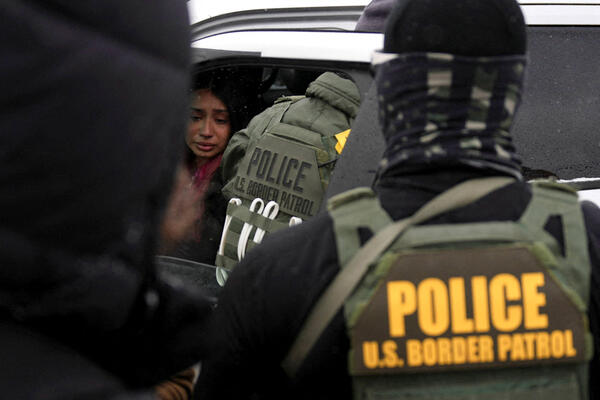
A detained woman sits inside a vehicle surrounded by federal agents, as immigration enforcement continues after a U.S. Immigration and Customs Enforcement agent fatally shot Renee Nicole Good on January 7 during an immigration raid, in Minneapolis, Minn., U.S., Jan. 21, 2026. Credit: Reuters
2025 was hard. For more reasons than we can count, the collective, personal, social, and systemic weight of tragedy, death, frustration, and hopelessness has left many weary in the dawning light of this new year—at least, I feel weary. Already in 2026, we have witnessed a masked Immigration and Customs Enforcement agent needlessly kill Renee Nicole Macklin Good. In Venezuela, the U.S. engages in an imperial war and openly admits its intentions to occupy the country. I cannot bear another year of genocide, ICE raids, complacent and inactive leaders, artificial intelligence deepfakes, social media toxicity, and trying to convince people that fascism is wrong.
But American Christians don’t like to recognize weariness in the face of injustice. We either press it down in service to the empire or, if we do acknowledge how tired we truly are, we tend to couch it in a message of God’s sovereignty and goodness. Although it is good and true to remember that God’s grace is sufficient and that power is made perfect in weakness (2 Corinthians 12:9), amid these present realities, such a God feels distant—even irrelevant. It is an age-old question: If God is so good, powerful, almighty, and faithful, then why does such evil persist? Why must the weariness continue? Where is God in a time like this?
I imagine this is what the father in Mark 9 is asking himself as he brings his son before Jesus. Enslaved by what Mark refers to as a “spirit,” his child seizes and foams at the mouth; the father explains that even the disciples could not heal his son. Jesus’ response is not intimate and kind, but isolating and abrupt: “You faithless generation, how much longer must I be with you? How much longer must I put up with you? Bring him to me” (9:19).
Bringing his child before Jesus, the father makes his plea: “If you are able to do anything, help us! Have compassion on us!” (9:23). “If you are able!” Jesus replies. “All things can be done for the one who believes.” In response, the father of the child immediately cries out: “I believe; help my unbelief! (v. 24).” Hearing this, Jesus rebukes the spirit and lifts the child to his feet.
This interaction between Jesus and this desperate father feels a lot like the prayers I have offered this past year: God, our nation has been seized by evil powers who would seek the harm of the many to benefit themselves; who traffic in lies and foment hatred between neighbors; who step on the poor and powerless to increase their wealth and power; who rip children from their mothers’ arms; who inflict harm on those imitating you in standing with the poor and powerless; and who blaspheme God in the most unholy ways to secure an authoritarian Christendom. If you are able to do anything, help us! Have compassion on us!
There is so much in this world that fosters unbelief.
Like the father of the sick child, we cling to the “if.” Amid the devastation of the world, I can’t help but put a condition—perhaps a confession—on my petition for God to intervene. So much has gone wrong. Our bodies are scarred. We look to those who claim to be disciples of Christ, but they do not help. Some were even revealed as wolves dressed in sheep’s clothing. We are weary. So, like the father in Mark 9, we offer tentative prayers, unsure if it is possible for God to do anything at all.
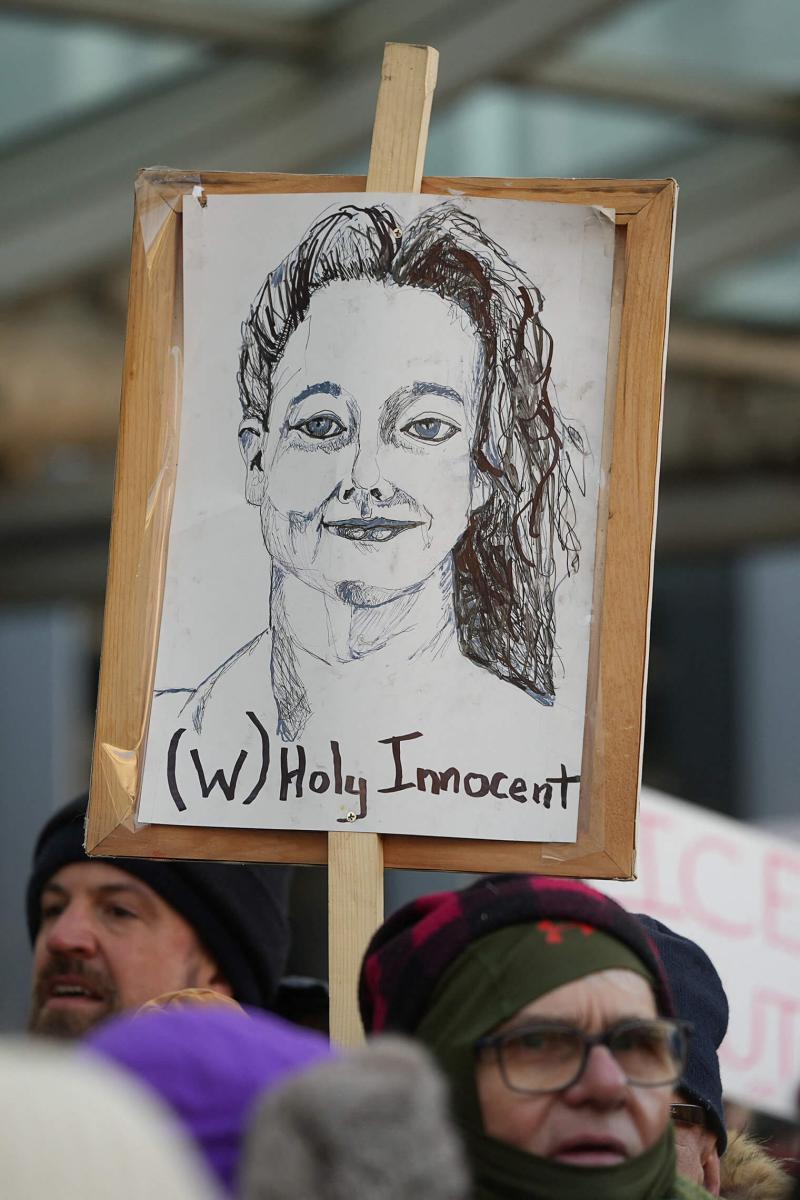
A person holds a sign featuring a drawing of Renee Nicole Good, who was fatally shot by a U.S. Immigration and Customs Enforcement agent on January 7, as people take part in a rally on the day of a general strike to protest U.S. President Donald Trump's deployment of thousands of immigration enforcement officers on the streets of Minneapolis, Minn., Jan. 23, 2026. Credit: Reuters/Time Evans.
I believe the father’s plea is a prayer for our fractured age. This prayer is not a failure of faith, but an honest articulation of belief stretched and strained by uncertainty. It is an unsentimental but urgent hope that our “if” might provoke God to show up and redeem what is broken in the world.
This prayer is not a failure of faith, but an honest articulation of belief stretched and strained by uncertainty. It is an unsentimental but urgent hope that our “if” might provoke God to show up and redeem what is broken in the world.
Just as I believe God was with us in 2025, I also believe that God will be with us in 2026. God stands with and for the poor and marginalized. God dwells in ICE detention centers and prisons. God’s goodness is manifest in those leaders who wield their power to promote the flourishing of their neighbors, no matter if they swear an oath of office on the Bible or the Quran. God sustains and guides those who seek goodwill for the world. God provides strength to those on the frontlines of protests and comfort to those assaulted by the empire’s violent powers. God will bring down the powerful from their thrones and lift up the lowly (Luke 1:52).
My bold petition for 2026 is simply this: God, if you are able, do something. I believe; help my unbelief.
Did this article have an impact on you? Tell us how! Whether you’re moved to take action, have a question, or want to share a comment (good or bad), we value your feedback!
Tell Us What You Think!
A detained woman sits inside a vehicle surrounded by federal agents, as immigration enforcement continues after a U.S. Immigration and Customs Enforcement agent fatally shot Renee Nicole Good on January 7 during an immigration raid, in Minneapolis, Minn., U.S., Jan. 21, 2026. Credit: Reuters
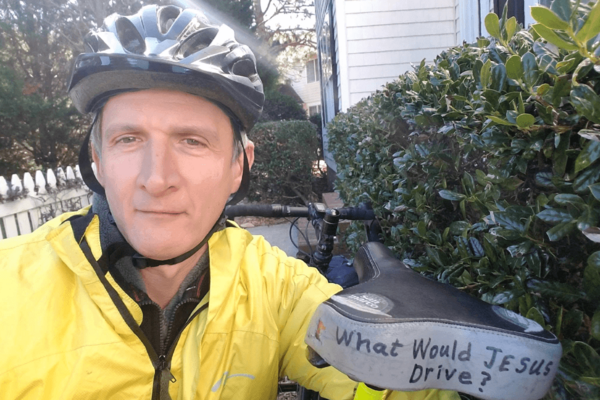
Through ClientEarth, a statistical scientist is suing Thermo Fisher, arguing the company's lack of fossil-fuel free retirement plans forces him to compromise his religious values.