“All I want is freedom for the people,” President Donald Trump told The Washington Post on Feb. 28. “I want a safe nation, and that’s what we’re going to have.” But as missiles rain down on Tehran—and reports state that every major city in Iran has been bombed—Christians must be wise enough to discern that the destruction of a country does not make it safe.
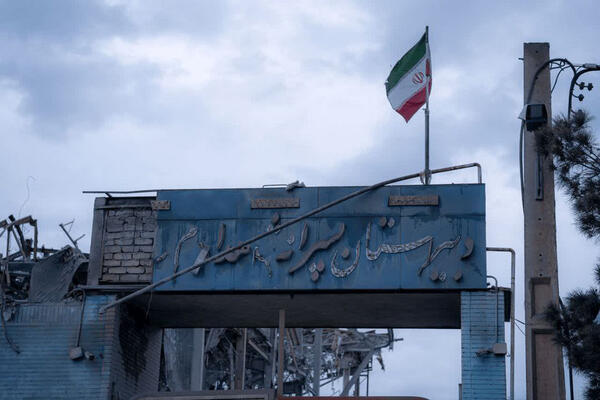
On social media, after attacking Iran’s nuclear facilities, Trump wrote, “If the current Iranian Regime is unable to MAKE IRAN GREAT AGAIN, why wouldn’t there be a Regime change???” So, if we take Trump at his word here, we have to bomb its institutions to rubble and kill countless civilians for Iran to be great. And yet, Trump himself stated on March 11 that there is “practically nothing left to target.” Over a thousand people have been killed, including a reported 168 students at an Iranian girls’ school that was, according to a preliminary investigation, mistakenly blown up by a U.S. missile. We ought to consider how such actions could ever be viewed positively by history or the Iranian people themselves. Is the price worth it? The Iranian government has announced plans to turn the site into a museum centered on the U.S.’s brutality.
The bombing of a girls’ school is particularly important for understanding the ways that humanitarian rhetoric has been used to commit and excuse atrocities. In the past, Western leaders have started and defended wars under the guise of liberating women from oppressive laws in Afghanistan and Iraq. Former first lady Laura Bush famously said in a radio address, “The liberation of Afghanistan is much more than a military victory. It is the liberation of women.” Earlier this month, Sen. Tommy Tuberville (R-Ala) defended U.S. military action in Iran by noting that women in Iran are “treated like dogs.”
But how can any nation take these claims seriously when our so-called liberating actions have killed 168 children at a girls’ school? Such an act suggests that, far from caring about the welfare of people in Iran, we are pursuing the war for different, more self-serving reasons. That tracks with our current involvement in Venezuela, where the U.S. has taken control of the country’s oil exports.
If nothing else, it serves as a touchstone for the hypocrisy that has formed the center of the U.S.’s Middle East policy. We often end up attacking countries for committing atrocities that we ourselves have also perpetuated.
READ MORE: Kings Start Wars. Christians Stop Them
I am no apologist for the current Iranian government, but the toll of this war has already been horrific, and the administration increasingly seems to have no plan for how to finish what it started. What I am confident in, however, is that countless civilians will continue to die in a war that at home has been sold as a humanitarian mission. As Christians, our witness must consistently fight against the valorization of this conflict and look for more peaceful solutions.
Scripture gives us the tools to push back strongly against such rhetoric, even offering alternatives to military force. In Jesus’ beatitudes, he celebrates peacemakers, not warfighters, calling them “children of God.” Jesus further builds an alternative scaffolding that undermines the very foundation of war by telling us to “love your enemies.” For followers of Jesus, war can never be a way to achieve lofty moral goals; it is always a failure that has deep and lasting consequences for both those who are killed and those doing the killing.
Picking up on this strand, Paul even offers us a way to transform conflict when he writes in Romans 12, referencing Proverbs, that we are not to repay evil for evil. Instead, he writes, “if your enemies are hungry, feed them; if they are thirsty, give them something to drink, for by doing this you will heap burning coals on their heads.” (17, 20 NRSV). This is a guiding light for a diplomatic approach to our foreign policy goals. If we want freedom for the people of Iran, then careful engagement with the Iranian government would be a good way to start.
If we are serious about caring for the welfare of the Iranian people, then our first task is to stop killing them. Freedom cannot result from senseless killing, and a new future cannot come in the form of bombs. Scripture reminds us that war is not a tool of redemption but a moral failure that needs redemption and repentance.
The prophet Isaiah envisioned a day when nations would “beat their swords into plowshares … and neither shall they learn war anymore” (2:4). Christians can only bring that world into being by working for peace and by resisting the temptation to make war moral.
While prayer for peace is an important part of our duty, we cannot stop there. One of the ways that we can fight the moral persuasion of war is by centering the human cost in our sermons, liturgies, and Bible studies. As with any conflict, there is no shortage of suffering for us to make central to our worship. One thing we cannot do is what this administration wishes us to do: look away.
Another thing that we can do is to make connections with Shiite Muslim and Zoroastrian neighbors—while not every member of these communities has Iranian roots, many do. And many more have family members who are directly in harm’s way. We must resist the political machinations that intend to make us enemies and instead find our way to friendship and solidarity. Becoming friends not only puts to shame the logic of this administration, but it also helps us practice our faith by witnessing to Christ’s ability to overcome division and conflict with love and community.
We worship the Prince of Peace, but we make a mockery of that title when we allow ourselves to be persuaded that the Iran War is moral or when we sit by while war is waged in the name of peace. We can search for Jesus all we want in the high-sounding rhetoric of this administration, but where we will certainly find him is not in hollow words, but amongst the rubble, with the Iranian people.
If we are serious about caring for the welfare of the Iranian people, then our first task is to stop killing them.

Did this article have an impact on you? Tell us how! Whether you’re moved to take action, have a question, or want to share a comment (good or bad), we value your feedback!