War Is Hell. So Are the Fossil Fuels War Runs On

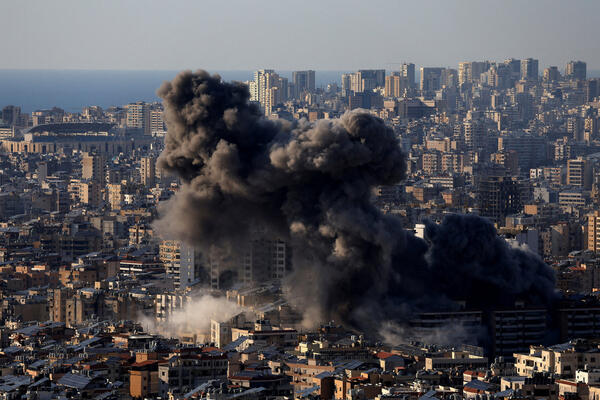
FILE PHOTO: Smoke rises after an Israeli strike on Beirut's southern suburbs, following an escalation between Hezbollah and Israel amid the U.S.-Israeli conflict with Iran, Lebanon, March 10, 2026. REUTERS/Mohamed Azakir/File Photo

As a pastor, I don’t use the word “hell” lightly, but I think it’s time.

The war against Iran has oil and gas facilities across the Middle East burning. Three million Iranians and a million Lebanese citizens are displaced. Black rain laden with toxic chemicals is falling in Tehran, Iran, likely ensuring a legacy of cancer and birth defects that will rival or surpass the health legacy of the atomic bombing of Hiroshima, Japan.

Energy prices around the world are skyrocketing, forcing millions to revert to wood or coal for cooking. Those most affected are low-income households, communities, and countries worldwide. Schools in Pakistan have closed for two weeks. A Cairo cafe and construction worker, put it plainly: “This is catastrophic for someone like me.”

Meanwhile, fossil fuel executives gathered in Houston last week for a conference known as “the Super Bowl of energy.” There, they doubled down on their commitment to fossil fuels. Despite two wars in the past five years and increasing climate impacts revealing the dangers of fossil fuels, the industry is insisting that more oil and gas are necessary and inevitable.

They are wrong. And we as people of faith must say so.

Over the past year, many religious leaders across the U.S. have heroically opposed the administration’s persecution of migrants. These leaders have spoken out, protested, and undertaken civil disobedience, facing real risk.

Now, faith leaders must speak with equal moral clarity about energy. There is energy that sustains life and energy that destroys it. Let us say it plainly and without hesitation: Renewables, developed justly, are energy from heaven. Fossil fuels are energy from hell.

For years, many hesitated to make such a stark moral argument about fossil fuels. The concern was understandable. Billions of people depend on energy for survival. Until recently, cleaner alternatives were often more expensive. That has changed.

Renewable energy is now less costly than oil and gas, even with the $13 million in subsidies that fossil fuels receive every minute. The question is no longer whether we should make the transition to renewables; it’s whether we will make the change and do it fast enough to avoid catastrophic harm.

READ MORE: Why Climate Work Keeps Me in the Church

The rationale for this shift is overwhelming. Fossil fuels are not just another industry. They are a primary driver of human suffering on a global scale. They are responsible for one in five deaths globally every year, according to Harvard University researchers—every year. Climate disasters already displace more than 30 million people every year, a number projected to surpass 200 million by 2050, greater than those displaced by war. Climate-intensified heat waves, floods, hunger, and disease are increasing deaths worldwide, and without rapid change, hundreds of thousands of people will die per year.

Oil companies externalize the true costs of pollution, health care, and disaster recovery onto the public while their industry, which has earned $3 billion in daily profits for the past 50 years, continues to profit.

This is a profound moral violation.

In speaking up for renewable energy, we shouldn’t pretend it’s perfect. We must oppose poorly planned projects which displace communities and mining for critical minerals which causes grave harm. We must insist that these injustices are addressed directly and urgently.

We can also validate the concern for fossil fuel workers whose livelihoods could be impacted by an energy transition—that’s a real ethical concern. But we can be clear that tying workers’ futures to an industry that cannot sustain itself for the long haul is avoidance, not compassion. In addition, the fossil fuel industry has massively under-delivered on promises of jobs in local communities. A just transition that creates good, union jobs in clean energy, infrastructure, and environmental restoration is not only possible; it’s necessary. And until a year ago, the Inflation Reduction Act was on track to create 9 million new clean energy jobs over the next decade. Then came President Donald Trump’s One Big Beautiful Bill Act—and, well, what happened next wasn’t good.

Even as we address these concerns, we need to highlight the fundamental difference between renewables and fossil fuel. Sun and wind are abundant. They cannot be hoarded. They do not trigger wars. They can be harnessed locally, quickly, and affordably. Solar and wind are now the lowest-cost new electricity sources in most of the world. Renewables create 2–3 times more jobs per $1 million invested than fossil fuels. Solar and wind projects can be deployed in months, not decades.

Yes, fossil fuels will be with us for many years, as a global energy transition takes a long time.

Yes, renewable energy is far from perfect, with protections urgently needed against solar land grabs and destructive mining for rare earths. But at scale and in the long term, there is simply no comparison. Renewable energy done right represents one of the great blessings—economic and environmental—that the world has ever seen. They need upscaling, now.

Fossil fuels? It’s time to call them energy from hell and to phase them out.