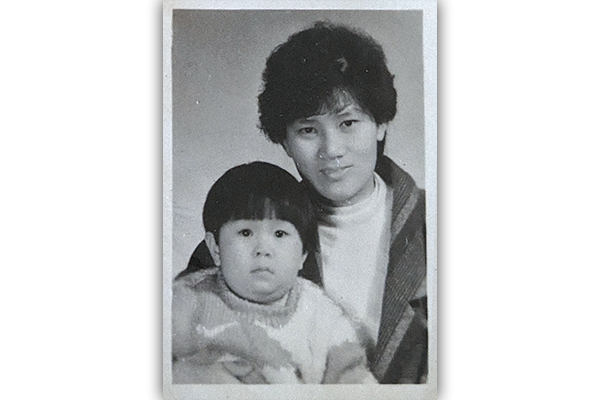
BY THE TIME this article is published, it’s likely my mom will be gone. She’s dying of end-stage stomach cancer. Since she moved in with us last summer, I have been in the throes of “panini generation” caregiving, made worse by my severe cases of eldest-daughter syndrome and immigrant-child obligation.
Though I want to report that these final months with my mom have been full of tender moments and deep connection, more often than not I’ve felt pushed to my limits in the face of suffering that I can’t control. Many readers can probably relate. Hour by hour, we watch slow-moving tragedies unfold around us—some personal, some public and colossal.
It’s torturous and exhausting to know that, often, there’s nothing we can do but bear witness. But I also gain a sense of agency by telling my family’s story. Through the telling, I find a collective container for our narrative that is bigger than my own capacity to hold suffering.
The Gospel story must be capacious enough to hold all our individual stories of pain.
My mom has lived more than her share of disaster. When my dad divorced her, it made her immigration status unstable. After my stepdad’s deportation to China, she became a single mom. Then came Hurricane Harvey and now cancer. Taken on a personal level, these events can lead to a sense of isolation and, somehow, shame. How is my family such a magnet for calamity?
But I’ve learned from my spiritual director Wai-Chin Matsuoka that to move from paralysis to empowerment, we must take our anger, fear, and sadness and go deeper. As artist Cynthia Winton-Henry wrote, these feelings are often the surface manifestations of broader collective traumas.
My anger over the unfairness of my mom’s cancer connects to collective rage over the petrochemical industry’s reckless pollution of our lands, including the area where my mom lived for decades. The fear my siblings and I felt during my stepdad’s detention and deportation joins with the holy terror of millions of migrant families whose lives are subject to the whims of the state. And my frustration over not being able to do it all when it comes to caring for my mom and kids taps into a shared discontent that, as sociologist Jessica Calarco wrote, “Other countries have social safety nets. The U.S. has women.”
In retreats with Wai-Chin, we chant, stomp, and wail. It’s one of the few places that has felt safe to plumb the depths of rage, terror, and despair that I and others experience. We let these emotions barrel through our bodies and into the earth, water, and trees.
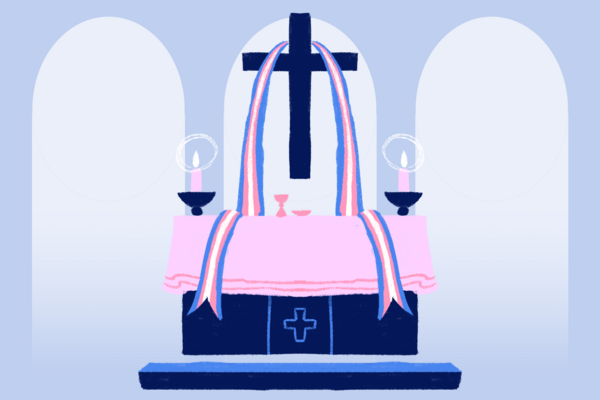
In the Christian tradition, there is a tree we regularly release our suffering to—the cross of Christ. This Lenten season is an opportunity for all of us to deepen our suffering to the collective level. If the gospel story means anything, then it must be capacious enough to hold all our individual stories of pain. And so, we share them with each other. Then we release them into this bigger story. Each one’s suffering is too much to hold on our own.

Liuan Huska is the author of the children’s book My South American Classroom and Hurting Yet Whole: Reconciling Body and Spirit in Chronic Pain and Illness. She works as director of communications for A Rocha USA.
Did this article have an impact on you? Tell us how! Whether you’re moved to take action, have a question, or want to share a comment (good or bad), we value your feedback!