AS MY FAMILY and I entered the pre-visit check-in area of Pelican Bay, a supermax prison in Crescent City, Calif., three guards stood stiffly behind a long counter at the other end of the room. The guards didn’t budge. We followed their gaze to a tiny TV on the wall above what was supposed to be a “kids’ corner” (just a dingy rug and a mini kid-size table). Their eyes were locked on the movie Frozen.
It was 8 a.m. I took a deep breath as I realized this was going to be a long day. We sat and waited as they watched their movie on the state’s dime. My husband, who often visits prisons as a forensic psychologist, assured our sons and me, who’d never been to a prison before, that this is just how it goes sometimes.
I said a quick silent prayer: “God, you said when we visit those in prison, we also visit you. So, we kind of took that literally, and we’re here to visit my pen pal, Myron.” Eight months earlier, Myron Dailey had signed up on multiple prison pen pal sites looking to build genuine, healthy relationships. Myron has explicitly asked that Sojourners use his name as a way of reclaiming his identity in a system that erases and dehumanizes individuals, reducing them to ID numbers. Some prison ministries operate under the assumption that they bring Jesus to the prison. But Matthew 25:36 clearly states that Jesus is already there. It’s up to us to see what he is up to. So, I joined prison correspondence programs, including Write a Prisoner (where I met Myron), Wire of Hope, Compassion Prison Project, and Justice Arts Coalition, to listen and learn from those who have been silenced, taking God’s word that Jesus would meet me.
Some prison ministries assume that they bring Jesus to the prison. But Jesus is already there. It’s up to us to see what he is up to.
I knew it was a leap of faith to fly across the country from our home in Connecticut for a prison visit, but Myron had, in a short time, made a remarkable impression on our family. We have sticky notes around our house with sayings he has shared: “Hard work beats talent when talent doesn’t work hard”—inspired by the words of basketball player Kevin Durant; or Myron’s own words, “The worst thing you can be is subjectively right, because then there is no room for self-reflection”; and my personal favorite, “There is nothing poetic about confinement.”
The sum of a human being
THE GUARDS CALLED us over as I looked up with a smile to heaven and finished my prayer. One guard began logging our personal information and every item in our possession as potential contraband: 13 silicone bracelets on the boys’ wrists, 13 rubber bands in their hair, my elder son, age 13. Myron’s inmate ID number ends in 13.
“Superstitious?” she asked.
“No,” I said, while my younger son beamed. He was born on Friday the 13th. “Can you believe the doctor tried to convince me to be induced early just so he wouldn’t be born on that day?” I asked the guard. The last day before my scheduled induction was the 13th and that’s when he was born. She didn’t acknowledge my reply to her question. My son nodded proudly; he loves this story—and I love that he won’t let a birth date dictate anything about him.
As we moved through the metal detectors, they took my husband first. We put the boys’ names on his visitor form so that in case of an emergency or lockdown, they would all stay together. But the guard ignored the form and processed me next, and for the first—and hopefully the last—time in their lives, the state separated us from our boys. This had never happened with us at airports or customs—kids traveling with parents are usually kept together. But not here. My husband and I stood on the other side of the gate, while our sons, 9 and 13, stood alone, wide-eyed in the visiting room, awaiting directions and a secondary inspection by the guards.
I raised another prayer, “God, please bring my boys over quickly.” If there is one place I don’t want to leave them, even for a few minutes, it’s in the care of a correctional facility. No parent wants to be separated from their child, but in an institution like a prison, anything is possible. I did not want them searched or questioned without us beside them.
I thought of Myron, first arrested as a teen because a white woman said he and his cousins stole something from a pizza joint. This prior arrest, though unsubstantiated, stayed on his record and landed him in the highest-level prison yard because prisons assess criminality based on past arrests.
One practice I learned from prison pen pal correspondence guidelines was never to ask someone why they came to prison or even look up their case. This allows you to build a relationship without bias or mistrust. But Myron believes in full transparency, so he shared the details of his conviction in one of his early letters. He gave me permission to include these details about his case in this article.
At age 24, Myron got in a fight with one of his uncles. During their altercation, Myron discharged a firearm in self-defense, a position which he maintained throughout the entirety of his trial. Even though he called 911 after the shooting and turned himself in peacefully, Myron was charged with first-degree murder and was convicted of second-degree murder with a sentence of 35 years to life imprisonment. Myron carries the profound weight of having ended his uncle’s life. The nature of forgiveness, from both God and others, is a recurring theme in our conversations as we both wrestle with the complexities of what it means to be forgiven and forgive others in a dehumanizing society that prefers punishment over repair.
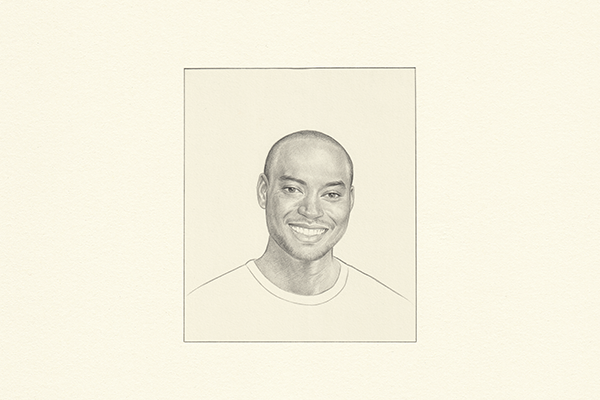
The sum of who Myron is as a human being cannot be reduced to his felony charges—he is a person with feelings and ideas, who longs for connection and friendship. Before Myron was arrested, he had been working at a day-care center and fighting for custody of his daughter. Incarceration denies his humanity and treats that denial as the currency required to pay his debt to society.
lopezfeaturemay262 (1).png
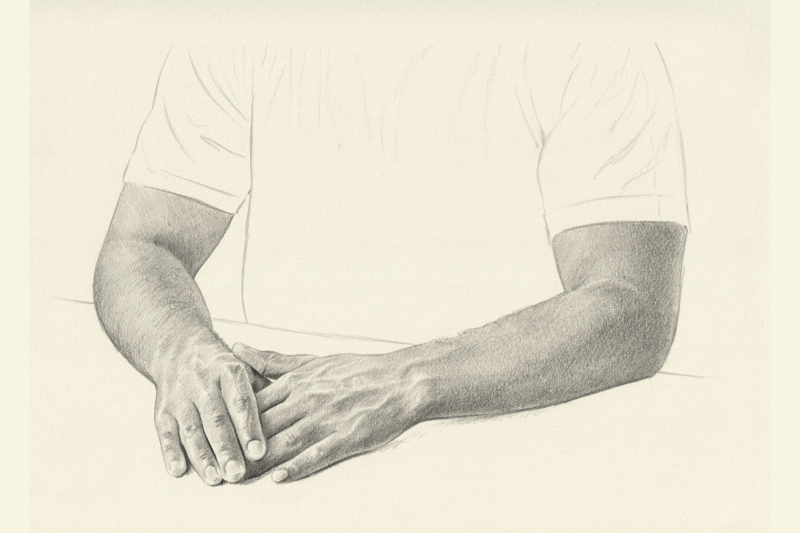
We both wrestle with the complexities of what it means to be forgiven and forgive others in a dehumanizing society that prefers punishment over repair.
Vending machine feast
MYRON HAD TO submit to two mandatory strip searches on the day we visited: once before he came into the visiting room, and again as soon as he left. Despite being deemed inhumane and not routinely necessary by advocacy groups, regular strip searches continue to traumatize men and women daily in prisons around the country. In 1979, the Supreme Court ruled that visual body cavity searches of prisoners are “reasonable,” further limiting Fourth Amendment protection for prisoners.
My prayer for my sons, who were only separated from us for a few minutes, became a prayer for Myron too. Just as I uttered my second silent amen, we were reunited with the boys. We boarded a minibus that took us around the perimeter of the 275-acre facility: Only rocks, gates, fences, and barbed wire, unlike the mulched and landscaped visitor parking lot.
We headed to a window where we saw Myron in his state-issued blues, my favorite color but one he says he will never wear again once he is free. Myron sat at a round table with four empty chairs around it. The guard removed his handcuffs, and my heart both leapt and sank.
We entered the visiting room, and we each gave Myron a one-hug greeting under the watchful eye of the guards. No other contact was allowed, which was exceptionally hard for my husband and me, as we are big huggers. We soon forgot about the guards behind the counter, the old woman playing cards with the old man at the table beside us, and the otherwise empty room. We were lost in a world of our own.
We laughed, joked, told riddles and stories. Myron spent most of the day talking with the boys about movies, comic books, and video games, sprinkled with sage advice that he can’t help but give. I wished his daughter could have seen him that day. She is the same age as my youngest. Her mom took her out of state shortly after we met Myron, and he has been unable to find her since. I could see both the joy and ache in his eyes.
When we got hungry, we feasted on overpriced snacks from the vending machine. For a six-hour visit, the machines were our only food source: Microwave burgers, tacos, ice cream sandwiches, soda, candy, cookies, chips—all foods we rarely eat. We whipped out our ziplock bag filled with 300 one-dollar bills, the maximum amount we were allowed to bring, and stockpiled provisions for the five of us. We spent more on that “meal” than Myron, a 4.0 student enrolled in two prison education associate degree programs, would make in nearly two months. At the time, he worked 40 hours a week as a GED tutor, earning 45 cents an hour, not even 2% of the going rate for experienced tutors in California. Thanks to the Thirteenth Amendment, which abolished slavery except as punishment for a crime, Myron’s labor, and that of incarcerated people across the country, is slavery in another form.
Uninterrupted time
SHORTLY AFTER WE began corresponding, California passed the Keep Families Connected Act, which made phone calls free for people incarcerated in the state. Before that, an out-of-state call was 14 cents a minute. Now, on most days, Myron and I talk on the phone about oppression, racism, and prison abolition. I’m a white woman and a graduate student in social justice, and he’s a Black man and an undergraduate studying sociology. Myron has been living much of what we’ve both read about. Our conversations are both intellectual and practical, and infused with humor. We share a love of storytelling and the need for verbal processing. Despite auto-recordings reminding us that the call is coming from a prison and being disconnected at 15-minute time limits, we usually manage to spend nearly an hour of interrupted talking.
But “visit day” in the prison was reserved for an uninterrupted time of family, friendship, food, and fun. As the day went on, the boys taught Myron to play Mafia, a game where one person is a murderer and another is a healer, and the rest try to guess who is who. The irony was not lost on me.
When it was time to leave, we all held hands on top of the table so the guards could see clearly, and we prayed together before giving our allotted one last hug and saying goodbye. I wondered if we would ever see Myron again. As we walked to the car, we pointed to redwood trees in the distance and told the boys we would go there the next day.
But they insisted we visit Myron instead. And that is just what we did.
Sustaining friendship
A YEAR AND a half after our trip, my older son wrote an essay about the most influential person he had met. He chose Myron, calling him a “life-changing friend.” Their friendship, like mine, started through letters and phone calls and was sealed with our visit. Myron encourages him as a student, athlete, artist, and critical thinker. He even asked an artist in the prison to create a model dragon out of soap and newspaper for my son. It arrived mostly intact and is proudly displayed in his bedroom, a reminder that even in the harshest places, people find ways to hone and share their talents.
Last November, Myron was transferred to the Richard J. Donovan Correctional Facility in San Diego. He worked and fought hard for this transfer so he can have a chance to complete his bachelor’s degree in sociology in University of California, Irvine’s LIFTED program. He works as a teaching assistant, earning 8 cents an hour. Myron continues the legal fight against the excessive sentence he received through a gun enhancement provision that automatically added 20 years. Through new legislation, gun enhancements are now at the discretion of the judge, but the law is not yet retroactive. Myron is also beginning a family court battle to assert his parental rights and locate his daughter.
Our sons could not join my husband and me when we visited Myron earlier this year. This new prison’s visiting room was much larger and filled mostly with graying men in wheelchairs and walkers. Without our boys, it was a striking reminder that prisons are worlds without children. Myron met us with his magnanimous smile and hadn’t seemed to age in the two years since we first met. In the commissary, only “no sugar” candies are allowed, so during our visit, Myron happily indulged in as much real sugar as he could, popping Starbursts and gummy worms while we talked about school and the challenges of transitioning from a single cell at Pelican Bay to dorm cells at Donovan. As Myron awaits reconnecting with his daughter one day, we promised to bring the boys back again to visit him soon. Until then, we continue to tell the story of our pen pal connection and how it has changed us all for the better.

Judah R. Lopez is a master’s student in social justice at Union Theological Seminary. She tutors individuals incarcerated in her community.

Did this article have an impact on you? Tell us how! Whether you’re moved to take action, have a question, or want to share a comment (good or bad), we value your feedback!