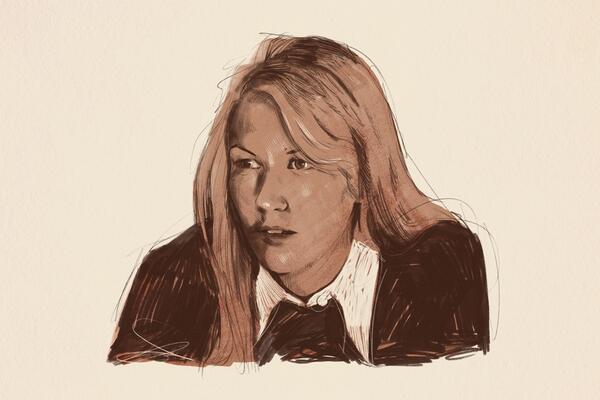
This is an excerpt from Braving the Truth, a new collection of blog posts by the late Rachel Held Evans. The collection includes reflections on Evans' writings by a range of Christian authors.
Sunday Morning, by Rachel Held Evans
In the summertime, the light darts through the slits in the blinds all gold and sudden—no gentle fade through purple and blue and gray to get you used to the idea of another day. I wake and listen to Dan breathe next to me. We stopped setting an alarm a long time ago.
Somewhere between 8 and 9, when the songbirds have settled down, I formulate my excuse:
Too far to the Orthodox Church.
Too late for the Episcopal Church.
Too liberal for the Baptist Church.
Too conservative for the Mainline Church.
Too protestant for the Catholic Church.
Too catholic for the Bible Church.
No one asks anymore, but I was raised to be ready with an answer. So the excuses are part of the routine now—like finally kicking off the covers, like my dark roast coffee with cream, like checking email, like morning prayer:
“Lord God, almighty and everlasting Father, you have brought me in safety to the beginning of this day. Preserve me with your mighty power, that I may not fall into sin, nor be overcome by adversity; and in all I do, direct me to the fulfilling of your purposes; through Jesus Christ my Lord.” -The Book of Common Prayer (Seabury, 1979)
Have I fallen into sin?
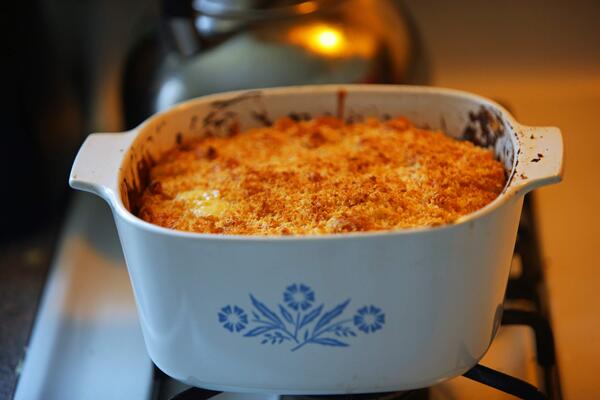
Who will bring casseroles when I have a baby?
What I feel these days is not guilt, but something far more nefarious: dull resignation. There are nearly two hundred churches near my small, Southern town, and hundreds more if we make the long drive to Chattanooga, so the fact that I can’t seem to make it through a single service without questioning the existence of God says a lot more about me than it does about church, now doesn’t it?
Do I want a church that fits me, or a me that fits the church? God makes sense to me under the trees, and God makes sense to me in poetry and prayer, and God makes sense to me in Eucharist and Baptism and community and even creeds . . . but not in the offering plate, not in the building campaign, not in the pastor-who-shall-not-be-questioned, not in the politics, not in the assumptions about what a good Christian girl ought to be.
Gentle, quiet.
Am I selfish for wanting more?
And who will bring casseroles when I have a baby?
I don’t know how to explain it—to my family, to my readers, to myself—that, despite the fact that I know these good people would love me unconditionally, I don’t want to go back. I don’twant to be the change. I don’t want to try anymore.
It’s 10:30 a.m., and I’m still tired—
still tired from our failed church plant,
still tired from the local gossip,
still tired of being seen as a project and a prayer request because I believe the earth is more than six thousand years old and that Anne Frank didn’t go to hell,
still tired of patriarchy,
still tired of feeling farther away from myself when I am in church than when I am anywhere else in the world.
I don’t know how to explain it—to my family, to my readers, to myself—how, when my gay friends aren’t welcome at the Table and my sisters aren’t welcome at the pulpit, somehow I’m not welcome there either. I feel at once pride and guilt.
When my gay friends aren’t welcome at the Table and my sisters aren’t welcome at the pulpit, somehow I’m not welcome there either.
But who will bring casseroles when I have a baby?
“Lord God, almighty and everlasting Father, you have brought me in safety to the beginning of this day. Preserve me with your mighty power, that I may not fall into sin, nor be overcome by adversity; and in all I do, direct me to the fulfilling of your purposes; through Jesus Christ my Lord.” -The Book of Common Prayer (Seabury, 1979)
The sun has now lit the whole house, and I pray regardless of whether the prayer feels right.
And hope that someday the same spirit will carry me back to church.
Originally posted on July 2, 2012.
On Casseroles and Finding Community, by Kristen Howerton
I grew up going to church twice on Sundays and on Wednesday nights. My childhood was spent playing in the vestibule or doing cartwheels with friends in the fellowship hall while we waited for our parents to finally stop talking and take us to lunch at Golden Corral. The running joke was that the church should give my mom her own set of keys to lock up, since we were usually the last to leave. Church was our spiritual home, our social network, our safety net, and our third space.
It’s no surprise I married a pastor and joined these same rhythms in adulthood. I was a dutiful pastor’s wife. I volunteered in youth group, sang on the worship team, and ran the church missions program. We did have keys and we often did lock up because we were the last to leave. The church was where I felt most at home, where I believed my purpose was rooted.
But over time, things began to shift. There was a subtle but unmistakable transition as my church began to align more overtly with conservative ideologies, especially on issues around gay rights, immigration, and national politics. The church’s stance on gender, sexuality, and leadership began to clash with my own evolving beliefs. Then, a longtime friend was fired from the church staff when he came out as gay. My values, which had always been centered on compassion, justice, and inclusion, were increasingly out of step with my own church.
READ: 14 Rachel Held Evans Quotes on Doubt and Other Key Parts of Christian Faith
And yet the thought of leaving was terrifying. How could I leave behind something that was so integral to my sense of identity and belonging? And yet, how could I stay at a place where that very belonging was not extended to everyone?
Then I discovered other Christians on a similar journey. When Rachel wrote, “Who will bring casseroles when I have a baby?” I immediately knew what she meant. Rachel articulated so well a shared fear of losing community, and spoke for so many of us. She understood that community was not just about the physical space we occupy but the emotional safety and support that surrounds us. She gave voice to our own fears of isolation and loss.
Rachel and I spent the better part of the past decade in a friend group of postevangelical misfits. It was a community of people who had grown up in a faith they had then deconstructed and put back together. We were sometimes cynical and irreverent and oftentimes silly. We updated each other on our kids, our faith crises, our personal and public failures, and sent each other some of the most hilarious photos that surely would make our mothers blush. But most of all, we were ardent supporters of one another.
Eventually, both Rachel and I left our churches, but we never gave up on community.
Rachel wanted to create community for others, and she did. Alongside Sarah Bessey and Jeff Chu, Rachel built a sanctuary in Evolving Faith. The conferences became a gathering ground for those of us struggling with the dissonance between our personal convictions and the practice of Christianity. Here, we found a space to wrestle with our beliefs openly and to reclaim the parts of our faith that felt steadfast. Between the Evolving Faith community and her writing, Rachel gave us the permission we needed to let go of what no longer served us, showing us how to live out our values with courage and kindness. She made it possible for those of us who felt like “outsiders” in our own faith to feel seen and understood. And for so many of us, this community became a reminder that there is indeed room for all of us at the table. Belonging isn’t defined by where we gather but by the grace we extend to ourselves and each other along the way.
What I wish I could tell Rachel is that when she died, an entire community did show up with casseroles, both literally and figuratively. The very community she helped build, with her words and with her unflinching honesty, rallied together to surround her family in love and care. It was a testament to the lasting impact of Rachel’s life.
Excerpted from BRAVING THE TRUTH: Essential Essays For Reckoning With and Reimagining Faith by Rachel Held Evans, edited by Sarah Bessey. Reprinted with the permission of the publisher, HarperOne, an imprint of HarperCollins. Copyrighted © 2026 by Rachel Held Evans.

Rachel Held Evans (1981-2019) was the New York Times bestselling author of Wholehearted Faith, Inspired, A Year of Biblical Womanhood, and Faith Unraveled.

Kristen Howerton is the author of Rage Against the Minivan: Learning to Parent Without Perfection.
Did this article have an impact on you? Tell us how! Whether you’re moved to take action, have a question, or want to share a comment (good or bad), we value your feedback!