
The walls are covered in shiplap paneling. Over by the spare toilet paper, an essential oil diffuser hums quietly as it emits Young Living’s “Purification” into the air. Two wide-eyed Precious Moments figurines watch you from the windowsill. A framed Bible verse declares, “As for me and my house, we will serve the Lord,” but you already knew you were in the bathroom of a white Christian woman; the signs and wonders were all around you. In Live Laugh Love: The Secret History of White Christian Women and the World They Made, Kristin Kobes Du Mez dissects those signs—and their political implications.
Du Mez, a professor of history and gender studies at Calvin University, landed on The New York Times’ bestseller list for Jesus and John Wayne: How White Evangelicals Corrupted a Faith and Fractured a Nation, her scorching dissection of white evangelical masculinity. With Live Laugh Love, Du Mez turns her eye to white Christian femininity. Because, “demographically speaking, women are the center of American Christianity,” writes Du Mez, “we should look beyond denominational seminaries and theological treatises and read Christian romance novels instead.”
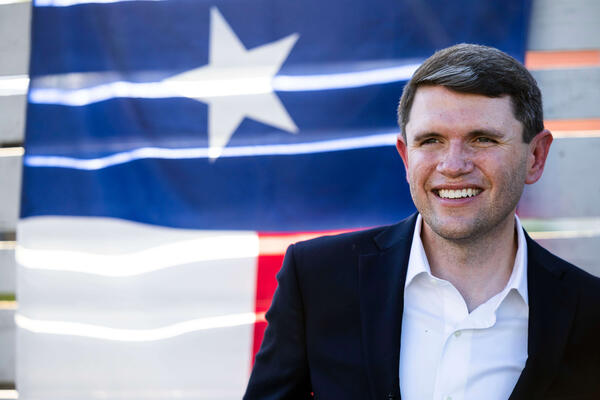
In a 2023 sermon, Texas Democratic Senate candidate James Talarico called Christian nationalism “a cancer on our religion” and denounced Republicans for trying to transform America into a “Christian theocracy.”
Yet, at the same time, Talarico—a Presbyterian seminary student—has made his Christian faith a core message of his campaign. He mentions biblical teachings like “love thy neighbor” when discussing partisan division. He talks about the angel Gabriel appearing to Mary as a model for consent and a justification for abortion rights.
To some, these positions may seem to be in tension. If you oppose Christian theocracy, how can you use Christian theology to justify your political positions in the public sphere? When Christian beliefs are presented as the moral arbiter of politics, isn’t that the definition of Christian nationalism?

Thinking about writing an opinion piece for Sojourners? Great! We're always looking for new voices.
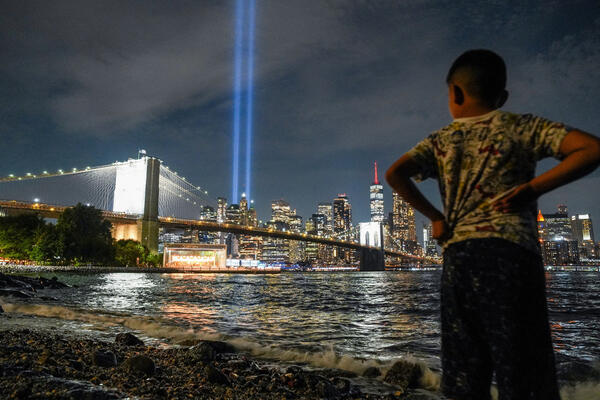
Most people remember exactly where they were on the morning of Sept. 11, 2001. I was in Nairobi, Kenya, a full day removed from the moment everyone else calls “that morning.”
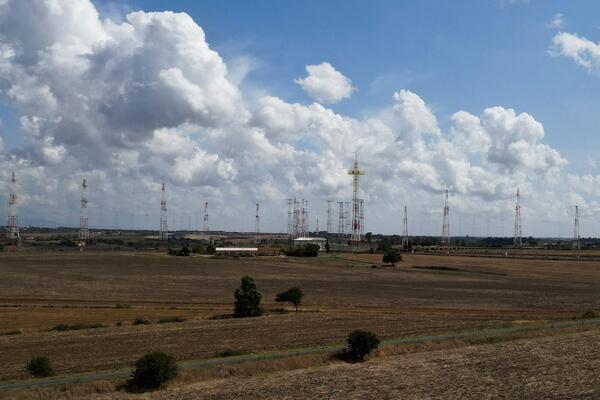
The Vatican will build a roughly $117 million renewable energy plant that could power the Holy See within two years via a system combining solar power and agriculture, sources involved in discussions on the project said.
The agrivoltaic plant is expected to have a capacity of 80 to 90 megawatts, making it one of Italy’s largest such installations, the sources added. In such plants, solar panels are mounted several meters above the ground so crops can grow beneath them, with the shade helping to reduce evaporation and shielding plants from extreme weather.
A joint Italian-Vatican commission met earlier this month to launch the project at the Vatican-owned Santa Maria di Galeria estate on Rome’s northwestern outskirts, after Italy ratified a 2025 bilateral agreement for development of the site this year.

Janet Kellogg Ray is on a mission as an evolution evangelist. Her two prior books, Baby Dinosaurs on the Ark? and The God of Monkey Science, show how she can run with any biblical narrative (Noah’s flood) or historical event (the COVID-19 pandemic), and use these as launch points for crash courses on fossilization, germ theory, and scientific methodology. In her new book, Fish with Feet, she not only places humans center stage in the story of evolution, but also sets out to explore how this impacts a core Christian doctrine enshrining the status and purpose of humans: the image of God.
For many Christians, evolution threatens the concept of the imago Dei because it suggests we weren’t perfectly designed and set apart from animals by God. This is partly why apologetic enterprises like Answers in Genesis and the Institute for Creation Research exist to preserve our divine origins. Otherwise, these groups say we may as well toss out the Bible and act like animals. Fish with Feet challenges creationists directly but is primarily intended for those who grew up under their influence: Christians (deconstructed, deconverted, and otherwise) who grew up with little to no education related to evolution or an old Earth. This certainly works for folks like me, since I was homeschooled on creationism and intelligent design by Abeka Academy.

This September is filled with calls to collectively remember. It was one year ago, on Sept. 10, that conservative activist and Turning Point USA co-founder Charlie Kirk was killed at Utah Valley University. September 11, of course, marks 25 years since the attack on the World Trade Center towers in New York City.
Amid these invitations to remember, I have wondered what it means, in this place and moment, to remember rightly. There is no doubt we remember these events. Yet, our memories differ. As the Catholic theologian Jean-Luc Marion writes, “Once things have happened, there remain only words.”

A humble ploughman walks across the countryside with a radical preacher and a former nun, with thousands of livid farmers and laborers following behind them. Together, the three travelers ponder the reason for the recent pandemic that swept across the land and killed half of the people they’ve ever known.
“The sickness was [God’s] punishment for the crimes of the rich,” remarks the preacher, John Ball, rather matter-of-factly.
“So why do we suffer also?” asks the ploughman.
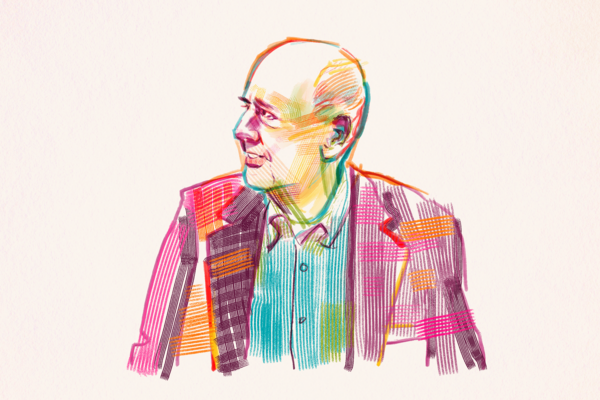
The late, great Wendell Berry found me at a unique time in my life: I was in the early stages of transitioning between genders.
Up until that point, part of me had always assumed that I wouldn’t connect with Berry’s writing because the people who recommended it to me were usually vaguely conservative men who wanted to live self-sufficient agrarian lifestyles. These people certainly had softer sensibilities than the more overtly militaristic conservatives I knew, but nonetheless, it sometimes felt that their idyllic worldviews and theologies didn’t have much room for people like me.

Months after protestors wouldn’t leave the lobby of the Idaho governor’s office in an attempt to meet with him over anti-transgender bills, a jury on Tuesday found a local minister guilty on a misdemeanor trespassing charge.
The jury found the Rev. Sara LaWall—who wore a clerical collar under a rainbow speckled blazer as she sat in court—guilty of trespassing after prosecutors said she remained in the governor’s office after being warned it was closed for the night during a protest of anti-trans bills this spring.
After the jury delivered the verdict, LaWall, the minister for the Boise Unitarian Universalist Fellowship, told reporters that the possible prison sentence she could face would be less time than judges can dole out for violations of Idaho’s new criminal transgender bathroom ban.
“That just feels wholly unfair and outsized and ridiculous,” LaWall told reporters after her trial. “… The jury found me guilty of staying in the governor’s office after being told to leave. I didn’t dispute those facts. But someone going to the bathroom now has a higher sentence, and that just feels so disproportionate and so wrong.”