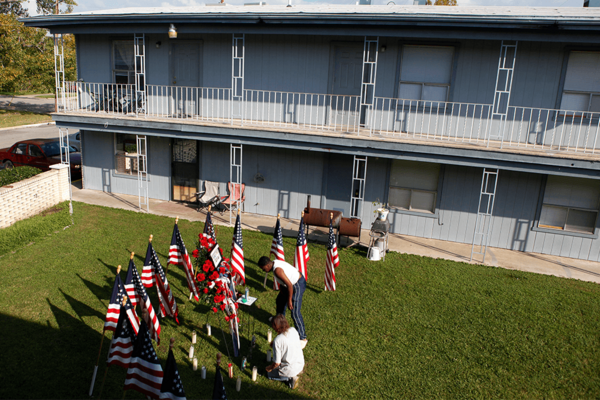
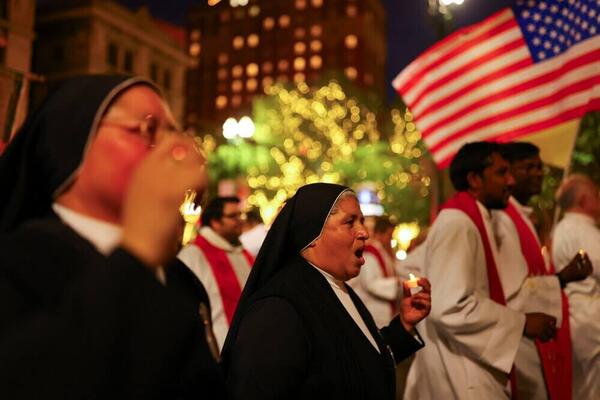
Catholics serving in the U.S. Army should not participate in the firing squad execution of Fort Hood shooter Nidal Hasan that the Pentagon is planning to livestream in December, a prominent U.S. archbishop said on Monday.
In an unusually strongly worded statement, Archbishop Timothy Broglio, who oversees the spiritual care of Catholic members of the U.S. armed forces, raised a series of objections to the unprecedented plan to broadcast the execution of Hasan, who killed 13 people at Fort Hood, Texas, in a 2009 shooting spree.
Broglio said he presided at the funeral of one of Hasan’s victims and lamented the shooting. But the Ohio-born archbishop asked whether the U.S. wanted to “imitate the terrorists of this world and make a public spectacle of barbarically killing our adversaries.”

The daily wisdom our algorithms invite Christians to practice on the Internet: Always judge a book by its cover. Be the first to cast stones. Condemn things we haven’t seen and know little about.
At the beginning of the second Trump administration, a homemade yard sign appeared in my neighborhood. It quoted the German Protestant pastor Martin Niemöller’s “First They Came” poem. Promoting both empathy and political action, Niemöller’s poem has become rightly omnipresent as Trumpism and its Christofascist base are arguably the most successful fascist movement since Nazi Germany. Lesser known than the poem is Niemöller’s journey into the antifascist spirit that inspired it.
Niemöller’s gradual turn against Hitler began only after the church’s autonomy was threatened in the Nazis’ attempt to establish the Reich Church. Before 1934, he voted for the Nazis numerous times, led a Freikorps unit during the Weimar Republic, joyfully greeted Hitler’s rise, and even sent his autobiography to Nazi Minister of Propaganda Joseph Goebbels with a personal note that it was written in the “spirit of the Third Reich.” In his role in the Confessing Church, he was againstHitler, but kept the ultranationalism and antisemitism that led him to support the Nazis in the first place. His imprisonment wasn’t enough to shake off his fascist proclivities—he still volunteered for the war effort from Sachsenhausen concentration camp. It took the defeat of Germany and a direct confrontation with his own complicity after the war, for him to reject fascism.
When I published a spiritual memoir based on the teachings of a 16th-century saint named Teresa of Avila, my 13-year-old daughter suggested my next writing project should be something “more people would want to read.”

I’m at the point where I’m a bit at a loss for what to say about Palestine. It has been three years since the on Israel on October 7, 2023, when Hamas killed more than 1,100 Israelis and abducted another 251 people.
That date also marks the beginning of the genocide in Gaza, which continues despite the ceasefire. More than 70,000 Palestinians have been killed by the state of Israel. Palestinians are losing faith in nonviolent resistance, and I honestly can’t blame them. Settlers and their allies in government are determined to annex the entire West Bank, and Israeli politicians are openly imagining a world where Palestinians are no longer in Palestine. The word “bleak” does not even begin to describe the situation in Israel/Palestine—a situation that is only made worse by the U.S. continuing to provide military aid to Israel. Perhaps “catastrophe” is a better word.
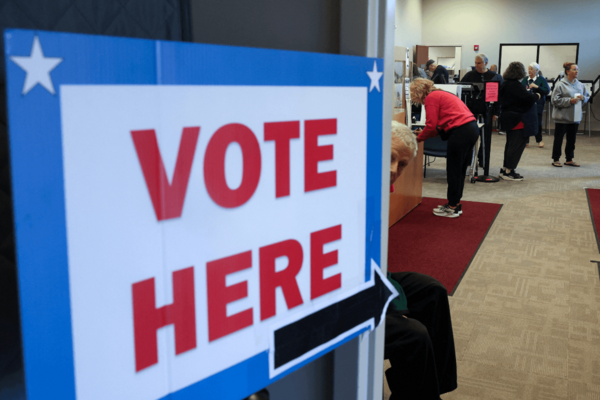
I need to level with you: The 2026 midterms are not a normal election.
Faith groups like Sojourners have long talked about the importance of elections. I have written about elections extensively in the past. But this year is different.
Specifically, there is a great risk that the Trump administration and its allies will attempt to disrupt or deny the election results; these attempts could very well succeed if we don’t act—or if they create enough chaos and fear to deter people from voting. It’s critical that Christians commit to pushing back on these attempts with faith-inspired activism—not just up to Election Day, but all the way through the seating of a new Congress on Jan. 3.
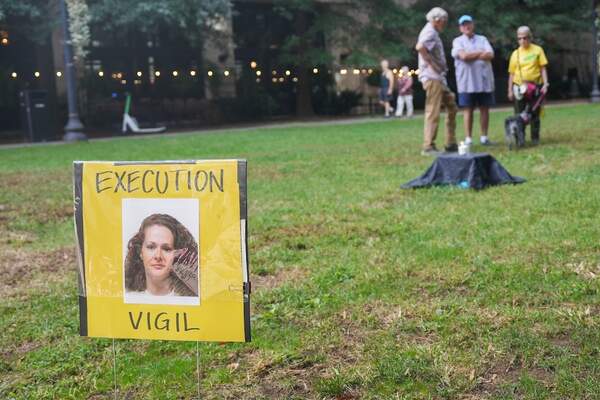
The recent botched attempted executions of Christa Pike and Tony Carruthers in Tennessee have laid bare what it is we are doing in my state in the name of justice—and people of faith are horrified by it.

I was 20 years old before I told anyone else in my life that I had gender dysphoria. Or, as I said back then, “all these gender feelings.”
It wasn’t that I didn’t want to tell anyone. Throughout many different seasons of my childhood and teen years, I’d tried to write letters and speeches to tell my parents and friends what I’d been experiencing. From what I’d absorbed in media, though, “coming out” was a dramatic proclamation. My understanding was that it meant you were confidently displaying your “true self” to the world—being “brave,” letting your flag fly, making a grand statement that said, “I’m here, this is me, and you’ve gotta deal with it.” To be sure, many people do not think about coming out this way—and in the years since that time, I’ve been moved by countless examples of coming out that occurred in gentler, more intimate ways. But that was what I had internalized then.

We’ve seen it before: the tale of a Christian disillusioned with evangelicalism and its culture of exclusion. What we are still learning, however, is the assuredness with which Christian communities will shun one of their own—even one of their most skilled artists.
Jason Ikeler’s new documentary Safe for the Whole Family: How to Make a Christian Superstar, which premiered Sept. 27 at the Nashville Film Festival, offers history and commentary on Contemporary Christian Music from authors and scholars including Leah Payne, Jane Hong, and Kristin Kobes du Mez. The film focuses on artists Jennifer Knapp, Nikki Leonti, and Michael Passons as they revisit their rise in the Christian music industry—and the blows dealt to them on their way out of evangelical spaces.
Toward the end of Paul’s first letter to the Corinthians, he notes that his young protégé Timothy will be visiting soon and goes out of his way to tell the church to be nice to him. “When Timothy comes, see that you put him at ease among you, for he is doing the work of the Lord” (16:10).