Give today, Get our New Book Donate

How White Churches Co-Opted My Racial Reconciliation Work

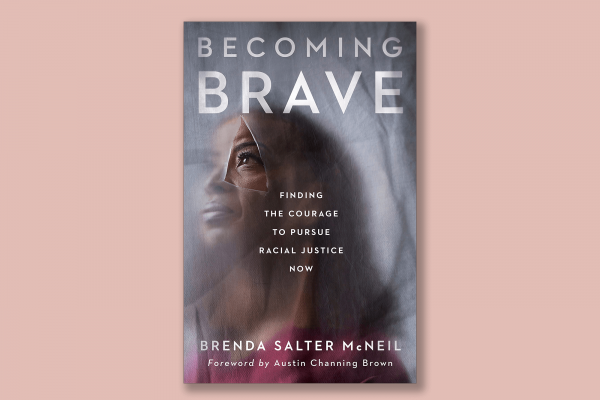
An excerpt from ‘Becoming Brave: Find the Courage to Pursue Racial Justice Now.’

Brazos Press

TO UNDERSTAND MY evolution as a reconciliation leader, you must first understand that I began my journey sincerely believing that if I could convince evangelical Christians that reconciliation was not some politically motivated agenda but a biblical calling rooted in Scripture, they would pursue racial justice. For years I tried to be biblical enough, nonthreatening enough, patient enough, persuasive enough, theologically rigorous enough, so that no one could say I had a hidden agenda.

That’s what my ministry was about for a very long time. I preached the good news of multiculturalism and diversity at churches and conferences. I led workshops and taught seminars and told people about inclusion and equity and how Jesus demonstrated these principles in his ministry.

But along the way, there were indicators that my approach, while good and well-intentioned, was not effecting the type of change I knew in my heart needed to take place.

Another question has emerged: What am I going to do about it? The answer is clear in my spirit, but not easy. I decided to become brave—to say the things that I must say and to stand for the truth, regardless of the consequences.

My reconciliation work has been deeply concerned with how my message will be received by white people. I made my message easy for them to hear. But no more. I have come to realize that I was used by white-dominant culture, probably unconsciously, to make the conversation about racial reconciliation more palatable to them.

But in the aftermath of the 2016 presidential election, with the white supremacy that evidenced itself in insidious and subtle ways, I made up my mind to no longer be used in this way. I will no longer preach, teach, or lead reconciliation on white-dominant culture’s terms.

Reprinted with permission from Brazos Press.

This appears in the July 2020 issue of Sojourners