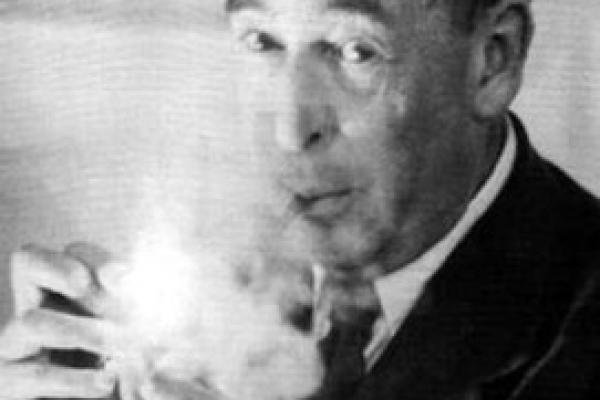
When he died on Nov. 22, 1963 hardly a soul blinked in Northern Ireland where he was born or in England where he spent most of his working life as one of the world’s greatest Christian apologists.
Clive Staples Lewis was a week short of 65 when he suffered a heart attack at his home in Oxford. The obituary writers barely noticed his demise, in part because he died on the same day that President John F. Kennedy was assassinated in Dallas.
British indifference to Lewis half a century ago will be examined at a one-day seminar at Wheaton College on Nov. 1, co-sponsored by the Marion E. Wade Center, the Institute for the Study of American Evangelicals and Wheaton College’s Faith and Learning program.
Lewis may be the most popular Christian writer in history, with millions of copies of his books sold, the vast majority in the United States where his influence is far greater than in his native country.
Was it Lewis’ modesty or British fear of discussing religion that fueled such indifference in Britain and Ireland?

On Oct. 13, Asian Americans United published an open letter asking the church to reevaluate its behavior toward its Asian brothers and sisters. The letter demands that the evangelical community listen and respect a community that has generally been overlooked or disregarded. Central to this issue is identity.
When we begin to divide or alienate communities through our behavior based on race, we are additionally dividing the identity of Christ. However, if we return to the core of what being Christian entails, we are reminded that we are not our own and find a new calling to community.
With whom do you identify? In a nation, with over 75 percent of its population nominally claiming the label Christian, asking whom we identify with is an important question. It is a challenge but a daily necessity to reflect on our character and ask if we are truly representing Christ.

While it's not uncommon to hear the terms "Tea Party" and "libertarian" uttered in the same descriptor, a new survey shows the gap between the two movements. According to the new American Values Survey, an annual release from the Public Religion Research Institute, a full 61 percent of libertarians do not consider themselves part of the Tea Party.
“While conventional wisdom has assumed that the Tea Party movement is fueled by libertarian convictions, most libertarians see themselves as outside of the Tea Party movement. Notably, libertarians are also half as likely as those who identify with the Tea Party movement to see themselves as part of the older Christian right movement," said Dr. Robert P. Jones, CEO of PRRI, in a news release.
In fact, only one in five libertarians claim affiliation with the religious right or conservative Christianity — a claim that more than half of Tea Party adherents would make.

Air Force Academy cadets will no longer be required to include the words “so help me God” when taking their annual Honor Oath.
On Friday officials at the Colorado Springs, Colo., campus announced its 4,000 current cadets would be allowed to opt out of the final phrase of their honor code, which they reaffirm each of their four years of study and training.
“Here at the Academy, we work to build a culture of dignity and respect, and that respect includes the ability of our cadets, Airmen and civilian Airmen to freely practice and exercise their religious preference — or not,” said Lt. Gen. Michelle Johnson, the academy’s superintendent, in a statement.
“So in the spirit of respect, cadets may or may not choose to finish the Honor Oath with ‘So help me God.’”
The current oath reads: “We will not lie, steal or cheat, nor tolerate among us anyone who does. Furthermore, I resolve to do my duty and to live honorably, so help me God.”
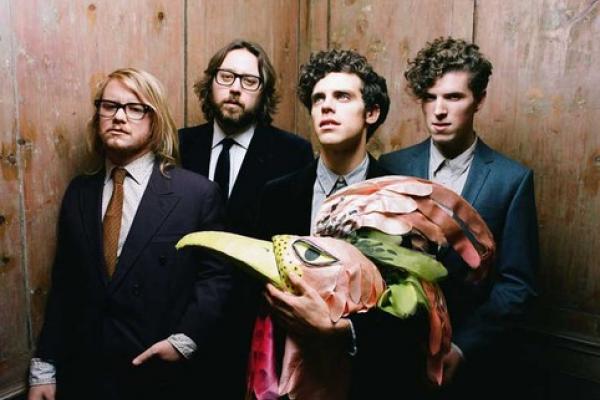
“I’ve always believed that there’s an amazing number of things you can do through a rock ‘n’ roll song,” Lou Reed, who just this past week passed away, once told the journalist Kristine McKenna.
English band Noah and the Whale take that observation and run with it. I had the opportunity of seeing the band live last week, and the show — and their sound — was simple, as nearly every rock song is, yet cathartic and delightful. It mixes elements of Reed and his sixties and seventies peers with Springsteen and sprinkles on touches of indie-folk that’s flourished over the last decade. And the results are marvelous.

Growing up Baptist, J. Dana Trent heard plenty of warnings about interfaith romance.
Marrying the wrong person — known as being “unequally yoked” — could ruin your faith and your marriage.
But three years after marrying a former Hindu monk, Trent says she’s a better Christian than ever.
“I had become complacent in my Christianity,” said Trent, an ordained Baptist minister. “Now my religion and spirituality have become much more integrated in my life.”
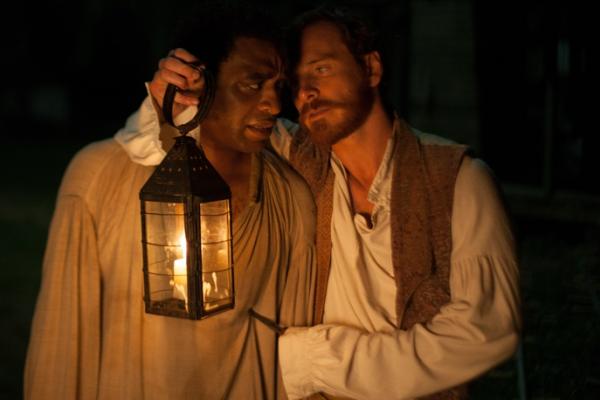
Before I saw the new film 12 Years A Slave, I knew nothing about Solomon Northrop or his astounding story of courage, forbearance, and faith.
I’d never heard of Northrop, an African-American freeman, who was born and reared in upstate New York in the early 1800s, well before the abolition of slavery in the rest of the nation. I’d not known of the historical practice of kidnapping freeborn black Americans in the North and selling them into slavery in the South.
I’d never heard about how Northrop, an accomplished violinist, was bamboozled into traveling from his farm in Hebron, N.Y., where he lived a prosperous life with his wife and three children, to Washington, D.C., for work, but was drugged, kidnapped, and sold in Louisiana. I’d never heard how he remained for a dozen years before heroically regaining his freedom in 1853 — one of a very few kidnapped freemen and freewomen ever to regain their freedom.