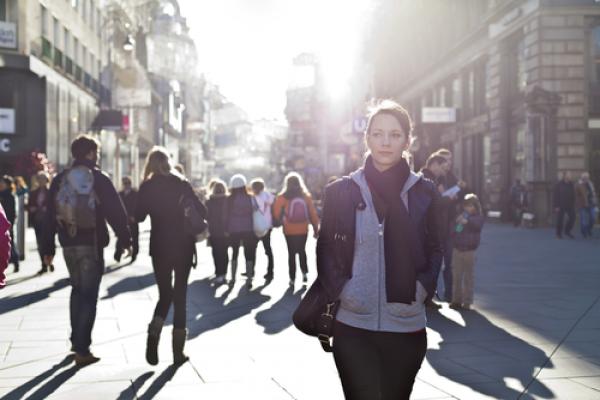
"They pass their days on earth, but they are citizens of heaven. They obey the prescribed laws, and at the same time surpass the laws by their lives."
The above is from a second-century letter to a Roman official has been making the rounds again. It’s been critiqued and analyzed by theologians and pastors alike. Suddenly relevant, the letter to Diognetus is an apologetic, an explanation if you will, of what it meant in the eyes of one writer to be a Christian in that day.
The letter is also an attempt to explain what it means for a Christian to be a citizen of an empire. The author wrote of loyalty, perseverance, and faithfulness, of what it means to be a citizen of heaven above and beyond any other citizenship.
It’s an uncommon rhetoric in our day, to be certain.
A curious early document, the author does not point to scripture as an authority. It’s too soon for epistles and canons. Still, I cannot help but wonder if Jeremiah’s words weren’t somehow in the mix, if the story of Jesus and the ten lepers weren’t in there too.
Heal society’s castoffs and then compel that same society to make peace with those they shun.
Work for the welfare of the place you live no matter what that place may be.
The letter reflects this venerable wisdom.
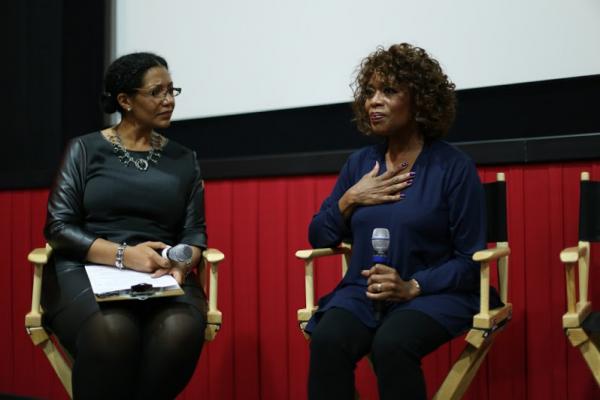
The ethos of slavery still runs deep in our national consciousness. Alfre Woodard, a supporting actress in the upcoming movie 12 Years a Slave, hopes that point is taken by all who see it.
“Whenever there is repression, it takes toll on everyone; especially a physical and psychic, stunting pain on the abuser,” Woodard said at a panel following a pre-screening of the movie hosted by Sojourners last week. “My hope, expectation is that audiences will start to think about slavery in a new way. That they’ll come away with some small perspective to understand each other better.”
The panel gathered to begin the conversation about residual impacts of slavery on the United States. Woodard started the discussion with a description of what it was like to be set and involved with a film that revolves around such a difficult emotional topic.
[view:Media=block_1]

What would the world be like if we were all more alike?
This isn’t just a philosophical question. In many ways, we live as though we wished others were more like us. We spend time with those who are similar to us and avoid those who seem to be different. We enjoy being around those who share our viewpoint and avoid those who challenge it. We accept the parts of others that make us comfortable and ignore or reject the rest.
But what about our diversity? Do we embrace it, or do we merely tolerate it?
Over time, I’ve grown to appreciate the importance of our differentness. I’ve gotten to the point where I think of this incredible diversity — within our universe, within our human family — as one of our greatest blessings.
Within the evangelical Christian universe, few things are more damning than being labeled 'Legalistic.' The term evokes images of strict rules, ruthlessness, enforced doctrines, unforgiving judges, and worst of all —unpopularity.
When churches, schools, pastors, institutions, and communities are viewed as legalistic, they are demonized and shunned — sometimes rightfully so.
One disturbing trend I’ve noticed — especially among young believers — is to assume that everything associated with a few of legalism’s attributes: structure, requirements, consequences, and work, is legalistic — it’s not.
"It helps, now and then, to step back and take a long view. The Kingdom is not only beyond our efforts, it is even beyond our vision. We accomplish in our lifetime only a tiny fraction of the magnificent enterprise that is God’s work. ... We may never see the end results, but that is the difference between the master builder and the worker. We are workers, not master builders; ministers, not messiahs. We are prophets of a future that is not our own." Bishop Ken Untener of Saginaw, Mich. + Sign up to receive our quote of the day via e-mail
[Editors note: Quote was previously misattributed to Archbishop Oscar Romero]
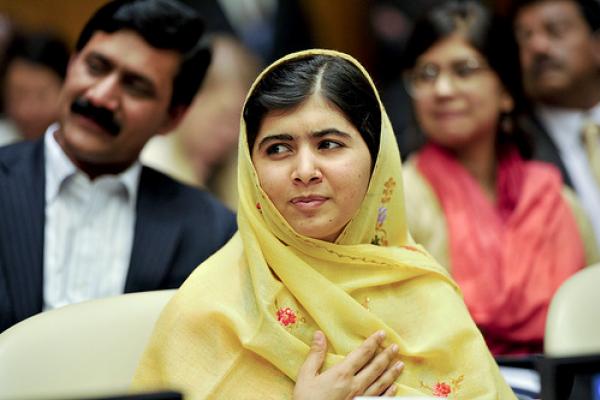
Malala Yousafzai has captured our love and imagination.
Malala was recently a guest on the Daily Show with Jon Stewart. By the end of the interview, Stewart was so enamored with Malala that he asked if he could adopt her. The remark was hilarious because it was true. After 5 minutes with this girl, who wouldn’t want to adopt her?
Malala is the 16-year-old Pakistani girl who fought for education in the face of persecution from the Taliban. She explained on the show that, “Education is the power for women and that’s why the terrorists are afraid of education. They do not want women to get education because then women would become more powerful.”
In the face of persecution from the Taliban, Malala says she “spoke on every media channel I could and I raised my voice on every platform that I could and I said, ‘I need to tell the world what is happening in Swat and I need to tell the world that Swat is suffering from terrorism and we need to fight against terrorism.’”
But it was what she said next that stole our hearts. She reflected upon what she would do if a member of the Taliban came to take her life.
If you hit a Talib … then there would be no difference between you and the Talib. You must not treat another with that much cruelty and that much harshly. You must fight others, but through peace and through dialogue and through education. Then I’ll tell him how important education is and that I even want education for your children as well. And I’ll tell him, ‘That’s what I want to tell you. Now do what you want.’

As the proliferation of pink points to October as Breast Cancer Awareness Month, shades of purple warn us not to forget Domestic Violence Awareness. The story in the Gospel of Luke sheds light on what tenacity, in any form, can accomplish. The widow did not cease in her efforts. Someone had wronged her; and she wanted the situation to be made right. We must be equally diligent in our determination to obliterate domestic violence. We must not become comfortable with reporting abuse after the fact. Our judicial officials, police personnel, school counselors, religious institutions to name a few, must take even the slightest whisper of harm seriously. We must not succumb to the foolish reasoning that “snitching” will put more African American men in prison. If we keep talking, teaching, sharing, and behaving as good stewards of God’s creation, there is nothing or no one to prevent us from getting a handle on domestic violence — and not putting an abusive hand on each other.
Survivors of domestic violence cope in many ways. Some engage in substance abuse while others tend to “over-spiritualize” their experiences. My mother chose to commit suicide to deal with her pain. Today, Yvette Cade travels the country speaking about her life. She is on the mend physically, but she is still afraid. Nonetheless, through her fear, she lifts her voice. Not one more person should have be battered or bruised before someone dares to help. Before we dare to help.
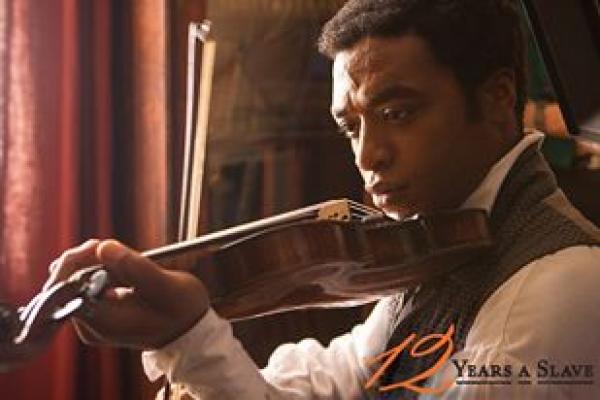
I watched 12 Years a Slave today. The film is based on Solomon Northup’s autobiography by that name. Northrup was a free black man living in Saratoga, N.Y. He was lured away from his home to Washington, D. C., on the promise of lucrative work and was kidnapped, transported to Louisiana, and sold into slavery. He was rescued 12 years later.
Some of the questions and issues that the movie raises are: What right do people have to own others? Do money and might make right? Unjust laws — such as slave laws — exist. It just goes to show that something can be legal, yet morally wrong. Still, laws come and go. We must not confuse laws with rights, which are universal and enduring truths that do not change. What is true and right and good is always so. So, too, that which is evil is always evil. Even if unjust laws are overturned and abolished, evil can still return in other guises.
I asked myself as I watched the movie, “Could it happen again?” Some of us may think, “Surely, something like this could never happen in our day.” And yet, people are abducted and sold into various forms of slavery here and abroad on a daily basis. Granted — people are not publicly bought and sold on the slave block in America today because of skin color; however, people are enslaved based on race and class divisions.