The Obama administration isn’t afraid to call out Republicans for playing politics on Capitol Hill, or Wall Street for runaway profits or insurance companies for health care woes.
But why, when it comes to protecting religious freedom abroad, is the State Department so hesitant to name names?
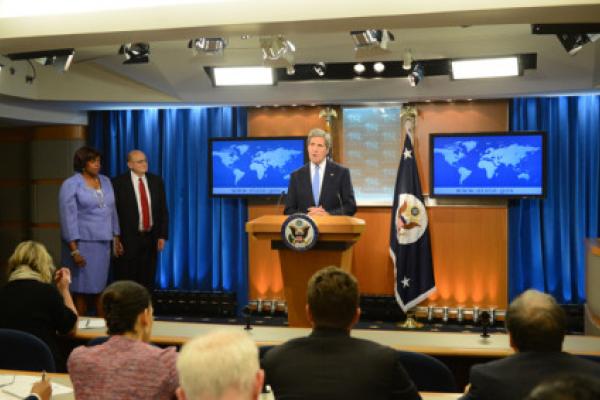
Watchdogs say the State Department missed a key opportunity to put teeth into its annual assessment of global religious freedom, which was released by Secretary of State John Kerry Monday.
Continuing a pattern begun under President George W. Bush, the report does not include a list of “countries of particular concern,” or “CPCs” — the diplomatic term for countries that either actively suppress religious freedom or don’t do enough to protect it.
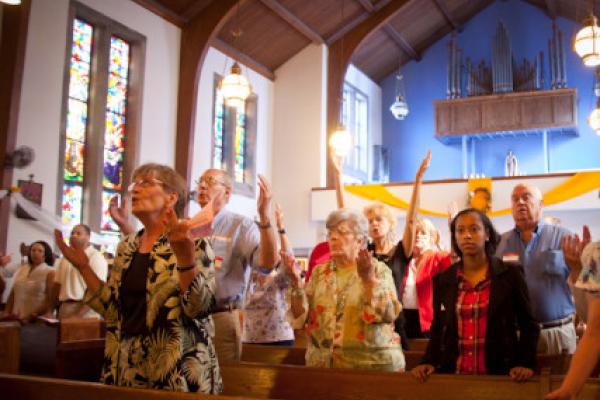
Nothing upsets the folks in the pews as much as changing the liturgy that they’re accustomed to, and that seemed likely to be the case when the Vatican ordered revisions to the familiar prayers and rubrics of the Catholic Mass.
But now, more than a year after the changes took effect in U.S. parishes, a survey of American priests shows that they are more disturbed by the innovations than their flocks.
In fact, the poll, conducted by researchers at St. John’s University School of Theology-Seminary in Collegeville, Minn., showed that almost 60 percent of priests surveyed did not like the new Roman Missal, as the liturgical book for the Mass is known, while about 40 percent approve.
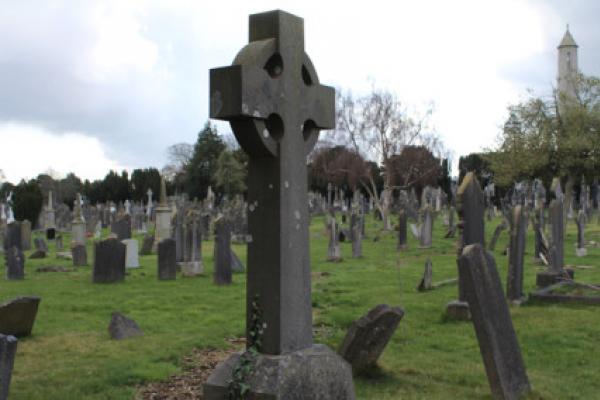
DUBLIN — Patricia Wojnar left a 32-year career in interior design to pursue a degree that wasn’t in demand: a master’s in bereavement studies.
Having seen four family members die early, she wanted to understand how to adapt.
As it turned out, the degree perfectly prepared her to enter one of Ireland’s emerging professions.
Wojnar is now a registered civil celebrant, presiding over funerals and weddings for people who refuse to associate with Ireland’s scandal-tarred Roman Catholic Church. She’s not alone; many newly minted civil celebrants are starting their own businesses as part of Ireland’s “post-Catholic” economy.
Although many observers have noted the impact of secularization and child abuse scandals on church membership and finances, only now are the Irish seeing the cultural and socioeconomic reverberations. These include a class of people willing to observe life’s most significant milestones outside the church.
Religious historians say that every 500 years, Christianity goes through a “massive transition,” as noted religion writer Phyllis Tickle puts it.
Around 500 A.D., “barbarians” sought to subjugate Rome by wiping out its underlying religion. Christianity went underground. In abbeys like Iona, monks painstakingly copied Scripture and civilization’s great writings, in effect saving Western civilization itself.
Around 1000 A.D. came the “Great Schism,” when the Western church based in Rome and the Eastern church based in Constantinople fought over creeds and doctrine, political power and cultural hegemony. That split endures to this day between Eastern Orthodoxy and Catholicism.
Around 1500 A.D. came the Protestant Reformation, when nationalism born of exploration in the New World and new commercial wealth demanded an end to Rome’s domination of European life. That split, too, endures.
Now comes a new millennium, and Christianity wears so many different faces that it’s difficult to speak of a single “Christian movement.”

Wearing a bright orange prison jumpsuit, the priest at the center of the furor in the Archdiocese in Newark made his first court appearance on Tuesday on charges he violated a court-sanctioned lifetime ban on working with children.
The Rev. Michael Fugee, 52, stood for the brief hearing as Bergen County Assistant Prosecutor Demetra Maurice read the seven counts against him.
Maurice is the same prosecutor who authored the 2007 agreement with Fugee and the Archdiocese of Newark that bars him from working with children in any capacity as long as he remains a priest.
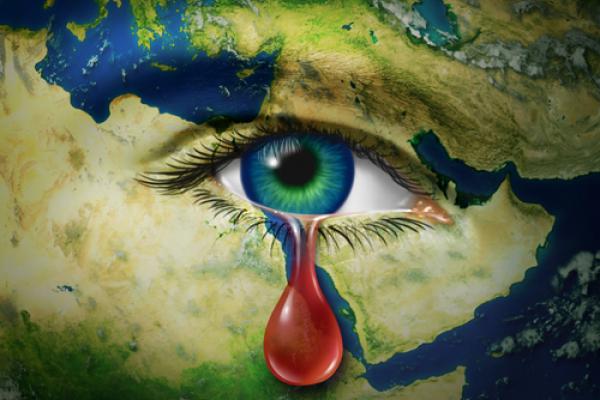
What the heck is going on in Syria? If you are like me, you have a problem keeping all the players straight, and the unfamiliar Arab names don’t help. Thankfully, the Syrian president has a relatively easy name to remember, Bashar al-Assad, but keeping track of who’s who and which side they’re on is a real challenge. Frankly, even when I can keep track, I’m very skeptical that I am getting anything close to the truth from news outlets, the White House, or our State Department. The talk about a “red line,” no-fly zones, arming terrorists, and weapons of mass destruction sounds a lot like the falderal we were being fed going into the Iraq war. So what’s a good citizen of the world to do? If I can’t make sense of the news accounts myself, who can I find to help me out? And if I can’t trust my government to sort out the good guys from the bad guys for me, how can I ever figure out what, if anything, my government should be doing in my name?

It’s a hard truth that, in the real world, Goliath sometimes beats David.
In the July issue of Sojourners, I wrote about the battle to save the Anna Louise Inn and how Cincinnati’s faith community has come together for the fight. Run by Cincinnati Union Bethel, a small non-profit, the Inn has provided safe and affordable housing for women in the city for 104 years and is one of Cincinnati’s most revered institutions.
But last Monday, Cincinnati Union Bethel announced it was selling the Anna Louise Inn to Western and & Southern Financial Group after a two-year legal battle.
“The needed resources, time and energy to this litigation has diverted focus from our other successful programs,” they wrote on their website. “This settlement and purchase agreement allow us to dedicate ourselves to our mission of serving women and children.”
Cincinnati Union Bethel owns both the Inn and the land on which it sits, but Western & Southern – a Fortune 500 company located across the street – wanted the property to build high-end real estate. So, when Cincinnati Union Bethel received $13 million in federal tax credits to renovate the Inn, Western & Southern sued them and the city of Cincinnati.
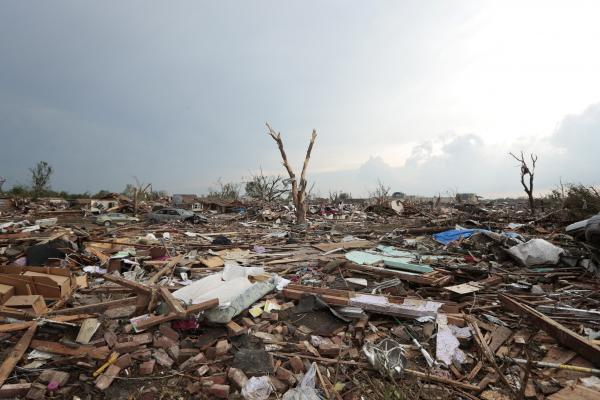
“O Lord, our Sovereign, how majestic is your name in all the earth! You have set your glory above the heavens.” And from those heavens descended a deadly cloud.
“Out of the mouths of babes and infants ...” The children of Plaza Towers Elementary?
“What are human beings that you are mindful of them, mortals that you care for them?” Indeed that is the question that troubles the heart of the faithful in times like these.
Can we still praise God? If so, how do we start? Can we possibly understand what happened in Moore, Okla.?
Don’t trust anyone who claims to comprehend the meaning of this storm. Don’t trust anyone who points with absolute certainty to a single cause for this storm. Don’t trust anyone who treats a tornado as anything but indiscriminate and cruel. These tragedies are not punishments or object lessons. Such natural forces do not reach their conclusion with a pat moral or a simple “they lived happily ever after.”
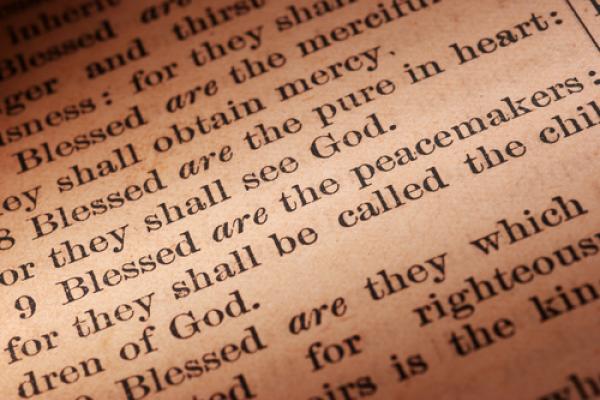
Jesus says some stuff in the inaugural speech of his ministry that really upsets the status quo of both the religious and non-religious. In essence, he says, "If you are to follow me as King of this newly inaugurated Kingdom of God, you will need to start loving your enemies as much as yourself. You will need to start getting creative in how you deal with your oppressors in order to choose the way of love and reconciliation rather than the way of revenge and contempt. In fact, when you live as peacemakers, you best reflect what it looks like to be children of God. Those of you that choose this way of life will be blessed."
A few years later — after Jesus has been announcing the good news of the Kingdom through both word and deed — he looks over Jerusalem and begins to weep. Here is the people and the city that is to symbolize right relationship with God and humanity. It is to be a place of shalom where salvation flows through all aspects of life. It is to be the city of peace. Instead, Jesus stands on the Mount of Olives overlooking the city and laments, "If you, even you, had only recognized on this day the things that make for peace!"
Finally, Jesus, as king, messiah, and deliverer models this way of life to the point of death on a cross. Refusing to accept the lure of power through military might or pursuing peace through violence, Jesus embodies the life of suffering and self-sacrifice that he is calling his followers to emulate. Jesus, as the ultimate peacemaker, shows us that the life and work of peacemaking isn't some fairy tale euphoria, but the gritty, subversive and sacrificial life of faithfulness to a God and kingdom that lives by a different standard than the systems and powers of the world.