The Catholic Church in Honduras is reaching out to both criminal gangs, such as Mara Salvatrucha and M18, and the government to negotiate a cessation to violence, similar to truces reached with church mediation in El Salvador, Guatemala, and Colombia. Agenzia Fides reports:
"We are in a process of recovery of the respect for life, we are listening to both gangs, but the government has not yet given an answer," said Mgr. Romulo Emiliani Sánchez, C.M.F Auxiliary Bishop of San Pedro Sula to a local radio station, announcing the start of a dialogue with the main criminal gangs in Honduras, to reach a truce similar to that in force in El Salvador.
Read more here.

A hunger strike by detainees has Guantánamo back in the news. But has the Obama administration been using drone strikes to kill al Qaida suspects rather than capturing them? The attorney who wrote the the first legal justification for using drones thinks so. The Guardian reports:
“John Bellinger, who was responsible for drafting the legal framework for targeted drone killings while working for George W Bush after 9/11, said he believed their use had increased since because President Obama was unwilling to deal with the consequences of jailing suspected al-Qaida members.
"This government has decided that instead of detaining members of al-Qaida [at Guantánamo] they are going to kill them," he told a conference at the Bipartisan Policy Center.”
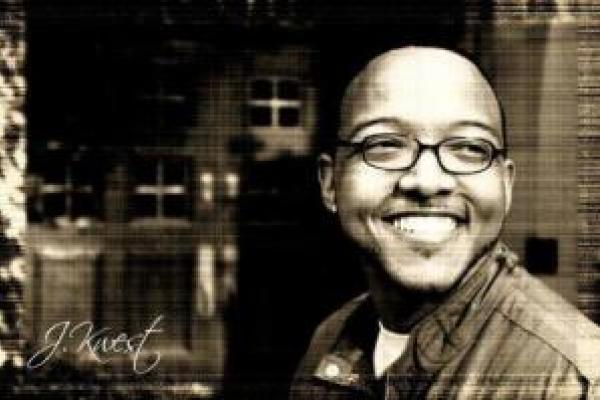
For nearly a decade, the ministry of Julian “J.Kwest” DeShazier has been an exploration in the relationship between music and faith. As artist, this Chicago native has used his unique rhythm to tell stories of deep meaning, inside and out of the church. A 2007 Holy Hip Hop Award winner, his song, “So Blessed,” was featured on the Grammy-nominated compilation Holy Hip Hop: Taking the Gospel to the Streets, and J has been celebrated as “Living Black History” by Urban Ministries International.
In 2012 he and his group, Verbal Kwest, were featured in the Sojourners, OXFAM, and Bread for the World-produced documentary The Line, providing a critical voice against poverty and violence in the U.S. A graduate of Morehouse College and the University of Chicago Divinity School, Julian currently serves as senior pastor of University Church in Chicago, and is a regular contributor to Sojourners, UrbanFaith and Kidult publications.
Editor's Note: There may be some objectional language in the beginning part of this about hour-long interview.
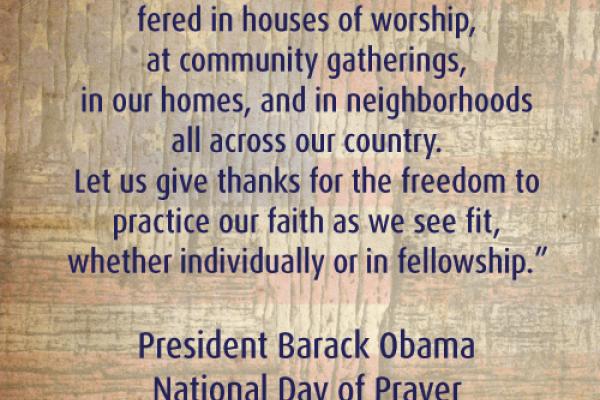
Editor's Note: Below is the text of President Barack Obama's Proclamation for the National Day of Prayer.
Americans have long turned to prayer both in times of joy and times of sorrow. On their voyage to the New World, the earliest settlers prayed that they would "rejoice together, mourn together, labor, and suffer together, always having before our eyes our commission and community in the work." From that day forward, Americans have prayed as a means of uniting, guiding, and healing. In times of hardship and tragedy, and in periods of peace and prosperity, prayer has provided reassurance, sustenance, and affirmation of common purpose.
Prayer brings communities together and can be a wellspring of strength and support. In the aftermath of senseless acts of violence, the prayers of countless Americans signal to grieving families and a suffering community that they are not alone. Their pain is a shared pain, and their hope a shared hope. Regardless of religion or creed, Americans reflect on the sacredness of life and express their sympathy for the wounded, offering comfort and holding up a light in an hour of darkness.

This week marked six months since Superstorm Sandy left entire communities devastated, families homeless, and many with little hope. But in the midst of this natural disaster, many banded together. As is true with many of our nation's tragedies, recent and throughout our history, communities form and hope emerges amid struggle. Sandy taught us about resilience. It showed us what it truly means to reach out, serve, and love our neighbor.
One young filmmaker in New York, Farihah Zaman, caught that resilience and acts of service on video. Here, she shows us how tragedy can turn into a joint effort to acheive the common good.
Is there anything more important to us than the air we take into our lungs every few seconds? The water that keeps us and all living things going? The soil that roots our food and our communities? Or the weather patterns that knit these elements all together?
What happens when these things begin to deteriorate — or rapidly change their behavior?
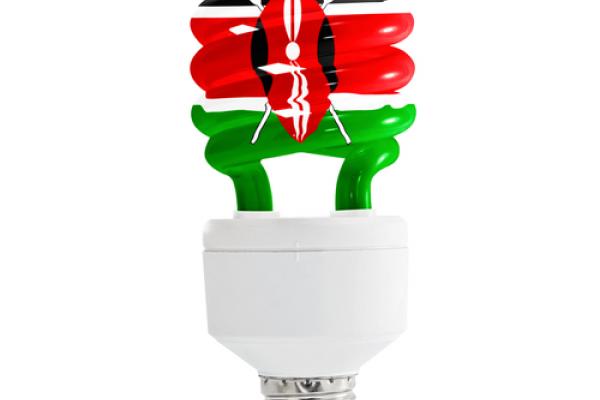
That is why I’m in Kenya with Cal DeWitt — well known Christian environmental scientist and teacher — and a group of eight others from the US and Canada: scientists, teachers, activists, and a film-maker.

America is at a crossroads: We live in a society that promotes working for our own ends, but if we are to survive and flourish it is time to start sacrificing for the common good by working together.
In early April, advocates for public education traveled to Washington D.C. for Occupy the Department of Education (Occupy the DOE). Students, parents, educators, and community members came together to protest a current system that is designed to segregate our society, while demanding a public education system that devotes itself to the common good through sacrifice of self for the love of the whole.
The expansion of hydrofracking could strain water resources from Forth Worth to western Colorado. The New York Times reports:
“Given projected sharp increases” in the production of oil and gas by the technique commonly known as fracking, the report from the group Ceres said, “and the intense nature of local water demands, competition and conflicts over water should be a growing concern for companies, policy makers and investors.”
One option is to recycle the water used in hyrdofracking. However the water may contain chemicals, natural pollutants, or ever radioactivity and it is expensive to clean the water. Some companies are expanding their use of brackish, undrinkable water unstead of fresh water to lessen their environmental impact.
Read more here.
General Motors signed the Climate Declaration. The statement is part of a new initiative by businesses for greater action on global warming in Washignton. No specific recommendations are made in the declaration. The Guardian reports:
"We want to be a change agent in the auto industry," Mike Robinson, GM vice-president of sustainability and global regulatory affairs, said in a statement.
Other endorsers of the Climate Declaration include eBay, Ceres, Starbucks, and Unilever.
The short statement, endorsed by GM, leads off: "Tacking climate change is America's greatest economic opportunity of the 21st century (and it's simply the right thing to do)."
Read more here.
A new Pew Research Center poll found fewer than half of Americans are very or fairly closely following the immigration debate. 38 percent have no opinion on the Senate mesaure recently intoduced by the "Gang of Eight." The lack of public engagement allows for both opponents and supporters to sway public opinion. The Washington Post reports:
A recent Washington Post-ABC News poll showed that nearly all of the big individual aspects of the “Gang of Eight” bill won majority support, a sign that proponents can have the potential for success in selling their measure. But given that most people 1) aren’t familiar with bill right now and 2) haven’t made up their minds about it as a package, there remains ample opportunity for opponents to strike.
Read more here.