Civil Rights
BORDERED BY strip malls, chain restaurants, and drug stores, four-lane Hillsboro Pike in Nashville, Tenn., carries cars from the Vanderbilt University area out to suburban neighborhoods. Every afternoon, thousands of drivers heading home from the city crest a ridge and pass a long, red-brick church.
That church, Calvary United Methodist, is where I was confirmed, participated in youth group, and sang in the choir. In the archives room off the education wing, a visitor can open a filing cabinet drawer, flip past photos of youth group retreats and church league basketball games, and find a manila folder labeled “Rev. Dr. Sam Dodson, 1958-1965.”
The folder is thin, but its contents are weighty. A letter to the local Methodist bishop from the church’s board explains that Dodson cannot adequately minister to his congregation while participating in political activities and suggests he be demoted to assistant pastor. A newspaper clipping from 1965 announces that Rev. Dodson and his family will be moving to Athens, Greece, where he will head St. Andrew’s American Church. I recognize some of the names signed to letters calling for Dodson’s demotion—an usher who pressed strawberry candies into my palm whenever I asked, a woman who looked me in the eye when I was 11 and told me I would be a leader in the church someday.
1. Here Is What Happens When Each Myers-Briggs Personality Type Makes A New Year’s Resolution
These may or may not be scarily accurate...
2. The Birth of a New Civil Rights Movement
“The shattering events of 2014, beginning with Michael Brown’s death in Ferguson, Missouri, in August, did more than touch off a national debate about police behavior, criminal justice and widening inequality in America. In 2014, the new social justice movement became a force that the political mainstream had to reckon with.”
3. 10 Resolutions for 2015
“We often only use the word in the context of this season, but “resolution” is a nuanced noun. Some of its definitions include: A firm decision to do or not to do something; the quality of being determined or resolute; the action of solving a problem, dispute, or contentious matter. In a world of seemingly endless conflicts, I sure like the sound of that. We need more of all of these qualities just now in this brand new year.”
4. The Tragedy of the American Military
“The American public and its political leadership will do anything for the military except take it seriously. The result is a chickenhawk nation in which careless spending and strategic folly combine to lure America into endless wars it can’t win.”
Vincent Gordon Harding and Rosemarie Freeney Harding: A Biographical Timeline
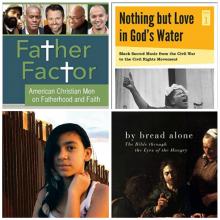
Paternal Insights
Father Factor: American Christian Men on Fatherhood and Faithoffers diverse perspectives from men under 40 who are rooted in a broad spectrum of Christian traditions, ethnicities, and backgrounds. Edited by R. Anderson Campbell, this is the fifth volume in the I Speak for Myself series. White Cloud Press
Sing Freedom
In Nothing but Love in God’s Water: Volume I, Black Sacred Music from the Civil War to the Civil Rights Movement, gospel music scholar Robert F. Darden explores the sustaining and revolutionary power of sacred song in African-American history. Penn State Press
IN THIS YEAR'S midterm elections, hundreds of thousands of Americans will have a much more difficult time casting their ballots than they did two years ago. And it won’t be because of rain, or early winter snows, or other acts of God.
It will be because powerful people don’t want them to vote.
Why? They stand to gain politically if the “wrong” people can be kept away from the polls. It’s the opposite of a “get out the vote” campaign—“keep out the vote” describes it better.
The tradition of keeping particular sectors of the population from taking part in the franchise goes back to the founding fathers. John Adams, for instance, believed that only rich, successful, smart people should vote—and only people of a certain race and gender, of course.
“Such is the frailty of the human heart,” Adams wrote in May 1776, “that very few men who have no property have any judgment of their own.” At the time, politicians in Massachusetts wanted to allow men who didn’t own property to vote. Adams thought that was a bad idea. For him, no property meant no vote.
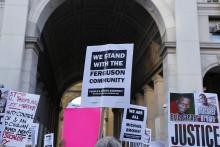
This week, I saw a torrent of debate about who reached for the gun and why police don’t shoot people in the leg rather than taking their lives. Neither angle seems to capture the bigger story at play on the evening news and fueling protest marches across Missouri.
On Sunday I preached to my church on race, current affairs and how to process — in a biblically loving way — what has been happening to brothers and sisters in Ferguson. (See video below) Talking about race and current affairs can be taboo in evangelical churches, and it was interesting as I saw a few couples exit the back door as I spoke.
Last week, I penned my thoughts on why we should pray for the saints in Ferguson. It was the outgrowth of my personal frustration and the pain I feel over the misunderstandings on race that can pervade the majority culture.
Race, Current Affairs & Prayer from Antioch Church on Vimeo.

Editor's Note: In light of this week’s events in Ferguson, Missouri, several writers at ON Scripture took a few moments to reflect upon what they would/will be preaching on this Sunday. To continue the conversation, join on Twitter at #onscripture.
Eric D. Barreto, Associate Professor of New Testament, Luther Seminary: St Paul, MN
The last thing a preacher wants to do on a Saturday night is to log into Facebook.
I exaggerate, of course, but I found myself scrambling last week when I learned of Michael Brown’s shooting last Saturday. My sermon for Sunday morning was ready to go. But I had to reassess all my work when I heard the witness of so many African American friends in particular as the news from Ferguson began spreading across social media. The frustration and disbelief, rage and disappointment, resignation and passion I heard moved me. But even more convicting was the fact that so many others were simply unaware of this event at the moment and unfazed by its repercussions.
In certain communities, no one had to pay attention to Michael Brown. In certain communities, his death did not resonate with significance. In certain communities, no one would confront the preacher and ask why she did not respond to the death of this young person.
And yet in other communities, his death was a touchstone, a cause for prayer and lament and righteous anger and faithful expectation.
These distinct reactions are a raw reminder that our communities of faith remain largely segregated. Though we worship the same God, the contexts within which we seek God’s face are radically different. In such a divided context, what does it look like to love your neighbor? What does it look like to be “one” church even as we are profoundly divided?

Civil rights and religious groups say efforts to rid federal agencies of anti-Muslim bias have faltered and prejudice against Muslims persists, particularly in the training of anti-terrorism officers.
On Thursday, 75 groups—including the Council on American-Islamic Relations, Auburn Seminary, and the NAACP—sent a letter to the White House urging an audit of federal law enforcement training material.
“The use of anti-Muslim trainers and materials is not only highly offensive, disparaging the faith of millions of Americans, but leads to biased policing that targets individuals and communities based on religion, not evidence of wrongdoing,” the letter reads.
A National Security Council representative said the letter will be reviewed and a response issued.
“As we said when these news reports first came to light, the use of racial or ethnic stereotypes, slurs or other similar language by employees is both unacceptable and inconsistent with the country’s core values,” said Caitlin Hayden, National Security Council spokeswoman.
The groups point to a reference to “Mohammed Raghead” in a memo and the claim by a former FBI official that the CIA’s director is a “closet Muslim.”
50 years later, poverty is still an issue in America.
I cannot say I am the greatest dancer. I enjoy all types of music. The rhythms of my eclectic taste often entice me to move. Naturally, I easily find myself swaying this way or that way. My feet are not far behind. Only sheer foolishness would compel me to compare my dancing with grace and gifts of Beyonce, Tina Turner, or any champion from Dancing With the Stars. I know my limits. That’s one of the first steps to being successful: know what you can and cannot do.
I can do the basic two-step. A step to the right. A step to the left. A step up. A step back. I do not have to think about it. Just a simple one-two, one-two, and the sounds tickling my ears manifest in my feet. There is no harm if all I do song-in and song-out is slide to right, shimmy to left, take it to top and prance it back. A simple motion of one foot forward and one foot backward, and I am at peace relishing in the music of the moment.
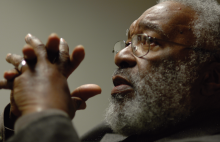
I SAT MY two boys down the night I got the call and heard the news. “Uncle Vincent has died and passed on,” I told 15-year-old Luke and 11-year-old Jack.
I could see the sadness in their faces. Vincent Harding had been like an uncle to them, an elder and mentor to me, a formative retreat leader for the Sojourners community, and one of the most insightful commentators and historians of the true meaning of the civil rights movement and Martin Luther King Jr.
Dr. Harding and Dr. King were friends. Vincent and his wife, Rosemarie, were part of the inner circle of the Southern freedom movement, and Harding wrote the historic speech that King delivered at Riverside Church in New York City on April 4, 1967, where he came out against the war in Vietnam and identified the “giant triplets” of racism, extreme materialism, and militarism.
That speech was perhaps King’s most provocative and prophetic address. It reflected King’s heart and mind, and went further than he had gone before in challenging foundational and systemic wrongs in U.S. life and history and not merely calling for racial integration. This King—particularly in his thinking and writing from 1964 and the passage of the Civil Rights Act until 1968, the year of his assassination—was a King perhaps best understood by his speechwriter that day, Vincent Harding.
That’s what Vincent always did for us all: asked us to go deeper into our faith.

Saturday marked the 50th anniversary of the senseless slaughter and lynching of civil rights workers James Chaney, Andrew Goodman, and Michael Schwerner during Freedom Summer in Mississippi. They gave their lives to insure that every person in Mississippi would have the right to vote and be a full citizen of this nation. This interracial trio believed with all their hearts that it was worth it to put their bodies on the line for racial justice and dignity, and they paid the ultimate price.
We have come a long way in the last 50 years, but the recent deaths of Trayvon Martin and Jordan Davis in Florida remind us that much work remains, and that white supremacy may have taken different forms, but it is alive and well. And today, white supremacy operates most powerfully at the subconscious level. And it has to do with an innate feeling of superiority.
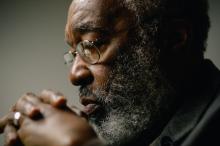
Vincent Harding died on Monday. One of my most important and dearest mentors is gone; there are countless other people across America — indeed, around the world — who are feeling the same as me.
But he really hasn’t gone; his memory and presence will continue on with us in a “cloud of witnesses,” which is the most important thing Vincent ever taught me.
At the Illiff School of Theology in Denver — the last place he worked and taught — Vincent’s title was “Professor of Religion and Social Transformation.” That was apt for someone who spent his life teaching and showing how faith was meant to transform the world, beginning with our own lives.
The first time I met Vincent Harding was at a talk he gave at Eastern Mennonite University titled something like “The People Around Martin Luther King Jr.” We expected to hear about all the famous civil right leaders from the movement. Instead, he spoke of those who had gone before, often many years before King, who had shaped, inspired, and sustained him like a family tree, a community of faith, or “a cloud of witnesses.”

Vincent Harding, a steadfast activist and ally in the struggle for freedom.

In one of the screen-saved memories cataloged from my childhood, I sit in the living room, cross-legged, chin supported by two fists, staring up at moving pictures flashing across a small screen. On network television — because we didn’t have cable back then — Moses (aka Charlton Heston) led thousands of his people out of captivity. They just walked out of Egypt — streams of them. And then they reached the Red Sea.
The Egyptian army was at their back, pressing in. In that moment, though they had left captivity, freedom was not a done deal. They still had to cross over. They were still at war. They still had to outrun an army trained to kill or enslave them again.
Heston — I mean Moses — stood straight-backed on the bank of the Red Sea. He lifted his staff and put it down at the edge of the water, and a miracle took place in living rooms across America. The sea parted. I’ll never forget that moment. This moment was crafted before the digital era — before Disney’s Prince of Egypt, even before Star Wars, and yet it was still awe-inspiring. My eyes focused like lasers watching whole families cross a sea on foot.
Moses led. He was not a king. He was a foster child. He was not from the dominant culture. He was from an enslaved people. He was not a great orator. He stuttered, but he led anyway. He said “Yes” to God’s call and leaned into it. And because he did, the people were set free.
On Feb. 8, tens of thousands of people gathered in the North Carolina capital city, Raleigh, for what organizers called the Moral March. It was a follow-up to last year’s “Moral Monday” movement that started in April 2013 when Rev. William Barber II, president of the North Carolina NAACP, and 16 others were arrested inside the North Carolina legislature for protesting sweeping voting restrictions proposed by the Republican-controlled state government.
I ALMOST DIDN’T go to the Moral March. I kept looking for excuses. There was all that work to be done for next week. I told my professor I’d miss Friday’s preaching class. I hoped she’d chide me and I’d feel guilty enough to stay. Instead she said, “Great, go with my blessing.” I told my tutor I’d miss tutorial. She said, “I’m so glad you’re going to the march.”
Why couldn’t I go to a normal graduate school where no one left their rooms? But instead I went to seminary, and to Union, of all places!
I said, God, I’m crazy to go. Mild laughter was the only response. I glared at my reflection in the dark window. The reflection raised her eyebrow and said, don’t be left behind now.
The little voice in the window stayed with me as I put an extra pair of thick socks in my bag. Don’t be left behind, reading books about other people’s marches and other people’s spiritual revelations and other people’s religions. This march is historic, my reflection informed me. Go and be part of history. This is your history.
This is your time.