Emily A. Dause is a public school teacher and a freelance writer. She writes in the tensions between despair and hope, doubt and faith, and isolation and relationship–with as much grace and audacity as she can muster. She contributes to Evangelicals for Social Action, Converge Magazine and Sojourners, among others. You can connect with her on facebook
(facebook.com/sliversofhope) or twitter (@EmilyADause). She blogs regularly at her website, sliversofhope.com.
Faith
7-21-2014

Jim Wallis
"In my life, I’ve gained the most wisdom from being in places where I wasn’t supposed to be and being with people I was never supposed to be with. Meeting and befriending people who Jesus would probably call “the least of these” has changed my life over and over again. I’ve learned more from so-called “outsiders” than I ever did from the insiders."
7-21-2014
Excerpted from Jim Wallis, The Uncommon Good (Grand Rapids: Brazos Press, a division of Baker Publishing Group, 2014). Used by permission.
7-21-2014
I think we all know that the issues we’re facing cannot be solved by Gamaliel alone. They cannot be solved by Catholic Charities alone. If they could have been solved by one institution—Sojourners, the National Council of La Raza, the NAACP—they would’ve been solved.
7-21-2014
In a recent article for TIME, Jim Wallis asks: Whatever Happened to the Common Good? Wallis notes:
The common good has origins in the beginnings of Christianity. An early church father, John Chrysostom (c. 347–407), once wrote: “This is the rule of most perfect Christianity, its most exact definition, its highest point, namely, the seeking of the common good . . . for nothing can so make a person an imitator of Christ as caring for his neighbors.
7-21-2014
As Christian Piatt, a feature writer for Sojourners, points out, “Jesus is always throwing us curveballs.” He writes that our behavior reminds him of an old saying. “God created us in God’s image, and ever since then, we’ve gone to great lengths to return that favor.”
7-18-2014
CHURCHPEOPLE have been urged by the General Synod to challenge political parties to "promote the common good" in the next General Election. The Church is also being encouraged to develop further its own efforts in this area.
7-18-2014
“Jesus did not come just to save our souls,” wrote New York Times best-selling author Jim Wallis in his new book, “On God’s Side.” “Jesus’ gospel of the kingdom is much more than the ‘atonement-only gospel,’ a message that was mostly about how I could get to heaven and not about a new order that had come to change the world and me with it,” says Wallis.
Sara Johnson 7-16-2014
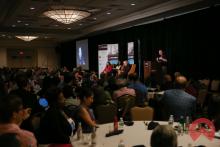
The Summit participants gather for the opening session. Brandon Hook/Sojourners
Editor’s Note: We at Sojourners thought it would be nice to share first-hand reflections on our inaugural annual conference, The Summit: World Change Through Faith & Justice, from participants. Our first post comes from Sara Johnson, who hails from Ennis, Mont. and is the founder of the Million Girl Army, a brand new non-profit launching this year focused on engaging middle school girls in the U.S. on gender justice advocacy. Sara is an emerging leader who was able to attend The Summit because of a sponsorship from one of our Change Maker donors. The donor covered all of Sara’s costs, from registration to travel and had a tremendous impact on Sara’s work, as she shares below.
Although nervous to be a founder of a non-profit that hasn’t officially launched yet attending a conference with heavy hitters in the non-profit world, within seconds of walking into the initial Summit gathering I was glad I came.
Tom Ehrich 7-15-2014

iluistrator and Visual Idiot/Shutterstock.com
If Christians stopped bickering about church, presenting sex as a first-order concern, telling other people how to lead their lives, and lending our name to minor-league politicians, what would we have to say?
We need to figure that out, because we are wearing out our welcome as tax-avoiding, sex-obsessed moral scolds and amateur politicians.
In fact, I think we are getting tired of ourselves. Who wants to devote life and loyalty to a religion that debates trifles and bullies the outsider?
So what would we say and do? No one thing, of course, because we are an extraordinarily diverse assembly of believers. But I think there are a few common words we would say.
Lisa Sharon Harper 7-14-2014

Irish countryside, Bildagentur Zoonar GmbH / Shutterstock.com
“If, as Christians, we believe that peace is rooted in Christ, then how we build that peace within us, in one way, is through the disciplines of solitude and silence; through spending time with God. Solitude is not necessarily extremely easy process, because it will bring to the fore all sorts of things that are within us. We will get to know ourselves in a fuller way. In solitude, where you know that God is with you, you can just be with God, and there is no need for a mask. Also, your humility might grow because you will see yourself as you really are — in a way that needs to be healed and transformed.”
Julie Polter 7-10-2014
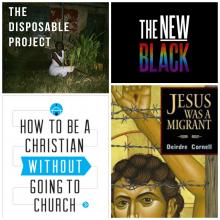
THROUGH THEIR EYES
In 2011, Raul Guerrero provided 100 Kodak disposable cameras and taught basic photography skills to nine young students in the Newlands area of Moshi, Tanzania. The Disposable Project book brings together their images of their community, with text by Guerrero. the-disposable-project.com
JOURNEYING
“Migration has been, for centuries, not only a source of controversy but a source of blessing,” Deirdre Cornell writes in Jesus Was a Migrant. Inspired by ministering among immigrants in different settings, this is a beautifully written set of deeply humanizing reflections on the immigrant experience and Christian spirituality. Orbis Books
Lisa Sharon Harper 7-09-2014
(Elinalee / Shutterstock)
LOVE. THAT'S WHAT moves mountains. That’s what the inimitable Dr. Maya Angelou shared with Oprah Winfrey in an interview a year before Angelou’s passing on May 28, 2014, at the age of 86.
In the days following her death, tributes blanketed the television and internet. Perhaps the greatest came on Sunday evening, June 1, as Oprah Winfrey aired a series of exclusive interviews with Dr. Angelou. Thus, the prophet spoke from the grave and this is what she said: “Love moves mountains.”
Jesus said faith moves mountains—faith the size of a mustard seed (Matthew 17:20). Did Dr. Maya Angelou dare to contradict Jesus? The poet/prophet says love. Jesus said faith. Which is it? Perhaps both.
People of faith know—they have witnessed it. Faith does move mountains. But they also know this: Faith’s power can lay dormant until it’s set ablaze by love. Perhaps only love has the power to fortify faith enough to make the earth quake.
Anger can shake earth, but it cannot move it. Rage can break earth, but it cannot move it. What if faith the size of a mustard seed requires the force of love to move the mountain? If that is the case, we are left with one haunting question: Why have we seen so few mountains move in our lifetime?
Andrew Wilkes 7-09-2014
FAITH-ROOTED Organizing: Mobilizing the Church in Service to the World outlines a theological cartography of social change. In this critical intervention, Alexia Salvatierra and Peter Heltzel reimagine—and as a necessary consequence, rechart—the landscape of vision, action, and strategic planning needed for social change.
Full disclosure: I have attended several trainings conducted by the co-authors. Indeed, the dual authorship of the text is a principal strength. Faith-Rooted Organizing blends the voice of an evangelical-activist theologian in Heltzel with the homespun profundity of a seasoned pastor and campaign organizer in Salvatierra. The authors delight readers with complementary writing styles: Heltzel speaks through theological propositions, interpolated intermittently with jazz references and theological punch lines; Salvatierra communicates through proverbs, organizing anecdotes, poignant biblical passages, and narrative side notes.
The result is a well-argued and accessible text that should resonate from the seminary to the sanctuary. Their driving thesis is that faith communities, especially Christian ones, should organize for social change in a way that is rooted and guided by the stories, symbols, sayings, and scriptures of our faith. Faith-Rooted Organizing functions as an instruction manual on effective advocacy while providing a theological rationale and vocabulary for a vocation marked by tremendous victories and colossal failures, breakthrough partnerships and fragmented coalitions, glimpses of beloved community and portraits of democracy stillborn.
Sarah Pulliam Bailey 7-03-2014
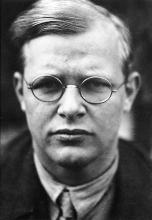
Dietrich Bonhoeffer lived from 1906 to 1945. RNS photo courtesy Joshua Zajdman, Random House
A new biography is raising questions about the life and relationships of Dietrich Bonhoeffer, an anti-Nazi dissident whose theological writings remain widely influential among Christians.
Both left-leaning and right-leaning Christians herald the life and writings of Bonhoeffer, who was hanged for his involvement in the unsuccessful plot to assassinate Adolf Hitler in 1944. Bonhoeffer was engaged to a woman at the time of his execution, observing that he had lived a full life even though he would die a virgin.
The new biography, Strange Glory: A Life of Dietrich Bonhoeffer, from University of Virginia religious studies professor Charles Marsh, implies that Bonhoeffer may have had a same-sex attraction to his student, friend and later biographer Eberhard Bethge.
“There will be blood among American evangelicals over Mr. Marsh’s claim,” Christian Wiman, who teaches at the Yale Institute of Sacred Music, wrote in a review for The Wall Street Journal. But there’s been no bloodbath yet, at least considering a few initial reviews.
7-03-2014
The good news is that this is a fictional scenario. Most pastors these days are at least a bit wiser both theologically and practically in how they deal with someone facing domestic violence. That’s one result from a groundbreaking survey released last week by Sojourners, a national Christian social justice organization.
7-03-2014
On a brighter side, 80% of faith leaders state that they would take the right steps in trying to reduce the violence if they were given the right training and resources to properly serve their congregations. “This is a conversation the church needs to be having but isn’t,” said Jim Wallis, president and founder of faith and social justice advocacy group Sojourners. “We cannot remain silent when our sisters and brothers live under the threat of violence in their homes and communities.”
7-03-2014
Those are among the findings of a new telephone survey of 1,000 senior pastors of Protestant churches from LifeWay Research. The survey was co-sponsored by two Christian nonprofits: Washington, D.C.-based Sojourners and Maryland-based IMA World Health.
7-02-2014
The research co-sponsored by the seat of Sojourners, a national Christian organization in Washington, DC, points out that 29% of pastors do not address the issue, believe that domestic violence is not a problem concerning the church.
Christian Piatt 6-30-2014

via Wild Goose on Facebook
We’re headed home from Wild Goose Festival, a gathering of artists, activists, musicians, and theologians, in Hot Springs, N.C. It was hot, rainy, and messy. My suitcase smells like my fifth grade gym locker.
I can’t wait to go back next year.
The speakers are remarkable; many of them are walking the talk they’re offering, which is an unfortunately rare phenomenon. The music is fresh and exciting, the art is created before your eyes, and there is an energy of hopeful expectation that renews your soul, flushing out the broken-down-ness of daily life.
But the most important part of the whole four-day event lies in the unexpected moments. Sometimes I would walk along the main dirt road in the middle of the grounds, lined with tables, tents, and makeshift gathering spaces, until I saw something interesting going on and just joined in.
In one moment you’re debating the theological implications of the American food-industrial complex. Half an hour later, you’re laughing with new friends in the beer tent. And then, just when the sun sets and you’re sure you lack the fortitude to go one any more, the music on the main stage cranks up and the very earth beneath you vibrates.