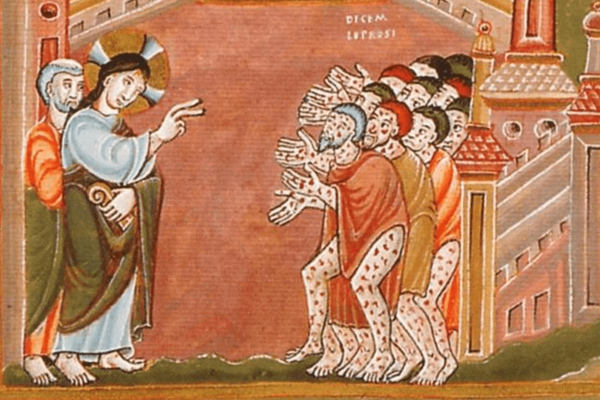
One day, after washing the feet and hands of men and women with leprosy, Angela of Foligno, the 13th-century saint and mystic, ate a leperous sore. “We drank the very water with which we had washed him,” she writes. “And the drink was so sweet that, all the way home, we tasted its sweetness and it was as if we had received Holy Communion. As a small scale of the leper’s sores was stuck in my throat, I tried to swallow it. My conscience would not let me spit it out, just as if I had received Holy Communion.”
On the one hand, it’s a radical testament: that all bodies are holy, and those most marginalized and considered “unclean” are Christ’s truest flesh. But on the other hand—what was the man with leprosy thinking in that moment as he watched Angela do this? What was his story, his life, his human experience that Angela saw as a gateway to God?
Read the Full Article