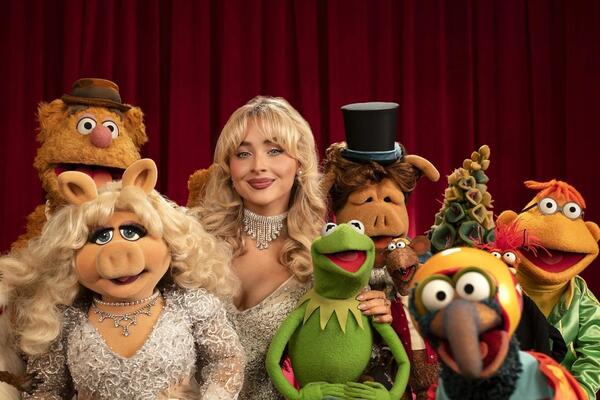
It’s 2026, the world is on fire, and against all odds, the Muppets are back on television.
In the first week of February, Disney released a special episode of The Muppet Show, serving as a backdoor pilot to a potential revival, with Sabrina Carpenter as a special guest and the Muppets back to their old antics. It’s been 45 years since The Muppet Show was officially on television, but despite all the time that has passed, something about it feels just as resonant today as it did decades ago. And part of that resonance, I think, comes from the Muppets’ affectionate relationship with chaos.
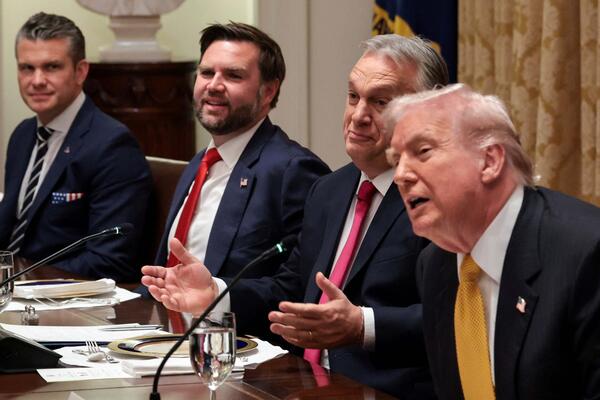
If there’s one word I’d use to describe the U.S. right now, politically and culturally, it would be chaotic. Every day there’s a new headline or story that only adds to that feeling of frenzied mayhem: One morning, it’s that we’ve kidnapped and detained the dictator of a foreign country; the next, it’s that masked agents are roaming the streets and disappearing people in unmarked vans. This chaos has always been part of President Donald Trump’s strategy, something Steve Bannon once described as “muzzle velocity”—overwhelming ordinary people with so much change that they don’t know where to focus their resistance. And that’s fascism: the repeated assurance that utter havoc is somehow order, and vengeful retribution is somehow justice.
It might seem like a stretch—or even a disrespectful farce—to suggest that a slapstick variety show about singing puppets could speak into this frequently horrific moment. But when I watched the revival special last week, it was the chaos of the Muppets that felt so resonant with the reality of the world. Better still, the portrait of a wacky and wonderful community of oddballs coming together to make something beautiful and joyful—even in the midst of their frenzied fumbles—is a picture of what our human community can be, despite our faults, too.
READ: A Forgotten Utopia Comes to Life in ‘The Testament of Ann Lee’
It’s a little ironic that chaos feels so rampant in our Republican-led country right now because conservatives have long been defined—in their words, at least—by their value of “law and order” and belief that order must be enforced to maintain a functioning country. As part of this logic, Republican policies often empower the military and law enforcement, place greater emphasis on punishing wrongdoing through incarceration or even capital punishment, and tend toward catastrophizing about the spread of ideas that seem to break the “traditional” social order—from queer experience to the coexistence of other religions and cultures in the same community. In all of it, there is an assumption that what they view as chaos can be “stamped out” with forceful (and often violent) action.
Christians, too, have been known to worship what we view as order. Christian thought has long emphasized a philosophical dualism between order and chaos, with order portrayed as one of God’s highest values and chaos as something distinctly intertwined with sin. It’s not hard to see why many might find this a fairly constant idea in the Bible: Whether it’s God bringing a beautifully formed creation out of chaotic waters in Genesis or Jesus calming the chaos of a storm at sea in the gospels, God does seem perpetually interested in giving us something better than what is merely “formless and void.” If anything, the desperate desire for all the chaos to come to an end—like a storm calmed and settled—feels more potent now than ever.
But what happens when we automatically assume our ideas of order must be God’s ideas? What happens when the pursuit of our assumed order becomes so synonymous with our political or religious identity that we try to enforce “order” at the expense of human dignity and freedom? As we’ve seen in recent months and throughout history, this is the paradox at the core of fascism: Strongman attempts to eliminate chaos and achieve human order through brute force often merely create greater and greater chaos, prompting harsher and more violent force.
Funnily enough, the concepts of order and chaos have always been part of the Muppets. Some people have even written tongue-in-cheek theories of “Chaos Muppets” and “Order Muppets”—which, once you see it, you can’t unsee it. Kermit, Scooter, Sam Eagle, and Rowlf are all obviously Order Muppets. Animal, Gonzo, Miss Piggy, and the Swedish Chef are all clearly Chaos Muppets. And the interaction of these two poles of personality is at the heart of The Muppet Show, causing frequent stress for our everyman (everyfrog?) manager, Kermit, and others who fervently wish the show would just go the way it’s “supposed to go.”
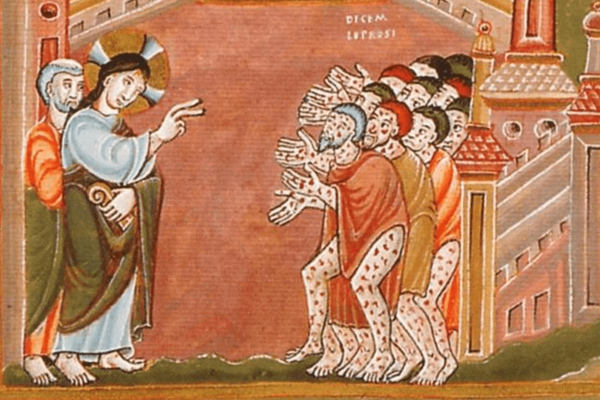
The religious leaders in the time of Jesus, too, had a distinct vision of the way society was “supposed to be” ordered and structured, and the elaborate “show” they were putting on for an audience. It’s notable, then, that much of Christ’s ministry involved stirring up that established run of show: inviting disparate and seedy characters to sit at the same table, breaking legalistic rules that hindered human flourishing, flipping money-changing tables seen as part of the status quo, and even creating a sort of holy chaos.
God, after all, may indeed be a God of heavenly order, but sometimes, when human order threatens life, God ushers in a heavenly chaos. The God we passively characterize as “enforcing order” above all else was also the God who scattered our languages from one to many in the story of the Tower of Babel—a fairly chaotic act, but one that speaks volumes about God’s desire for distinction and diversity and eventual harmony despite difference. It is this task to which we are called.
The Muppets have taught me that the proper reaction to chaos is not hardening, fear, or oppressive enforcement of some kind of perceived normal.
Chaos is often unpleasant, and it certainly isn’t always from God. Far be it from me to suggest that the chaos stirred up by the Trump presidency is somehow holy. But maybe in the face of all chaos, our response should not be the desperate pursuit of more order through greater force—the very mentality that bred the chaos in the first place—but instead an attempt to humbly befriend the reality of the world and meet people in it with joy and good spirits—and some subversive table-flipping.
One of my favorite little beats in every outing of The Muppet Show is when Kermit appears at the end to close things out and thank the special guest. Without fail, it is always a moment when it looks as though, despite their shortcomings and silliness, this big ol’ dysfunctional family of chickens, rats, pigs, and frogs has pulled off something special yet again by the seat of their pants, and Kermit seems humbly and gratefully aware of it.
And indeed, what would The Muppet Show even be if everything were to go exactly according to plan? What we love about these characters is not that they do everything perfectly, or even very well, but that they persist through the absurdity and clash of differences enough to take a bow—and that despite every jeer and ridicule from the theater critics Statler and Waldorf, they somehow find delight and laughter. The Muppets have befriended the chaos, and we have benefited.
We do live in a chaotic moment, and much of our chaos is not as endearing or wholesome as Gonzo the Great launching himself out of a cannon. But the Muppets have taught me that the proper reaction to chaos is not hardening, fear, or oppressive enforcement of some kind of perceived normal. The only thing that can truly redeem chaos is joy, relationship, and a resolve that the show—which is to say, the creation of beautiful things together—must go on.
When asked to describe The Muppet Show creator Jim Henson’s greatest gift, director Ron Howard said, “His ability to be satirical but not cynical. He was able to, with great affection, say, ‘Look how silly we can all be. Look how crazy the world can be.’ And yet not turn that into something bleak, but to recognize joy amid the chaos.”
May we recognize joy amid the chaos, too.

Georgia Coley is a documentary filmmaker and culture writer living in Nashville. She writes about the intersection of trans experience and theology at her Substack, Georgia In Her Mind.
Did this article have an impact on you? Tell us how! Whether you’re moved to take action, have a question, or want to share a comment (good or bad), we value your feedback!