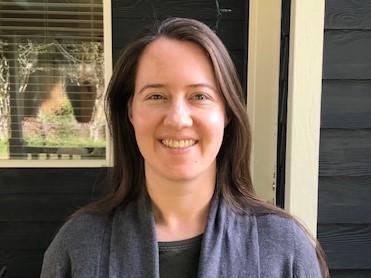
Liz Cooledge Jenkins is the Seattle-based author of Nice Churchy Patriarchy and the forthcoming Maybe We Could Pray Again (Broadleaf, Spring 2027). She blogs at growingintokinship.substack.com.
Posts By This Author
We Can Find Meaning in Pain Without Resorting to Platitudes
Darcey Steinke’s This Is the Door shows us how.
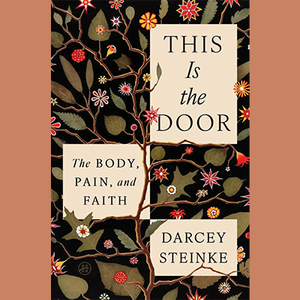
AS SOMEONE WHO has experienced life-altering, faith-shaking physical pain, when I see a book with a subtitle like The Body, Pain, and Faith, I find myself automatically asking: Can I trust this author? Do they speak of pain from personal experience or as a mere intellectual exercise? Five-time novelist Darcey Steinke answers this question right away. In the foreword to her new nonfiction book This Is the Door, Steinke details her experience of several months of back pain so intense that it caused her to “walk a tight-rope between raging against [her] pain and trying to search for any scraps of meaning that might be left in its wreckage.” Those of us who have endured pain like this can likely relate. As the book continues, Steinke explores her own pain, the pains of her family members, the pains of various historical artists and thinkers, and the pains of people she interviewed who suffer in different ways. Is there meaning to be found?
When Oppressor and Oppressed Pray to the Same God
Praying doesn’t mean God is on our side.
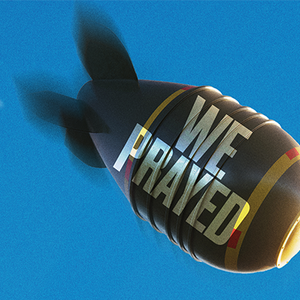
HAVE YOU PRAYED about this?
Martin Luther King Jr. and his compatriots in the Civil Rights Movement could emphatically say yes. They prayed before boycotts, before marches, and covered every nonviolent, disruptive, anti-racist action they took in prayer.
Pete Hegseth could also say yes. He prayed at the Pentagon in April as the U.S. initiated an inhumane and nonsensical war in Iran. Hegseth called for God’s blessing on the U.S. military action, inviting God to move with vengeance and anger. (Oddly, his prayer closely followed a scene in the film Pulp Fiction.)
A New Book Shows Vulnerability’s Risks and Rewards
‘Revealing’ offers wisdom for our relational “disclosure dilemmas.”
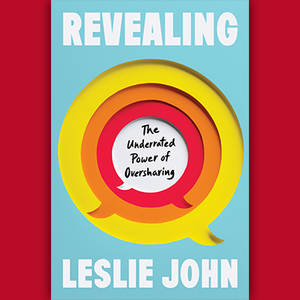
WE OFTEN WEIGH the cost of speaking up, considering the potential pitfalls of revealing our real thoughts or feelings when we think doing so carries risk. But do we consider carefully enough the cost of staying silent? And do we factor in the potential benefits of revealing our true selves?
Is It Possible Not To Worry?
In Nervous Systems, Sara Billups shows how God meets us wherever anxiety dwells.
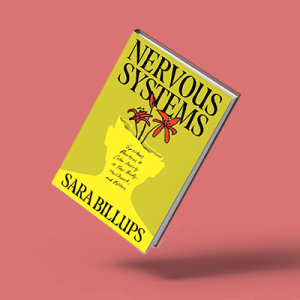
IF YOU'VE SPENT some time in church, you’ve likely heard a sermon on Jesus’ instruction, “Do not worry.” But how do we actually do that? Can we actually do that? In Nervous Systems, author Sara Billups grapples with “the dissonance between the head reading ‘do not worry’ and the heart worrying.” And while Billups seeks to align her head and heart, she does not claim to have found a spirituality that magically dispels anxiety. “My anxiety did not dissipate,” she writes. “Instead, God met me repeatedly in its very presence.”
With a mix of memoir and critical reflection, Billups explores how God meets us wherever anxiety dwells—in the human body, the church body, and the body politic. Billups, who has a doctor of ministry in the “sacred art of writing,” relies on both research and personal experience to guide her. She weaves in her exploration of Ignatian spiritual practices as a tangible way to seek God’s steadfast presence in anxious times. Reflecting with candor on her anxieties around health, aging parents, motherhood, church, and politics, she captures the nuance that Christian discussions of anxiety—the ones that might boil down to “just pray more” or “trust God more”—often miss.
I appreciate Billups’ emphasis on being “faithful and present” in our lives, relationships, faith communities, and world. For her, fidelity and stability are spiritual practices. In a time when “our anxiety manifests acutely in political polarization,” as Billups writes, we need a spirituality that grounds us. We need a faith that reduces our defensiveness and pushes us to engage with diverse communities out of a desire to love, rather than a need to control. “Political anxiety is stoked,” Billups writes, “when we are not well-formed and spiritually mature.”
Missionary Kids Know the Holes In American Evangelicalism
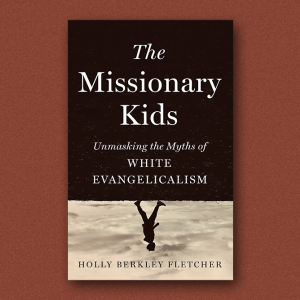
When Holly Berkley Fletcher was a child, she once heard her missionary parents “literally introduced as ‘Super Christians.’” In a white American evangelical culture that idolizes missionaries in this way, how do we speak honestly about the harm missions too often leave in their wake? In Fletcher’s new book The Missionary Kids: Unmasking the Myths of White Evangelicalism (Broadleaf Books), missionaries’ grown children offer a complex and fascinating perspective.
Fletcher—a historian, former CIA analyst, and missionary kid (MK) herself—draws on extensive research, her own experience as an MK, and surveys and interviews with fellow MKs to present a wide-ranging look at MKs’ experiences. Without losing sight of the noble intentions of most missionaries and the good work that many of them do, she pulls back the curtain on the perceived saintliness of missionaries, uncovering an alarming multitude of systemic harms. In doing so, she exposes key myths at the core of white American evangelicalism itself.
Slowing Down for Grief
In ‘Even After Everything,’ Stephanie Duncan Smith shares her story of loss and love with unflinching honesty.
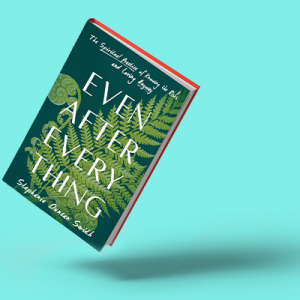
Even After Everything: The Spiritual Practice of Knowing the Risks and Loving Anyway, by Stephanie Duncan Smith / Convergent
IF YOU WROTE down your past year’s most significant personal joys and losses on a timeline, how might they line up with the liturgical calendar — Advent, Christmas, Epiphany, Lent, Holy Week, Eastertide, and Ordinary Time? Placing these two calendars side by side, what might you find? Stephanie Duncan Smith digs into these questions in her memoir Even After Everything. For Duncan Smith — and likely for most of us — “Sometimes our personal moments converge with these natural and sacred seasons in profound, meaning-rich ways. And sometimes they clash with unbearable disparity.”
Duncan Smith shares her own story of loss and love with unflinching honesty, even and especially where it seems to clash with the Christian story. The places of dissonance are, for her, both a “dizzying problem” and a “place of divine encounter.” She invites us to dive into the dissonance with her as she wrestles out a sort of reconciliation — a renewed understanding of the Christian story that makes room, so much room, for every human grief. “The promise has never been smooth nor safe passage,” Duncan Smith writes. “The divine promise is presence.”
What Do We Want? Justice! What Have We Got? Burnout!
Two authors offer practical ways to advocate for change without depleting our souls in the process.
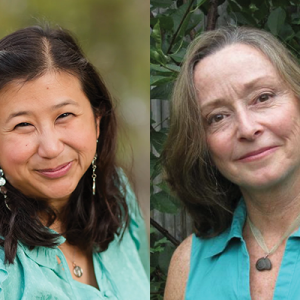
Dorcas Cheng-Tozun and Trish O'Kane
DORCAS CHENG-TOZUN, author of Social Justice for the Sensitive Soul (Broadleaf), wanted to be an “unceasing voice” for social justice. “And while I was busy saving the world,” she writes, “I would also be the kind of person who’d happily sacrifice anything for a good cause.” But 10 months after Cheng-Tozun moved from the U.S. to China to set up an operations office for her spouse’s solar business, thrilled at the possibility of providing affordable electricity to billions of people, she experienced the “worst and longest panic attack” of her life. For more than a year, she could do “little more than sleep and cry and journal.” A crucial, difficult question arose: “Why can’t I handle what everyone else seems to be managing perfectly well?”
For Trish O’Kane, author of Birding to Change the World (Ecco), the breaking point was Hurricane Katrina, which destroyed her New Orleans home and neighborhood. “After a disaster,” O’Kane reflects, “you just can’t do as much. Nor should you. You need time to think, to ponder ... I needed a great slowing down.” She took up knitting, spent long hours outdoors on the ground “watching the clouds change shape and bumblebees loading their back legs with pollen and the yard birds going about their business.
Like Cheng-Tozun’s year of sleeping, crying, and journaling, these months surfaced life-changing questions for O’Kane. “I could feel my question changing,” O’Kane writes, “from What should I do? to How should I be?”
In their respective books, Cheng-Tozun and O’Kane write from the other side of activist burnout — something Cheng-Tozun experienced after working for multiple social justice organizations, and O’Kane after working in human rights journalism in conflict areas, both for many years. Both writers ponder how to change, heal, and move forward. Birdwatching was the gateway for O’Kane, while Cheng-Tozun found herself reflecting on sensitivity, introversion, and the many ways people are wired with different gifts to offer. They have different backgrounds and stories — Cheng-Tozun is now a writer and consultant who most recently worked for a Christian nonprofit that equips BIPOC contemplative activists; O’Kane is an environmental educator who created the “Birding to Change the World” program at University of Wisconsin-Madison — but both authors offer a similar invitation to those who yearn to make a difference: Learn to embody gentler, more sustainable ways of doing so.
Churches Can Utilize Volunteers Without Exploiting Free Labor
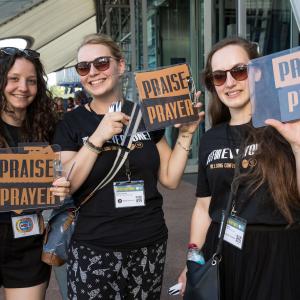
Hillsong conference in London. Jeff Gilbert / Alamy
The Secrets of Hillsong, a docuseries streaming on Hulu, traverses some wide-ranging — and alarming — ground, detailing the international megachurch’s history of sexual assault allegations, affairs, child molestation, and cover-ups. In the midst of all this, it might be easy to gloss over something a little less flashy: what one might call, to put it mildly, an unhealthy volunteer culture.
When It Comes to the Climate Crisis, What Comes After Lament?

Photo by Kelly Sikkema on Unsplash
Elizabeth Weinberg draws connections between things many of us haven’t thought to link together. In her 2022 book, Unsettling: Surviving Extinction Together, a whale’s excrement is not just feces but the nourishment that fuels whole ecosystems.
Who Are Christians Called To Be in a Post-Roe World?
While many lawmakers deny the intricacies of reproductive health, most people in the U.S. hold more nuanced views.

Illustration by Alex William
THE REPRODUCTIVE HEALTH landscape in the United States has changed drastically in the last year, and it continues to change. But some things remain the same. One consistent aspect of our ongoing national conversation is that many of those who support the greatest restrictions, including on access to abortion and other elements of reproductive health, claim Christian faith as a primary motivator.
I spent much of my young adulthood in evangelical contexts where people had strong opinions about faith and reproductive rights. Most evangelicals I knew believed that life begins at conception and thus abortion should be broadly prohibited by the law as akin to murder. In these spaces, the Bible was considered the main — sometimes the only — source of authority when it came to navigating ethical questions. I’ve come to realize, though, that the Bible hardly speaks anything straightforward into the intensely personal realm of when human life begins and what decisions should be made in complicated, real-world situations.
I wonder, then: What does it look like to wade through this murky territory as people of faith? Who are Christians called to be in a post-Roe world?
Healing Grounds for the Earth — and for Christianity
If we're serious about fighting climate change by rebuilding soil carbon, we have to address the colonialist systems in which we live.
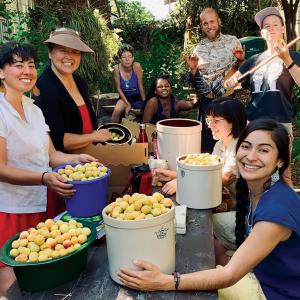
From Canticle Farm
WHEN I SPEAK on the phone with Anne Symens-Bucher, she tells me about the end of St. Francis of Assisi’s life. Francis “was losing sight, suffering from the pain of the stigmata, and on the margins of the community that had grown up to follow him,” Symens-Bucher explains. “This is the moment he writes the ‘Canticle of Creation.’” Symens-Bucher is one of the founders of Canticle Farm in Oakland, Calif., a community of eight households where the fences are taken down, giving access to a large garden in the middle. Canticle Farm is made up of people who, in Symens-Bucher’s words, are “experimenting at the intersections of faith-based, social justice-based, and Earth-based nonviolent activism.” In his canticle, after which this community is named, Francis praises God from a deep sense of kinship with all creation. He sings of “brother fire,” “sister water,” “brother wind,” “mother earth.” Birthed as Francis approaches his own death, it is a vivid, sober-minded song of the interconnectedness of all life.
Western colonialist people have often failed — or refused — to recognize this interconnectedness. Earth, animals, plants, and people suffer from our (and I say “our” because I speak as a white U.S. citizen) denial of this oneness. Soils are depleted, waters and air are poisoned, and sea levels rise and temperatures warm, threatening the most vulnerable among us immediately, and all of us eventually. Perhaps in this time of environmental crisis, we might find a “canticle” moment, one that renews our kinship with creation.
Liz Carlisle explores these questions in Healing Grounds: Climate, Justice, and the Deep Roots of Regenerative Farming. As an environmental scientist looking for healthy soil, Carlisle interviews experts who are Black, Indigenous, and people of color — scientists and farmers engaged in work ranging from bringing buffalo back to the prairie ecosystems of Montana to growing mushrooms on ancestral forest land in North Carolina. Through the process, she realizes that if we’re serious about fighting climate change by rebuilding soil carbon, we’re going to have to address the very roots of the colonialist systems in which we live.
Praying the Imprecatory Psalms Is an Act of Nonviolence

Blue broken plate on a blue background. Photo credit: Natalia Kokhanova / Alamy. Image via Reuters.
As Hebrew Bible scholar Walter Brueggemann has reflected, the imprecatory psalms put words to our thirst for vengeance. In praying these psalms, we process our rage and give our violent impulses over to God. “O God, break the teeth in their mouths,” one psalmist prays; “let them be like the snail that dissolves into slime” (Psalm 58:6, 8). I’m all for this kind of prayer. I’m all for praying the entire range of the psalms — even the ones that sometimes make us uncomfortable or aren’t necessarily welcome in church. And if there is any occasion for an imprecatory psalm, certainly Russia’s invasion of Ukraine, in all of its brutality and sheer horror, is one of those occasions.
Extraordinary Courage, Extraordinary Kindness
“Boaz goes out of his way, above and beyond what might have been normal or expected, to use his relative wealth, and security, and power to affirm Ruth’s dignity and value. He did this in the midst of a world that, not unlike ours today, did not always value people who were poor, or immigrants, or of a minority race, or ethnicity, or women.”