
Vincent W. Lloyd, author of Black Dignity: The Struggle Against Domination, is associate professor of theology and religious studies at Villanova University. He lives in Philadelphia.
Posts By This Author
Dignity, Divinity, and Pete Hegseth’s Spectacle of Death

In her 2023 book Doppelganger: A Trip into the Mirror World, Naomi Klein argues that the process of mirroring explains an essential dimension of today’s politics and culture. Instead of a clean divide between good and evil, just and unjust, where we can confidently position ourselves on the side of liberators, we find ourselves in a hall of mirrors, puzzled about which way to turn. Racists pursue their policy ends in the name of civil rights, quoting Martin Luther King Jr. Social media and video hosting services like Rumble, Gettr, and Truth Social replicate YouTube and Facebook, responding to “systemic bias” in the mainstream media and supposedly championing free speech. In its treatment of Palestinians, the state of Israel reflects the persecution and genocide once faced by Jews. Donald Trump’s first go-to insults are the ones that are most obviously true of himself.
Defense Secretary Pete Hegseth’s short-lived plan to livestream the execution of Nidal Hasan was a product of our age of mirroring. While Hegseth was an officer in the U.S. Army, al-Qaida and Islamic State militants performed executions in public and circulated them online, shocking the world. Now, Hegseth shocks the world by recommending a similar practice, but ostensibly performed by the good guys, in the service of justice. While livestreamed execution might seem rather close to pornography—encouraging viewers to derive pleasure from dehumanizing another, and right-wing Christians find pornography deeply vexing as a political and personal matter—the world of mirrors we inhabit distracts us from noticing those similarities. That is, from making moral distinctions and judgments based on close attention to the particulars of a case and to our principles.
This Nation’s Violence Is No Longer Private
The only time I heard my father speak Spanish was in prayer. Before dinner, he thanked God for the food we received and for our presence to each other in the language of his home country. He still does.
We lived in Minnesota from 1993 to 1999, and on wintry nights, when the wind chill might dip so low that Fahrenheit equaled Celsius, our meal was blessed with words that seemed out of place and yet essential to who we were—as prayer should.
At the time, the infrastructure of immigrant communities in Minnesota was only beginning to develop. The number of families from Southeast Asia and Somalia was just starting to increase; it was still far from the critical mass that would make possible civic and cultural organizations, restaurants, and stores, let alone political power. In my school, I recall no other families from Latin America. The local Mexican restaurant was Taco John’s.
Black Lives Matter Must Lead to Black Lives Thriving
To affirm the value of Black life requires the possibility for Black life beyond survival: life that is rich and creative, flourishing.
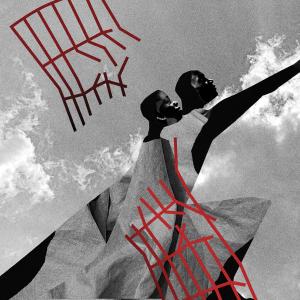
Illustration by Trevor Davis
BLACK LIVES MATTER. In the years since 17-year-old Trayvon Martin was murdered in his hoodie carrying Skittles, we have learned why this phrase is not simply a consequence of all lives mattering. The world systematically devalues Black life, turns Black life into death-bound life, and it is our task — as justice seekers and as Christians — to embrace Black resurrection.
Politically that makes sense, but what does it mean theologically? Surely Christianity proclaims that all might be saved, independent of skin color. A half-century ago, James Cone and fellow Black theologians embraced this theological challenge head-on. They charged that the possibility of life after death for any individual is inextricably linked to the struggle against the death-dealing forces of white supremacy. How might we fill out this insight today, with Black Power slogans themselves finding new life and new form as activists embrace Black joy, Black excellence, Black rage, Black love, and Black dignity?
In a definition that has rapidly gained traction in activist circles, Black prison abolitionist and scholar Ruth Wilson Gilmore defines racism as “the state-sanctioned or extralegal production and exploitation of group-differentiated vulnerability to premature death.” Black studies scholars have refined and deepened this claim, arguing that anti-Black racism names a system of laws, institutions, feelings, and even forms of seeing and thinking that make Black life particularly vulnerable to premature death. Slavery may have ended in the 19th century, but many of the structures and habits that made slavery possible, that made it plausible for Black human beings to be treated as less than human, persist, and those structures and habits function by making Black life precarious. One false move, and the police officer or prison guard or neighbor or privileged “Karen” may invoke the violent power of whiteness to put an early end to Black life.