
I was 20 years old before I told anyone else in my life that I had gender dysphoria. Or, as I said back then, “all these gender feelings.”
It wasn’t that I didn’t want to tell anyone. Throughout many different seasons of my childhood and teen years, I’d tried to write letters and speeches to tell my parents and friends what I’d been experiencing. From what I’d absorbed in media, though, “coming out” was a dramatic proclamation. My understanding was that it meant you were confidently displaying your “true self” to the world—being “brave,” letting your flag fly, making a grand statement that said, “I’m here, this is me, and you’ve gotta deal with it.” To be sure, many people do not think about coming out this way—and in the years since that time, I’ve been moved by countless examples of coming out that occurred in gentler, more intimate ways. But that was what I had internalized then.
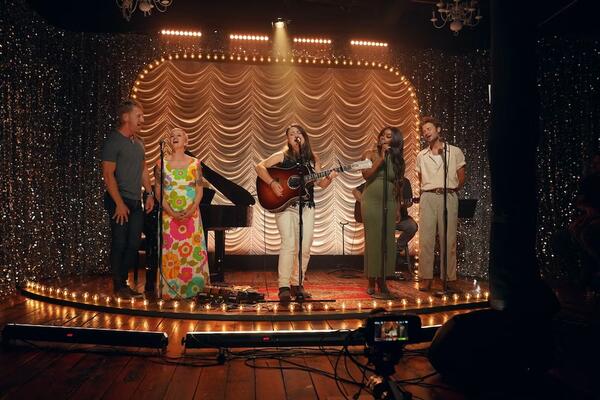
We’ve seen it before: the tale of a Christian disillusioned with evangelicalism and its culture of exclusion. What we are still learning, however, is the assuredness with which Christian communities will shun one of their own—even one of their most skilled artists.
Jason Ikeler’s new documentary Safe for the Whole Family: How to Make a Christian Superstar, which premiered Sept. 27 at the Nashville Film Festival, offers history and commentary on Contemporary Christian Music from authors and scholars including Leah Payne, Jane Hong, and Kristin Kobes du Mez. The film focuses on artists Jennifer Knapp, Nikki Leonti, and Michael Passons as they revisit their rise in the Christian music industry—and the blows dealt to them on their way out of evangelical spaces.
Toward the end of Paul’s first letter to the Corinthians, he notes that his young protégé Timothy will be visiting soon and goes out of his way to tell the church to be nice to him. “When Timothy comes, see that you put him at ease among you, for he is doing the work of the Lord” (16:10).

“You need to wait for people to catch up,” the pastor said.
It was 2015, and I was visiting the church offices to talk with this pastor about changing parts of the liturgy to make it more inclusive for genderqueer parishioners in this open and affirming congregation. The well-meaning pastor’s response hung heavy in the church office. Over the first few years of my coming out as transgender in a Christian church, pastoral staff and close friends tried to be the community I needed them to be. But I needed more than this cisgender community was able to offer. Months later, the same pastor and I cried together as we concluded that I would find the all-encompassing, life-giving support I needed elsewhere.
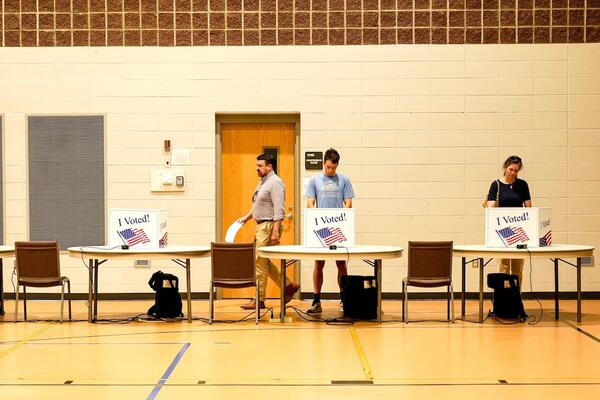
Faith-based organizers across the U.S. are mobilizing with increasing fervor to protect the integrity of the 2026 midterm elections.
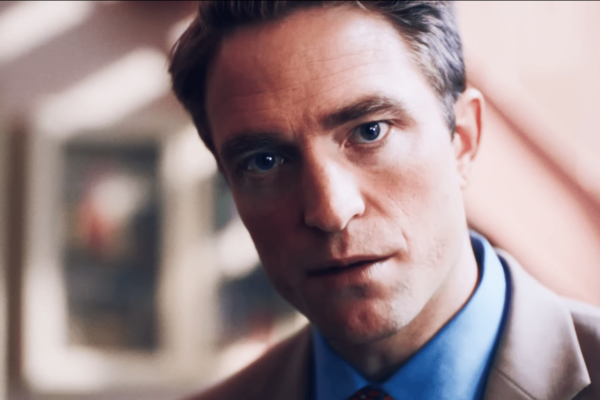
“What would have happened if I wasn’t here?” The question oozes out of Robert Pattinson’s Chris Hansen as a rhetorical killshot. Primetime, Lance Oppenheim’s movie about the rise and fall of Dateline NBC’s 2000s ratings juggernaut To Catch a Predator, depicts Hansen as savoring every syllable. Their “predator”—a creep lured onto a TV set disguised as a suburban home by a grownup posing as a teen in online chatrooms—is stunned by Hansen’s sudden appearance, shrinking under his righteous inquisition, and finally left to ponder his inhumanity as law enforcement swarms.
This was the conceit of To Catch a Predator, the short-lived but enormously popular NBC show that partnered with an anti-child exploitation group called Perverted Justice to ensnare would-be pedophiles into online chatting, sexting, and, ultimately, visiting adults posing as underage teens. Once inside, the faux-teen “decoy” excuses themself before Hansen appears, armed with withering putdowns and transcripts of the lurid text exchanges. “I’m Chris Hansen with Dateline NBC,” he announces. “You see how this looks, right?”
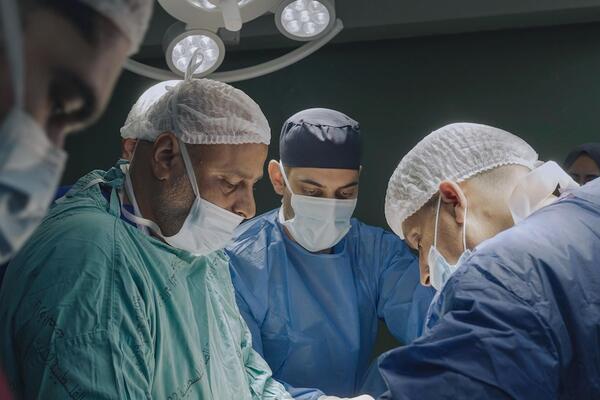
Director Poh Si Teng’s damning and incisive documentary, American Doctor, follows three American physicians and the medical work they do for those suffering in Gaza.

Living in an age where rage is a currency, where anything and everything is a financial stressor, and where our political machine’s main function is to sow division, clinging to positive platitudes like “Things will get better!” or “Just hold out hope!” can feel like an expression of wilful ignorance, or at best, stupid naivety. It’s hard, nearly impossible, to remain hopeful in such uncertain times; a feeling encapsulated in the fifth album from Joy Oladokun (they/she), fittingly titled Hope is a Heavy Thing.
The Arizona-born singer-songwriter’s career has burgeoned from her pensive lyricism, a marriage of the personal and political: their Nigerian-Christian upbringing as a queer person in their 2019 single “Sunday”; the unique pain of the African-American experience in the piano-led pandemic anthem “Who Do I Turn To?”; or her dependence on self-medication in “Drugs.”
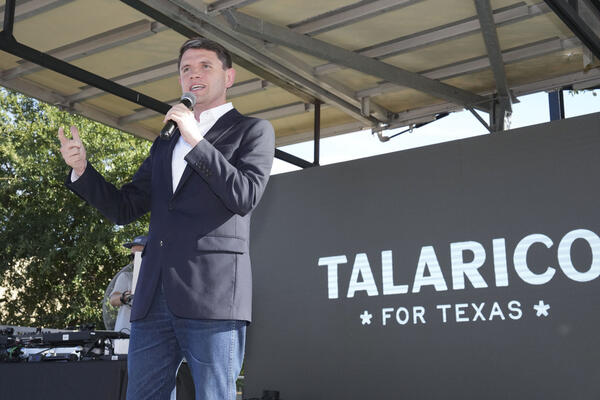
In the months leading up to the U.S. midterm elections and in the shadow of today’s headline-dominating Christian Right, a lost gospel is getting a new hearing. In red states across the country, devout Christians running for office on the Democratic ticket are making the case, as Jesus himself once put it, that “The laborer deserves to be paid” (Luke 10:7).
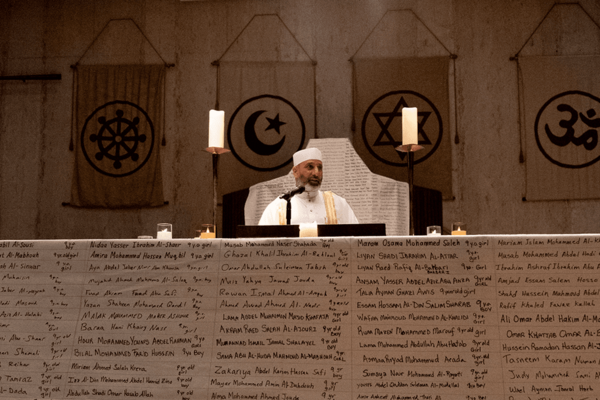
Earlier this month, a coalition of advocacy groups unveiled the Gaza Children’s Shroud, a linen assemblage bearing the names of 20,000 children killed in Gaza between October 2023 and August 2025—a staggering physical testament that when laid end-to-end, is 328 feet long. The names were handwritten by nearly 50 congregations and organizations across the U.S. and nine in Ireland, including churches, mosques, Buddhist centers, interfaith, and secular groups.