Climate change

Lisa Sullivan 7-30-2026
Illustration by Nicolás Ortega

IN APRIL, REPRESENTATIVES from 57 nations met in Santa Marta, Colombia, shattering bureaucratic climate change gridlock to forge a “coalition of the willing“ for a just transition beyond the use of fossil fuels. Together, they moved past the question of if we should abandon fossil fuels; the gathering in Santa Marta focused entirely on how. Global climate leadership is being rewritten, forged through a rare convergence of political courage and multifaith prophetic witness.

The Editors 7-01-2026
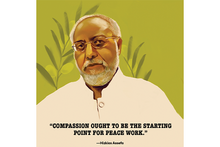
Hizkias Assefa is a founding faculty member of the Center for Justice and Peacebuilding at Eastern Mennonite University and a past director of the Nairobi Peace Initiative. He has mediated violent conflicts in countries including Burundi, Kenya, Mozambique, Nigeria, Rwanda, Senegal, South Sudan, and Ethiopia. / Illustration by Ryan McQuade

THIS YEAR MIGHT BE among the hottest on Earth. Free and fair elections are being subverted in the U.S. According to Scot Nakagawa, Christian nationalism is like a bus ready to run down trans rights on the road to authoritarianism, and the U.S. military chaplaincy program has been co-opted by people preparing to usher in the apocalyptic end times through American troops. Just like kids on a long metaphorical road trip, some of us may be asking, “Is it Armageddon yet?” Or maybe we’re asking, along with poet Tyler Truman Julian, “When is the time to flee?”

Bill McKibben 5-28-2026
Illustration by Kaitlin Brito

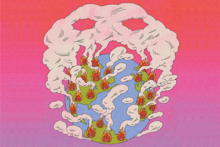
IT’S AMAZING TO THINK there was a time when God could get one’s attention by setting a single bush on fire. Now, apparently, it takes the entire planet.

In the last 18 months or so, there’s been a lot of talk framing climate change as a lesser issue, that instead we’re concentrating on “affordability,” and so on. If that’s been true, our intermission is coming to an end. Meteorologists are predicting that a new El Niño will form in the Pacific later this summer, and that there’s a good chance it could be a “super El Niño,” only the third such occurrence in the last 30 years. But even if it’s just a “normal” massive injection of heat into the atmosphere, it will mean enormous trouble.

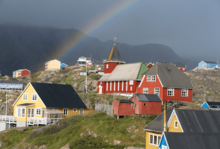
GREENLAND IS NOT for sale. You cannot buy land. It’s not yours. In our culture, it’s a gift, as a [Lutheran] bishop, I would say [a gift] from God.

MAYBE YOU’VE NOTICED the pattern: Since 1995, the United Nations has called world leaders together every year to participate in a Conference of Parties, or COP, on climate change. Politicians and negotiators are tasked with discussing progress and commitments—or lack thereof. So far so good, right? But year after year, governments fail to show up with enough ambition to meet even their own targets—targets that already fall short of what social movements and scientists demand. Faced with an existential threat to human and other life on earth, our leaders meet annually and agree to back away from their promises, pushing the planet further into a situation of more flash floods and drawn-out droughts, more wildfire smoke and rising shorelines, a world less fit for life in all its variety.

In 2025, COP30 marked 10 years since the signing of the Paris Agreement, where 196 countries committed to limit global warming to 1.5°C higher than preindustrial temperatures. In the summer leading up to COP30, a document began to circulate: “The science is clear: we must limit global warming to 1.5°C to avoid catastrophic effects. We must never abandon this goal,” the document says. “It is the Global South and future generations who are already suffering the consequences. We reject false solutions such as ‘green’ capitalism, technocracy, the commodification of nature, and extractivism, which perpetuate exploitation and injustice.” Instead, the authors call for transformational, structural change, the kind of courage that never makes it to COP meetings.

The document reads like an impassioned call from a revolutionary climate movement, criticizing even the green economy for emerging “not as a break with capitalism, but as an incremental modernisation of capitalism, expanding its capacity for self-regulation while perpetuating systemic contradictions.” Yet the document did not come from the Extinction Rebellion, a socialist group, a left-wing think tank, or a handful of anarchists. It came from the Catholic bishops of Latin America, Africa, and Asia, who issued it together as “the message of the Catholic Church in the Global South.”

The Editors 11-20-2025
Graphic by Ryan McQuade / Sojourners

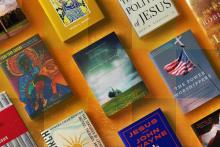
THESE BOOKS ALL circle the same question: What does our faith call us to do in the face of injustice? Women Talking, the 2018 novel by Miriam Toews that kicks off this list, captures the urgency of that inquiry.

“We are wasting time ... by passing this burden, this sack of stones, from one to the next, by pushing our pain away,” says Greta, a character eager to face a great evil happening in her Mennonite colony. “We mustn’t play Hot Potato with our pain. Let’s absorb it ourselves, each of us, she says. Let’s inhale it, let’s digest it, let’s process it into fuel.”

The last 25 years have dealt us plenty of pain—the so-called war on terror, racialized police violence, white Christian nationalism, greed-accelerated climate change. These books have helped us process that pain into fuel for change.

Faisal Bashir 8-21-2025

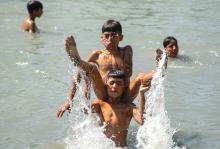
AS A PHOTOJOURNALIST, I have witnessed firsthand how climate change is shaping life in Kashmir, from snowfalls and receding glaciers to scorching heat waves and erratic rainfall. I have seen rivers drying, houseboats sitting in the dried portion. [This June] when I reached the outskirts of the capital city, Srinagar, kids were playing, bathing, cooling themselves during an intense heat wave.

Illustration by Franziska Barczyk

TEMPERATURES ARE AGAIN breaking records around the world, a now grimly familiar annual event. During an early summer heat dome over much of the country, a much-shared video showed a car in Missouri go airborne as it hit pavement severely buckled by the extreme heat. 2024 was officially the first year that the world eclipsed a 1.5 degrees Celsius surface temperature rise above the pre-industrial standard — busting through the ceiling for temperature rise that was agreed to in the Paris climate accords. Worse, the Trump administration seems determined to reverse as many of the Biden administration’s climate accomplishments as possible — undoing progress that, while insufficient to the scale of the crisis, was still a step in the right direction.

As Christians, how do we reckon with the reality of the climate crisis, not as a future hypothetical but a present reality? A text that comes to mind is Psalm 24:1-2: “The earth is the Lord’s, and everything in it, the world, and all who live in it; for God founded it on the seas and established it on the waters.”

When I think about this text, I feel both righteous anger and grief for what human beings, each of us created in God’s image, have wrought upon God’s world. Yet at the same time, I have long believed that we have a responsibility as believers to be prisoners of hope — followers and instruments of a Lord and liberator who is alive and continually at work in the world to make all things new. As the recently departed Walter Brueggemann put it, “God is doing something lively in the world ... it may be slow, but it is very sure ... a new world is coming into being.”

Bill McKibben 5-22-2025
Cavan-Images / Shutterstock

SINCE I AM a Christian, I worship the Son, not the sun. That said, I’ve been spending most of my time lately thinking about that large ball of gas the good Lord was kind enough to hang in the sky, 93 million miles away. In fact, we’re getting ready for an entire weekend devoted to considering the most important object in our physical world — though it is the only one you can’t look at directly. SunDay will happen on September 20 and 21, 2025 (details at SunDay.earth), and I hope it’s a chance for real reverence.

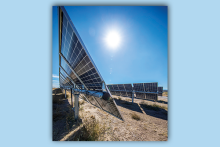
The sun already supplies light, heat, and photosynthesis, and now it’s ready to provide all the power we could ever need. In the last decade, engineers have dropped the price of solar power by 90%; they have done similar work for batteries that store power for when the sun goes down. We now live on a planet where the cheapest way to generate power is to point a sheet of glass at the sun.

If we take full advantage of those new facts, we stand some chance of limiting the damage from the climate crisis. Last year, California reduced the amount of natural gas it used to generate energy by 25% compared to its usage in 2023. This is the most hopeful statistic I’ve come across in my 35 years of working on global warming. California was able to do this because it had put up enough solar panels to really make a difference. And this could happen everywhere. Texas is currently building clean energy faster than anywhere else in North America but is miles behind China, which put up about 60% of the planet’s solar panels last year.

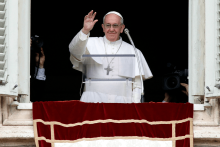
Newly elected Pope Francis appears at the window of his future private apartment to bless the faithful, gathered below in St. Peter's Square, during the Sunday Angelus prayer at the Vatican March 17, 2013. REUTERS/Tony Gentile

Pope Francis, born Jorge Mario Bergoglio in Buenos Aires, Argentina, was the first in a long line of 266 popes to be from South America and the first born outside of Europe since the 8th century. The pope, also the first to be a member of the Jesuit Order, was beloved by many progressive Catholics and lauded for his priorities of uplifting marginalized communities, protecting immigrants and advocating for environmental justice. According to a 2024 Pew Research Center survey, about 75% of U.S. Catholics viewed Pope Francis favorably.

But he was also a polarizing figure. He struggled to manage the ongoing sexual abuse crisis that plagued his predecessor, Pope Benedict XVI. Pope Francis met with survivors and attempted to pass reforms within the Church, but victims continue to come forward.

Céire Kealty 4-24-2025
From You Are a Sacred Place ©️ 2025 by Madeleine Jubilee Saito. Reprinted with permission of Andrews McMeel.

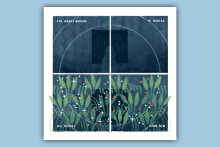
I FIRST CAME across digital media artist Madeleine Jubilee Saito’s work on social media. While scrolling through a sea of Instagram stories about environmental disasters, civil unrest, and humanitarian strife, I reached a square that made me pause: a multicolor four-panel image from a digital watercolor comic. I took in the top two panels of a gray figure staring out into the sky and then the glimmering, fruited foliage framing the bottom two panels. It felt like a vision from a better, more just future. The text on each panel, though brief, was powerful. I took in each word like a sacred telegram: THE GREAT WOUND / IS HEALED / ALL THINGS / MADE NEW.”

When I was younger, I found comfort in dynamic plotlines nestled in the predictable geometry of print and online comic series. Through Saito’s work, that comfort returned to me, in the form of four panels grappling with climate grief and environmental repair.

When I spoke with Saito about her work, she said that her affinity for comics started in high school. “As a young person, I had a very hard time accessing my own feelings or seeing that my interiority or my life were particularly valuable,” she said. “Comics were a way I could crystallize that value and the meaning of my own interiority for others — make it visible.” Now, Saito’s work conveys the value of the natural world. In her ecological storytelling, we see portraits of people amid towering trees and shimmering waterways. Her human subjects submerge themselves in the elements; her natural subjects invite readers to take a closer look at this numinous world.

Her upbringing in northern Illinois exposed Saito to the tensions between humans and earth. She grew up in a house deep in the woods — “a strip of forest in the middle of this desolate monocrop landscape,” she said, explaining how she saw beauty amid exploitation. “The animals — raccoons and possums — were pests to be managed. Every year the trees and bushes and plants from the forest would encroach further toward the house and every year they would need to be cut back.”

This awareness of the adversarial relationship with the natural world has guided her work and now culminates in her debut book, You Are a Sacred Place: Visual Poems for Living in Climate Crisis (Andrews McMeel, 2025). The first section explores the doom happening parallel to climate collapse. In one story, we see someone curled up in bed, sinking into and verbalizing their sadness post-job layoff. Wildfire smoke chokes the Seattle air around them. In this panel, I see myself, two years ago, numb from financial despair while wildfire smoke cast a noxious orange hue over Philadelphia.

Liuan Huska 4-24-2025
bubaone / iStock

I COULD FIT right in with crunchy “MAHA” moms.

I wore my babies in patterned baby carriers, puréed organic squash and bananas for their first foods, and obsessed over toxins and microplastics in everything. I daydream about backyard chickens and growing enough tomatoes and cucumbers to last through the winter storedin neat rows of mason jars in my pantry. I, too, want cleaner water, soil, air, and food for my children.

The “Make America Healthy Again” movement is a strange “horseshoe alliance” of far-right and far-left hippies, homesteaders, vaccine skeptics — maybe even some who make their own granola. At its heart is a growing mistrust in the scientific establishment and a shrinking definition of health — from something we work toward together as a society to something we defend and purchase for ourselves and our families.

As a person with resources, I feel the easy draw of that narrowed mentality. If the air or water is polluted, I can buy fancy purifiers. If the soil is contaminated, I can pay to haul in garden dirt or move to land farther from polluting sources. But there are fewer and fewer places to go to avoid wildfire smoke, hurricane damage, or toxic emissions. Seeking my children’s health requires more than individualistic self-protection. It requires seeking the health of all people and the entire planet.

4-03-2025
Solar panels of a photovoltaic solar power installation are seen on the roof of a church in Loos-en-Gohelle, northern France Oct. 31, 2015. Credit: REUTERS/Pascal Rossignol.

Nearly 90% of U.S. Christian religious leaders believe humans are driving climate change. When churchgoers learn how widespread this belief is, they report taking steps to reduce its effects, as we found in our research published in the Proceedings of the National Academy of Sciences.

We examined data collected in 2023 and 2024 from a nationwide survey of 1,600 religious leaders in the United States. The sample included religious leaders from fundamentalist and evangelical churches, Baptists, Methodists, Black protestants, Roman Catholic denominations and more – all recruited to match the proportions of churches across the country. The survey assessed religious leaders’ beliefs about climate change and whether they discuss climate change with their congregations.

According to that data, while the overwhelming majority of Christian religious leaders accept the human-driven reality of climate change, nearly half have never mentioned climate change or humans’ role in it to their congregations. Further, only a quarter have spoken about it more than once or twice.

Bill McKibben 3-27-2025
bestdesigns / iStock

THE WIND AND floods of Hurricane Katrina — now, amazingly, 20 years in the rearview mirror — were an early wake-up call about climate change. Precisely what scientists had been predicting was underway — super-strong storms overwhelming the coasts. But Katrina taught another lesson too: Those most in danger in this new world were going to be poor and quite likely would be people of color. The Lower Ninth Ward became a symbol of all those things, and to wander those streets in the weeks afterward was to see the future.

But we didn’t see it clearly enough, not enough to really change what we were doing. Indeed, we’ve just inaugurated a president who campaigned on his conviction that it’s all a hoax. Drill, baby, drill.

Just as he was transitioning into power, we had the fires of Los Angeles. These, again, were just what climate scientists said would happen: Record dryness (essentially no rain since May); record warmth; record windspeeds. It was a conflagration as predictable as it was horrific. But this time it came with one new feature: A great many of the victims were rich. Not all of them — the middle-class community of Altadena burned (including the home of my earliest memories as a boy). But in Pacific Palisades, street after street of multimillion-dollar homes — the very definition of California as idyll — were swept with fire despite the airy breezes off the blue ocean.

Fletcher Harper 2-11-2025
Firefighters battle the Palisades Fire, as seen from the Tarzana neighborhood of Los Angeles, January 11. REUTERS/Ringo Chiu

The fight to save the planet isn't over yet, but it will look different under Trump. Can Christians lead the charge? 

Liuan Huska 11-14-2024
MHJ / iStock

I WRITE THIS two months before the November 2024 U.S. presidential election, knowing that it will land with you, dear readers, after all the votes are in and the course for the next four years is likely set. My insides lurch thinking about the potential outcomes. We are in the middle of the decisive decade for large-scale action to mitigate the worsening effects of climate change. Going in one direction or the other feels, sometimes, like a turn toward life or death for the planet.

Like many, I have learned to apply lessons from navigating the grief and pain of personal losses to our collective crises. I lost my dad suddenly to colon cancer earlier this year. A few weeks later, my mom was diagnosed with stomach cancer. Grasping for predictability amid the unknown, I tried to superimpose my dad’s illness onto my mom’s future. It did not help. My anxiety skyrocketed.

What helped, instead, was applying what Zen practitioners call “beginner’s mind.” A beginner has no background knowledge about a situation. They have no expectations for how things might unfurl. Approaching a situation as a beginner can open pathways that experts did not see.

Bill McKibben 10-10-2024
Stephanie Keith / Getty Images

NONVIOLENT DIRECT ACTION is a relatively new invention — though prefigured by the Cross, it was Gandhi, Rev. Martin Luther King Jr., and a million others whose names we don’t know or remember who introduced this technique to us over the course of the 20th century. There’s no handbook for how it’s done, and no West Point equivalent — which means that we largely proceed by trial and error as we try to move the conscience of the world. We make it up as we go along. Which is fine, but you must be honest about what works.

Over the last year, one tactic that climate activists have tried is attacking cultural works — iconic paintings, right up to the “Mona Lisa,” and great shrines of humanity, most notably Stonehenge. They’ve been responsible, figuring out ways to do minimal damage, and perhaps such methods were worth a try: When you’re losing, you throw Hail Marys. And the people who carried out these actions clearly should not be subject to ridiculously punitive sentences.

Kaeley McEvoy 8-13-2024
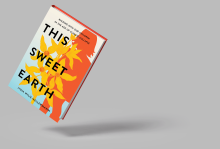
This Sweet Earth: Walking with Our Children in the Age of Climate Collapse by Lydia Wylie-Kellermann / Broadleaf

LYDIA WYLIE-KELLERMANN HAS a large cemetery in her backyard. There lie “weeds and tulips and a few homemade tombstones ... beloved fish, brutally attacked chickens, stray cats, and two beloved rabbits.” In this cemetery, her two preteen sons, Isaac and Cedar, and wife Erinn Fahey host a lot of funerals. Why? Living during climate collapse means we must face death with dignity.

Approaching mortality with gentleness is just one of many lessons woven throughout This Sweet Earth: Walking with Our Children in the Age of Climate Collapse. Reading the book feels like listening to stories shared by a friend over a glass of sweet tea.

This Sweet Earth is filled with narratives from Wylie-Kellermann’s life as an activist, parent, and watershed-dweller. Every chapter is benedicted by corresponding prayers and blessings, which affirm that Wylie-Kellermann was brought up on a diet of poetry and anti-nuclear pamphlets. Former editor of Geez magazine and daughter of protest prophet Bill Wylie-Kellermann and organizer and writer Jeanie Wylie-Kellermann, Lydia chooses words with precision, power, and a bit of whimsy.

Bill McKibben 7-18-2024
francescoch / iStock 

God’s creation operates according to rules — we call them physics and chemistry — and they are not to be trifled with. Right now, we’re trifling.

But right now — at the exact same moment — we’re also using chemistry and physics to do some remarkable things that could potentially repair some of that trifling.

We don’t know which will win. It will come down to biology — that is, to the rules that govern who we are in this created order.

The trifling first: The climate crisis is clicking into its highest gear yet. 2023 was the hottest year in the last 125,000, and the steamiest too, as the heat drives up the level of moisture in the atmosphere. Carbon dioxide levels in the atmosphere grew at their fastest pace ever, surging more than 4 parts per million. Ralph Keeling, the veteran scientist in charge of compiling the data, said, “Human activity has caused CO2 to rocket upwards. It makes me sad more than anything. It’s sad what we are doing.”

It should make us sad. Some humans — climate scientists, specifically — warned the rest of us humans about all this more than three decades ago, when we could have headed off much of it. We didn’t.

Meg Duff 6-12-2024
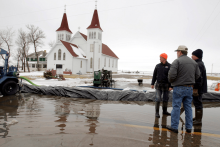
The church of St. Benedict stays dry from overland flooding, because of an earthen dike built around it after a flood in 1997, in southern Fargo, N.D., March 29, 2009. A dike holding back the swollen Red River failed early on Sunday and swamped a school in Fargo, N.D., but a backup dike contained the spill as cold weather favored flood fighting and evacuation efforts. REUTERS/Eric Miller

In every U.S. congregation, there are likely people experiencing grief, fear, or anger on behalf of creation. Most Americans now know that the climate is changing; according to recent surveys, a majority now also feel some level of climate-related stress or anxiety. But when terms like “climate grief” and “eco-anxiety” show up in the news, stories often point people toward individual behavior changes or activism, according to a recent study in the journal Environmental Research: Health. Missing from the conversation is the spiritual dimension of the climate crisis and the role that faith communities can play.