Faith

A presidential inauguration is by tradition the grandest ritual of America’s civil religion, but President Obama took the oath of office on Monday in a ceremony that was explicit in joining theology to the nation’s destiny and setting out a biblical vision of equality that includes race, gender, class, and, most controversially, sexual orientation.
Obama’s speech, his second inaugural address, repeatedly cited civic and religious doctrines — namely the God-given equality extolled by the “founding creed” of the Declaration of Independence — to essentially reconsecrate the country to the common good and to the dignity of each person.
It was a faith-infused event that recognized both the original sins as well as the later atonements of America’s history, especially on race, which was front and center as the nation’s first African-American president took the oath on the holiday commemorating the Rev. Martin Luther King, Jr.
And Obama and other speakers vividly traced the nation’s tortuous path from slavery to civil rights — from the Emancipation Proclamation 150 years ago to the March on Washington 50 years ago, the latter presided over by King.
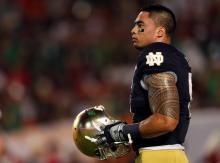
Listen, I’m not here to bash Manti. I’m not here to ridicule or mock him. I’m not even suggesting that Manti is lying or that his statement is not accurate but we can all agree that the whole story is absolutely bizarre and the total truth has yet to be fully revealed. But because I’m a believer in people – and more so – because I believe in the power of redemption, reconciliation, and restoration, I want to see Manti do well – not just as a football player – but as a man … as a human being … and as someone who often speaks of God.
If I were Manti’s pastor …
While more details will emerge in the future, I wondered what kind of advice I would give him if I were Manti’s personal pastor. (Manti, being Mormon, is supposedly a deeply religious person.) Here are the four pieces of advice I’d give him.

Tuesday was the 84th birthday of Rev. Dr. Martin Luther King, Jr. I don’t know about you, but I miss his words, so I offer a few. King said “people often hate each other because they fear each other, they fear each other because they don’t know each other, they don’t know each other because they cannot communicate, they cannot communicate because they are separated.” I would add to his words: ‘and in that separation they seek guns.’ As an evangelical Christian, I’m going to make this theological.
Wayne LaPierre, executive vice president of the National Rifle Association, said this as his response to the massacre of children at Sandy Hook elementary in Newtown, Conn.: “the only thing that stops a bad guy with a gun is a good guy with a gun.”
That statement is at the heart of the problem of gun violence in America today — not just because it is factually flawed, which of course it is, but also because it is morally mistaken, theologically dangerous, and religiously repugnant.

President Obama will publicly take the oath of office on two Bibles once owned by his political heroes, Abraham Lincoln and the Rev. Martin Luther King Jr. One Bible was well read, but cited cautiously, the other granted scriptural sanction to the civil rights movement.
When Obama lifts his hands from the Bibles and turns to deliver his second inaugural address on Monday (Jan. 21), his own approach to Scripture will come into view. Characteristically, it sits somewhere between the former president and famous preacher.
His faith forged in the black church, Obama draws deeply on its blending of biblical narratives with contemporary issues such as racism and poverty. But like Lincoln, Obama also acknowledges that Americans sometimes invoke the same Bible to argue past each other, and that Scripture itself counsels against sanctimony.
Obama articulated this view most clearly in a 2006 speech, saying that secularists shouldn’t bar believers from the public square, but neither should people of faith expect America to be one vast amen corner.
“He understands that you can appeal to people on religious grounds,” said Jeffrey Siker, a theology professor at Loyola Marymount University in California who has studied Obama’s speeches. ”But you also have to be able to translate your case into arguments that people of different faiths, or no faith, can grasp.”

Worried about exposure to foul language, immodest dress, peer pressure, and other inappropriate behavior, Susan Brown didn’t want her two daughters attending public schools — even though she’s a substitute teacher in a public school in Minnesota.
Brown initially home-schooled her daughters until a friend told her about the Minnesota Virtual Academy, an online public school that is fully accredited. She liked the curriculum, and as a single mom relying on substitute teaching income, she preferred how the school provided the supplies instead of having to buy supplies herself as a home-school parent.
“You can’t give your kids an effective moral and religious upbringing if you only see them a couple of hours a day,” said Brown, a Catholic whose daughters, now in the 10th and 12th grade, started virtual school in the second and fourth grade. “When you’re at home with them, you can incorporate your beliefs into the day.”
Since Florida became the first state to try them in 1996, virtual public schools have enjoyed dramatic growth, with at least some of it coming from religious families. Like home-schooling parents, parents of virtual public school students like having their children home so they can integrate religion and values into the school day.

It is an odd juxtaposition, December 21, 2012 and January 21, 2013. The former date representing the “so-called” Mayan apocalypse where the usual suspects prepared for the end of the world – many of whom were Christians awaiting the second coming of Christ – and the latter date, which is the day President Barack Obama will be inaugurated for his second term.
In my estimation, this odd 21st-century connection reflects the event known as the baptism of Jesus as described in Luke 3:15-17 and 21-22. Initially we see that there is an expectation elicited by the preaching prowess of John the Baptist. The unnamed “men” wonder in their hearts if “whether perhaps he was the Christ” (Luke 3:15 RSV). John, then goes on to describe what he understands to be Christ-like qualities when he proclaims, “[One] who is mightier than I is coming, the thong of whose sandals I am unworthy to untie” (Luke 3:16).

The only reason that I am Christian is because I am spiritual-but-not-religious.
Right. That's it.
Let me first say that in my own thinking, I don't separate these two things, religion and spirituality. I get that many do and I can see the rhetorical advantages to doing so. I just don't do so for any other reason than popular conversation has done so.
Here's why, and please forgive the autobiographical nature of this post. It's a testimony of sorts and dreadfully difficult to summarize. I'm pretty well convinced that I'm not all that unique in what I'm about to share. Also, if you have been paying attention (assuming you've known me for some time or been reading my blog) none of this should come as a surprise.
The only reason that I am Christian is because I am spiritual-but-not-religious.

Almost two years ago, I took a titanic risk. If you look at things from an earthbound perspective, what I did is: I took my livelihood, and my children's provision, in my hands alone. I quit my job at The News & Observer, a major, Pulitzer-prize-winning newspaper where I earned a decent salary and reached 150,000 to 200,000 readers on any given day.
The decision was a long time coming — my whole adult life, really. Before I ever started my first newspaper job in 2000, I’d wanted to help people explore deeper things than just tax policy, or crime, or environmental regulation. These just skim the surface of who we are as humans: why we share or hoard, why we hurt or protect one another, what we owe to Mother Earth.
What I found as a newspaper reporter was that I had no choice but to skim the surface of things. There’s not enough space to go deeper, but, more importantly, deeper takes you into hypothesis, not fact — and hypothesis is a leap of faith. What you find when you go deeper depends a lot on the gear you’re wearing when you dive. I’m cloaked in Bible stories and Christian tradition, and therefore I live in hope that there’s a Creator and that this God is working quietly to heal the world.
I read recently in Psalm 27:
“The Lord is my light and my salvation —
whom shall I fear?
The Lord is the stronghold of my life —
of whom shall I be afraid?”

“After the first exile, there is no other.”
—Rosellen Brown, The Autobiography of My Mother, 1976
The great wheel of the year has turned once more, and I find myself back at the beginning again. Not at the start of a brand new year, but rather, at the anniversary of my father’s death.
I was eight years old when he died, on January 8, 1977, after six long months of decline from lung cancer. In the family’s last-minute midnight scramble to the King’s Daughters Hospital to offer a final farewell, I was adjudged too young and too asleep to wake up for the ride.
I found out that he had died when I crawled from bed at dawn the next morning, yawning and jonesing for cartoons, only to find a bath robed neighbor stoking the fireplace, and my father disappeared into ether.
That singular fact has been the still point of my turning world in the decades since.

IT'S A STORY that promises to make you believe in God.
A boy, shipwrecked on a lifeboat with a Bengal tiger, repeatedly cheats death and eventually discovers his own self. It's a typical coming-of-age tale, really—except for the whole tiger part.
Life of Pi centers on Pi Patel, the son of a zookeeper, who grows up grasping to understand God. His open heart and willingness to learn lead him from Hinduism to Christianity to Islam. While stranded at sea along with a few escaped zoo animals as company, he continues to explore the meaning of God as he's thrust into dramatic—and at times inconceivable—situations.
Anyone who has read Yann Martel's best-selling book can understand how near impossible it seems to adapt the larger-than-life story into a film—none more so than the person who did just that, screenwriter David Magee. The largest chunk of Pi's journey is a solitary one, save the aforementioned Bengal tiger (named Richard Parker).
In an interview with Sojourners, Magee said he wrote the scenes without any lines for Pi at all, only inserting them where necessary after the fact.
LAST FALL, I (Anne Marie) decided to take a break from the church I had been attending to check out a nearby Episcopal service with one of my housemates, Joshua. I had no idea at the time that this might turn into a permanent switch. My Baptist, Anabaptist, and evangelical roots don’t quite explain what drew me to St. Stephen’s Church that Sunday, but I remember the thought that kept going through my head: I need to take Communion.
For a number of reasons, I had been feeling apathetic toward Christian faith. I needed something official and visceral to cleanse me of the growing indifference I felt. The thought entered my mind: I need some bread and wine, because if my own prayers can’t kindle the spirit of Jesus within me, then I’ll get him in there by force. I hoped that partaking in the real-deal-flesh-and-blood would allow me to return to my own church in peace.
I can’t say that the Episcopal service that day cured me of all my doubts and frustrations about Christianity, but I did find meaning in the liturgy, rituals, and traditions that continued to sustain me in my first year in a new city. As Joshua and I continued to attend St. Stephen’s, we each reflected on what we, as young adults, are looking for in church and Christian community.
Church advertisements often focus on how to keep young people “engaged,” and there are countless new books about why young people are leaving the church. Statistics show decreased church attendance among those in our generation, and while this may be cause for concern, I’m not too worried about it. I’m glad that churches and denominations are interested in engaging young people, but so often this well-meaning desire is rooted in fear and anxiety about the future of the church. Is Christianity becoming obsolete? Will the church die away?
News flash: Christianity isn’t going anywhere. But churches and denominations may have to adapt—and not necessarily the way they’re doing so now—if they are to survive.
As 20-somethings who’ve left the cocoons of family and college for our first forays into the “real world,” we have two basic conclusions about what we are looking for in church communities.

IN THE U.S., the Cold War has served to justify a permanent wartime economy, blacklisting and surveillance of dissenters, and military interventions against smaller and weaker nations from Vietnam to Nicaragua. In the Soviet Union, it has been used to excuse a permanent state of economic austerity, the imprisonment and torture of dissenters, and military interventions from Hungary to Afghanistan. And on both sides the Cold War has provided the ideological underpinning and political momentum for a nuclear arms race that threatens the future of the entire human family. ...
As Christians our faith, security, and hope for a peaceful world can only be placed in the one true God, who is the creator and sustainer of all life and the Lord of history. The first and most essential commandment forbids us to trust the fate of God’s earth and generations unborn to the creations of finite, fallible, and fallen human beings.

There will be, I assume, a thousand different ways to dismantle what it is that I am about to say. I get that. I respect it. I invite it. This is a conversation that we need to have and, thankfully, are having at a national level. That said, sometimes I wish we still lived in a time when talking about one's faith in public was considered inappropriate or rude. Sometimes, that is. Only sometimes.
Lillian Daniel has a new book coming out. I'll refrain from sharing my opinion about the book until after I have read it. You can read Robert Cornwall's review here. The book is entitled WHEN "SPIRITUAL BUT NOT RELIGIOUS" IS NOT ENOUGH: Seeing God in Surprising Places, Even the Church. There are some handy quick reviews on the amazon.com page. My favorite is from Shane Claiborne.
Lillian is as fed up with bad religion as anyone else, but she's also careful to celebrate good religion and good spirituality that brings people to life and makes the world a better place. May her book invite us to stop complaining about the Church we've experienced and work on becoming the Church we dream of.

“You’re a Christian? But you’re so nice!”
I’ll never forget these words, spoken to me by a friend of mine from my college’s theatre program. He was one of my more eccentric friends, more blunt than most, and he was also very openly gay. His exclamation of surprise may be the instance that I remember the most, but he certainly wasn’t the only person during my college years to express their surprise at the thought of Christians living by principles of love rather than intolerance, or at the very least, indifference.

I know this sounds totally bizarre, but I had a moment of clarity about the value of human life in, of all places, a kid-themed pizza joint yesterday. No, they don’t exploit their workers (that I know of, short of submitting them to overstimulated kids all day). It took a few steps for me to get there, so bear with me.
Yesterday, my daughter, Zoe, turned four years old. It’s a crappy time of year to have a birthday party, since lots of people are out of town, and those who are around are more or less partied out from the holidays. On top of that, we just moved here a few months ago and hardly know anyone. So to try and make up for all of that, we let her pick anywhere she wanted to go for dinner.
Not surprisingly, she picked John’s Incredible Pizza Company, which is like Chuck E. Cheese on steroids. Not high on my list of choices, but hey, it wasn’t my birthday. Zoe’s grandparents are in town and they invited a couple other family members who live nearby to join us. One of Amy’s distant cousins brought along her husband or boyfriend (still not sure which), and I remarked after the dinner to amy that he bore a striking resemblance to the alt-rock front man Perry Ferrell, of Jane’s Addiction fame.
“What ever happened to Perry?” Amy asked. Short of founding the Lollapalooza Festival and hitting every Coachella festival ever held, I had nothing. So I Googled him.

I’m going to tell you something I do not do very well. But, only if you will not tell the other mothers because I have listened to them talk, and apparently I am the only one not very good at this. Deal?
I'm not good at helping my children learn to feed themselves. I totally get in the way. Let me explain.
Well, actually, there isn’t much about it to explain.
I don't like messes. So, I feed my children … for too long. I sit a bowl full of spaghetti in front of them, and I get a little panicky. I mean, have you ever found dried, crusted spaghetti noodles on the floor a week (or more) later when you're cleaning? And what about the slimy, greasy residue left on the plastic tray attached to the high chair? And then there's the highchair cover. I did not realize you could take that thing off to clean it until my second child was two. Wow. That was amazing — what I found under it, I mean.
Never mind the fact that most of the food gets on the child and everything and everyone else … not in their mouths.
And, I mean, I'm also very concerned about my child’s dietary needs. Seriously, I think that is the biggest reason I insist on feeding them well into their third year. (Did I just write that?) They need me. They need me to spoon that mouthful of spaghetti straight into their teeny little mouth. That way I know where it goes — there is no guesswork.
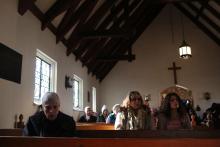
NEWTOWN, Conn. — Dealing with the pain of the school shooting that claimed 28 lives will take faith, support, and joyous Christmas celebrations, church leaders said at the first Sunday services held since the tragedy.
At houses of worship around town, people gathered in pews, crying, kneeling, and hugging each other through services that focused on remembering the victims of the Sandy Hook Elementary School shooting, uniting the community, celebrating the meaning of Christmas and preventing similar disasters.
Yet even this beleaguered town's day of worship provided a moment of fear when congregants at St. Rose of Lima Roman Catholic Church fled the building, saying they were told there was a bomb threat. Police with guns drawn surrounded the church. No injuries were reported, but the church canceled all events for the day.
Earlier in the day, services at St. Rose, much like other places of worship in the area, were focused on the tragedy.
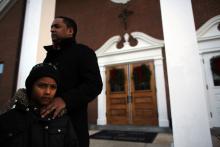
One commentator suggested that it was precisely because God was not there that this heinous act happened. Gov. Mike Huckabee claimed we should not be surprised to see this kind of violence since we have removed God from our schools and our society. His sentiment is to say, “God is NOT here.” If that is the case, then it surely can explain the existence of pure evil that we saw displayed on Friday.
However, thinking like that of Gov. Huckabee suggests that we somehow have the power to remove God from our schools and our society. This kind of God is quite small, weak, and impotent — one that is dictated by the mere whims of humanity. This is not the God of whom Matthew spoke.
Matthew spoke of the Almighty God fully embodied and revealed in the person of Jesus. So much so that he claimed he was Immanuel: God with us. He is here not in spite of the pain, nor did he come to explain it away. God is here in the midst of our suffering.
The hope of Advent is that God responded to the suffering of humanity by entering into it with us. He did not stand outside of it and look in with a wincing face and hope that everything would somehow work out. Nor did he see humans who removed him from their schools and societies and say, “Well fine, then, have it your way!” Not at all.
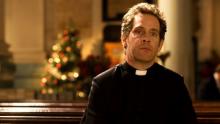
This Christmas, for the spirituality-and-pop-culture enthusiasts on your gifting list, consider the following: Be kind and rewind.
Give them the gift that keeps on giving ... long after the series has been cancelled.
Rev. The Vicar of Dibley. Saving Grace. Davey and Goliath. Pushing Daisies. Six Feet Under. The Book of Daniel. Lie to me. Lost. And Northern Exposure.