Faith
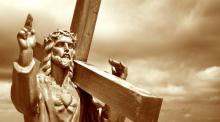
Last weekend – Easter – was a time where all Christians remember the tragic end of Jesus’ life, as well as the miraculous raising of Jesus the Christ from his death. The week prior to Jesus’ death – Holy Week – is one where Christians focus on Jesus’ arrival and entry into Jerusalem, the hub of Israeli and Jewish power, amid excited and adoring crowds. As we read through and remembered this tragic story, we heard and saw the excitement and adoration of the people quickly turn, resulting in a call by the people to kill – crucify! – this man they so enthusiastically welcomed. Not only do the people cry for his death, but they answer Pilate’s question by declaring let “His blood be on us and on our children” (Matt. 27:25). The multitude, in other words, embrace the responsibility for Jesus’ crucifixion, whereas Pilate, ironically, acts like a good Israelite seeking to separate himself from a deed that violates covenant justice (Gardner, 390). The result of the people’s eagerness, which was fed, we are told, by the chief priests and elders’ ability to persuade the multitude, lead to the death of Jesus on the cross.
My fear, however, as we remember the horrible and horrific event of the crucifixion, is that we have forgotten much of its significance, both historically in Jesus’ time and for us today. What we now call the “substitutionary atonement theory” has understood the cross primarily as the beginning of salvation, and not also as the culmination of a radical life lived within an Empire. This theory has tended to disconnect the life-path chosen by Jesus from the salvation attributed to the cross. The cross, as represented in the New Testament, is both an end and a beginning. It demonstrates the predictable end of life lived in service to the Kingdom of God within an Empire. It also invites us into a future in which the power of this life-ending cross becomes the power of a cross-initiated life.

I’m no postmodern theology expert, so I’ll leave it to the pros to explicate more about what’s what in postmodern thought. But for me, the exciting work revolves around supplanting things like binary, propositional “truths” about God with more inductive, open-ended notions of the Divine that transcend religious doctrine or even our own mental constructs of God. This is both a necessary and a liberating process, I think, that indeed can lead the Church (big C Church, that is) toward something far more reconciling and healing for humanity than the modernist approach to faith we’ve employed for many decades now, if not some centuries.
It’s helpful to look back a little bit at where we’ve come from in our religious and theological evolution of thought and practice. At the risk of geeking out on something that puts everyone to sleep, I’ll try to make this quick and fairly painless. Interestingly, it can be argued that the more fundamentalist strain of Christianity can trace its origins back to the “liberal” thinking following the Enlightenment that suggested all things – faith, God, and religious thought included – could be explained by rational means. This hyper-rationalism sought to build up rhetorical constructs that made a case for God, so to speak, as well as buttressing the doctrines of the Church.
Books
Faith meets science
- Scientist Katharine Hayhoe and her spouse, evangelical pastor and writer Andrew Farley, gently and wisely respond to the concerns of those who deny the reality of climate change in A Climate for Change: Global Warming Facts for Faith-Based Decisions (FaithWords). An accessible exploration of the science behind climate change and the faith-based reasons why Christians can and must act.
- Ben Lowe, of Young Evangelicals for Climate Action, describes the rise of climate leadership on Christian college campuses in Green Revolution: Coming Together to Care for Creation (IVP Books).
- In Global Warming and the Risen LORD: Christian Discipleship and Climate Change (Evangelical Environmental Network), Jim Ball offers biblical and spiritual resources needed to meet the challenge.
- No Oil in the Lamp: Fuel, Faith and the Energy Crisis (DLT Books), by Andy Mellen and Neil Hollow, is part science manual, part Bible study and points toward a Christian theology for resource depletion and "peak oil." The unexpected foreword by the CEO of a top U.K. energy company adds depth.
- God, Creation, and Climate Change: A Catholic Response to the Environmental Crisis (Orbis Books), edited by Richard W. Miller, collects original essays by leading Catholic theologians and ethicists to give theological and biblical perspectives on our environmental crisis.
- Green Discipleship: Catholic Theological Ethics and the Environment (Anselm Academic), edited by Tobias Winright, is a compendium drawing on scholars from the fields of ecology, biology, history, and sociology, and includes study group aids. It also has the text of "If You Want to Cultivate Peace, Protect Creation," a January 2010 speech by Pope Benedict XVI, which can also be found at www.vatican.va.
- Sacred Acts: How Churches are Working to Protect Earth's Climate (New Society), by Mallory McDuff, looks at local churches' best practices to reverse climate change.
NEW YORK CITY has been bombed at least twice in the past decade. First by al Qaeda and second by Hurricane Sandy.
In the wake of the Sept. 11 attacks, the United States launched two ground wars and a worldwide "war on terror." Within two months, Congress federalized the Transportation Security Administration to secure airports. More than 263 government organizations were either created or reorganized. Some 1,931 private companies were put to work on counterterrorism, homeland security, and intelligence. Rightly or wrongly, America moved heaven and earth to stop terrorism in its tracks. It was seen as both an ongoing threat and a moral affront that had to be dealt with.
What about Climate Change?
In February, a New York State Senate task force on Superstorm Sandy compared the hurricane that affected 24 states to the 9/11 terrorist attacks. "[On 9/11] there were more than 3,000 souls lost, but in terms of the geographic destruction, it was isolated to Lower Manhattan," said Sen. Andrew Lanza (R-Staten Island). "[After Sandy] we have miles and miles and miles of destruction. Hundreds of thousands of homes affected, 60 ... New Yorkers killed, 250,000 to 260,000 businesses affected."
Hurricane Sandy killed 253 people in seven countries. It was the second largest Atlantic hurricane ever recorded—and the most expensive. It smashed into the East Coast with barely three days' warning. Like hurricanes Katrina and Rita before it, Sandy was a disaster of biblical proportions.
After 9/11, Americans knew in our gut that something was seriously wrong. Our moral intuition had been sucker punched.

Labels can be helpful when, for instance, applied to cans of soup or barrels of toxic waste. But they are less so when affixed to human beings – particularly when labels are meant to summarize, indelibly, one’s spiritual identity.
In a recent Rolling Stone interview, Marcus Mumford, the 26-year-old lead singer of the wildly successful British band Mumford & Sons, raised the hackles of religious folks (in some quarters) when he declined to claim the “Christian” label as his own.
You see, Marcus is the son of John and Eleanor Mumford, who are the national leaders of the Vineyard Church in the U.K. and Ireland, an arm of the international evangelical Christian Vineyard Movement. Last year, he married actress Carey Mulligan, whom he’d met years earlier at a Christian youth camp.
And the music of Mumford & Sons, for which Mumford is the main lyricist, is laden with the themes and imagery of faith – often drawing specifically upon the Christian tradition. They explore relationships with God and others; fears and doubts; sin, redemption, and most of all, grace.

Nuanced or not, are Christians, especially evangelicals, perceived as being against things like peacemaking? Or is it that their version of peacemaking is backward looking toward some halcyon day of yore (or 1950s America)? At this point in the book, Rob spends a lot of time walking us through the development of justice in the Bible from “eye-for-an-eye” to “turn the other cheek.” I want you to read this chapter for yourself and make your own conclusions about what Rob sees and tell me if you see it, too.
Rob's thinking is that people are gradually cluing in to God's vision of a world without retributive violence. “Revenge always escalates,” he writes. Always.

Tripp Hudgins touched on something in his post yesterday that is essential to this discussion about Rob Bell and his book What We Talk About When We Talk About God. He wrote:
Why does Rob write this stuff? Whose side is he on? Yours. Mine. Ours … Rob is on everyone’s side. He’s trying to live like the God who meets him when he’s surfing, hanging with his kids and friends, walking along the city streets, or doing just about anything.
Tripp, how can you say such a thing! “Rob is on everyone’s side”? How could Rob possibly be on the side of those who ruthlessly criticize him?!? I’m sorry my friend, but that’s just ridiculous and absurd.
And yet the ridiculous and absurd is at the heart of the Christian message. I hope that Rob is for everyone. Not because I need Rob to be on my side, nor because I need his approval or acknowledgment. (Although, I wouldn’t mind it!) Rather, I hope it’s true because at the heart of the Christian message lies the ridiculous, absurd, and even scandalous message that God is for everyone.

It's the Monday after Easter, and I couldn't think of a better day to talk about God being with us. Adam Ericksen wrote about the dance of doubt and faith on Good Friday, the challenge and beauty of embracing the fullness of the journey. Rob takes that all one step further in this chapter: With.
There is, I believe, another way to see God, a way in which we see God with us— with us, right here, right now. This isn’t just an idea to me; this is an urgent, passionate, ecstatic invitation to wake up, to see the world as it truly is.
(Kindle Locations 1201-1203)
Suddenly I have “Right Here, Right Now” by Jesus Jones playing in my head. Excuse me for being a child of the 80s.
My take-away? This God doesn't choose sides like we do.

This is going to be a problem. This chapter on faith and science and quantum mechanics is going to be a problem. Why? Well, because this faith and science thing has been done to death. Did you know that the Vatican has an observatory and that one of the authors of Red Shift Theory was a Jesuit? Yep. The famed Scopes Monkey Trial was more than a century ago and those of us in the Protestant Mainline have long ago made peace with it. The Vatican apologized for the oppression of scientists, most specifically it said that Galileo was right. Scientific inquiry and Biblical interpretation are not the same thing. So what's Rob's purpose for this chapter?
Well, it's manifold. He's an evangelical. He's writing in some ways to other evangelicals, specifically those who have felt cut off from the tradition. Here in the States, the classic evangelical line holds echoes of the arguments used during the Scopes Monkey Trial. Some in that Christian tradition are still fighting that fight. Heck, some progressives are, too. Powerful (if false) dichotomies have been established.
(The Controversial figure Rob Bell has created another firestorm with his latest provocative book What We Talk About When We Talk About God. Raven Board Member Tripp Hudgins and I will share our thoughts on the book in this blogalogue. We invite you to join the discussion by leaving a comment below.)
Thank you, Tripp Hudgins, for your “Open Letter to Rob Bell.” As always, you are inspirational and thought provoking. The letter provides a great introduction to our blogalogue on Rob’s latest book What We Talk About When We Talk About God. I want to emphasize one point you make and relate it to the first chapter of the book, called “Hum.”
You claim that, “This book is not about a ‘new’ thing. It’s simply about God and how we come to know God in this world.” This is such a great point because Rob isn’t making up new ways to talk about God. Throughout the book, Rob explores what God has done in the past and how God continues to pull all humans into a global future that has “greater and greater peace, love, justice, connection, honesty, compassion, and joy” (19).

In Christianity’s passage through Holy Week to Easter Day, a moment of truth will arrive.
Every detail is well known, thoroughly studied, and dramatized by Hollywood and homespun pageants — and the familiar story will reach across the divide and touch, or try to touch, every person who is listening and watching.
Many will get it, especially if they live in circumstances where people get falsely accused by the self-righteous; where the weak and vulnerable get mistreated by the powerful; where physical suffering is a daily occurrence; where death seems like the only next option.
That audience could well comprise the bulk of humanity — those who endure poverty, starvation, and violence of epic proportions, those who live in more prosperous lands and yet are the oppressed, the ignored, the expendable.
For that audience, the Gospel message is profoundly good news.

SPOKANE, Wash. — Karen Wanjico had no choice.
Turn away from her mother like the rest of her congregation, or be exterminated by God at Armageddon — which could come any moment — with no hope of resurrection.
Wanjico, of Casa Grande, Ariz., was 17 years old when she chose to go with the congregation and shun her mom. Looking back now, at age 49, she says it was the most devastating thing she’s ever done.
After earning a Master of Divinity degree and working several years as an advocate for victims of sexual abuse, Wanjico can talk about what happened to her: She was spiritually abused.

This letter was written on a plane a week ago. I posted it originally on Facebook as a status update. Out of curiosity I took a gander at it again and decided I wanted to share it here. Things are so fluid on the Ol' F-Book that I thought keeping it here would be good to do. Rob's new book, What We Talk About When We Talk About God, offers someting new and something familiar all at once. What I think Rob is doing is not so much giving us new ideas (though, given some of the ecclesial silos many of us have been reared in some of these ideas might seem new). Instead, Rob is lending his voice to many Christians. His pastorally framed theology is just the kind of thing many people have been clamoring for these last several decades. My grandparents would have loved his new book. So would have their parents. I kid you not.
This book is not about a "new" thing. It's simply about God and how we come to know God in this world.
Gordon Cosby was my spiritual father, not simply a brother in Christ. This relationship continued for some 45 years until his dying days. In a time when egalitarianism defines nearly all relationships as the desired norm, it’s well to remember the role of mentors who maintain, purely through their own internal integrity and faithfulness, a spiritual authority in the lives of others. Gordon Cosby was such a person to me, and to countless others.
I first encountered Gordon when I was a young legislative aide on the rise in Washington, D.C., working for Senator Mark O. Hatfield and his legislative efforts to end the Vietnam War. Disgusted with the moral vacuity of the evangelicalism that had been my heritage, but searching for faith that was more than just following a progressive social agenda, I discovered the Church of the Saviour. Gordon’s insistence that following Jesus required a disciplined inner spiritual journey always expressed in joining God’s outward mission in the world captivated me then, and ever since.
"They look like big, good, strong hands, don't they. I always thought that's what they were. Ahh, my little friends, the little man with his racing snail. The nighthawk. Even the stupid bat. I couldn't hold on to them. the Nothing pulled them right out of my hands. I failed." -Rock-biter, in The Neverending Story
In the movie The Neverending Story, there's an alternate reality called Fantasia made up of all the hopes and dreams of humankind. But gradually people have stopped believing, hoping, dreaming, and wishing. And so a mysterious someone seized the opportunity and unleashed a dark void that gradually devours all the beautiful creations. The Nothing. The creatures of Fantasia are powerless to stop it. Why was the Nothing unleashed?

The momentum for immigration reform is building across the country, but leaders in Washington are often the last to realize the seismic shifts taking place. The most recent example is when Alabama Sen. Jeff Sessions made the claim that there is no “moral or legal responsibility to reward somebody who entered the country [without documentation].”
No moral responsibility? Many Christians believe otherwise.

What would an “atheist Lent” look like? A group of young nonbelievers are finding out, observing the Christian practice minus its religious context.
They have given up alcohol, animal products, and various Internet and cellphone interactions. One has vowed to make a daily Lenten practice of telling those he encounters how important they are to him.
But their observance of the 40-day period in which many Christians abstain from worldly desires in a bid to come closer to God has upset some atheists who say borrowing religious traditions is antithetical to nontheism.
The exercise has also illustrated a divide in the nontheist community – between older atheists who see religion as inherently evil and younger atheists who are more open to interactions with religious belief.

I try to be a diplomat, to err on the side of patience, when it comes to theological differences between Christians.
Reconciliation and peacemaking come natural. My wife says I stop sounding like myself when I'm hard-nosed or critical.
But recently, sitting across from a young man who heroin ("that boy") very nearly got the better of just days before, I lost at least a layer of my irenic self, lost a bit of my cool. When it comes to certain teachings, I'll not be as diplomatic in the future.
When are we going to stop teaching that the Father has to look on Jesus to love us? Why do we teach that the Father turns away from us, abandons us because of our sin? When are we going to stop teaching that the Father is angry with men and women or hates us (or stop projecting any other merely human emotion on to God?), conveying by our messages (verbal and nonverbal) that God despises that which he gloriously made in God's image?
The message we too often send is that Jesus must persuade the Father to love us, must plead with his Father not to forsake us.
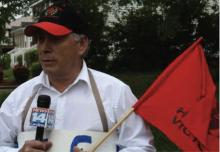
A RECENT ONLINE profile referred to farm worker labor union leader Baldemar Velasquez as both "militant" and "genius." It's hard to argue with either of those designations for the 66-year-old founder of the dynamic Farm Labor Organizing Committee (FLOC). The Toledo, Ohio-based union has used a David-vs.-Goliath style to bring corporate giants to the collective bargaining table, thereby improving the living and working conditions of perhaps the least powerful worker group in the nation.
Velasquez, an ordained evangelical Christian who received a MacArthur Fellowship in 1989, simply sees FLOC's work as God's work, and his opponents might consider following the wisdom of the Pharisee Gamaliel, who said of the apostles, "I tell you, keep away from these men and let them alone ... You might even be found opposing God!"
Velasquez, who founded FLOC in 1967, has yet to lose a battle. A 1967 strike Velasquez led against Ohio tomato growers resulted in two dozen growers signing union contracts. A national FLOC boycott of Campbell's Soup in the 1980s resulted in a three-way collective bargaining agreement that raised wages and improved working conditions for tomato workers. A six-year campaign in North Carolina resulted in another three-way deal between FLOC, cucumber growers, and the Mt. Olive Pickle Company. Today, FLOC is going after another giant, Reynolds American, the second-largest U.S. producer of tobacco products.

Like the masses, we flocked this past weekend to the megaplex for the opening of another would-be blockbuster, pleased to discover that the much-heralded and sometimes-maligned Oz prequel is even more good and wonderful than it is great and powerful.
Acting, plot, intrigue, color, mystery, and special effects: all these measure-up under the fantastic mastery of director Sam Raimi. But beyond the eye-candy, sensitive audience members might be as mesmerized by the movie’s deeper myth and redemptive meaning as by its cinematic technique.
Of course, if we remember the original movie and its myth, the wizard has issues, for there’s a man behind the curtain who is much more about a confession of subdued humility than a profession of supernatural agility. The prequel takes us back before the main myth — to see the man inside the man behind the myth.
Somewhere in the magical middle of this movie, the not-yet-wizard Oscar Diggs (James Franco) makes his confession: “I'm not the wizard you were expecting, but I may be the wizard you need.” We can apply this maxim everywhere. This truth uncovers the human simplicity of the Oz legend and its relevance to all our longings in realms related to power and spirit.