Forgiveness

MANY OF THE VOICES in this month’s readings seem to have “no filter.” They say what they think without adjusting it for politeness or theological correctness. In so doing, biblical paragons are presented as identifiably human, and God is seen as a God who welcomes our unvarnished truth. Here the raw human emotion acknowledges the complex terrain that is the human heart. The texts assume we feel, hurt, and occasionally want revenge; that we transgress and fear revenge; that we want forgiveness for ourselves but not necessarily for others. We can feel that God had gotten the better of us. Our experiences of God can be frustrating and painful. Like Jeremiah and Jonah here and Hagar (Genesis 16:7-14; 21:15-19) and Hannah (1 Samuel 1:9-11) elsewhere, these texts invite us to tell God about God and take our frustrations to God.
The scriptures call us to interpret them with regard to their ancient contexts and our contemporary ones. Israel/Judah, in any of its configurations, was one of the smallest and least powerful nations in its world. The scriptures were compiled and received their last edit when what was left of Israel was completely subjugated by a foreign power. That is not our contemporary situation as Americans. We may have been conditioned to read from the position of Israel, but we also need to read from the position of empires that subjugate. If God can bear us without filters, surely we can scrutinize our own imperial impulses.

FRANTICALLY GRABBING last-minute items, I rush out the door to get my middle-school son to his pregame warm-up. “Oh, don’t rush; it will only take us 25 minutes to get there,” says my son. Surprised, I question where he got that information. Looking up from his phone, he replies, “Google sent a notification on my phone since my calendar has the game with location.” With some marvel in his tone, he remarks, “Every morning Google Assistant tells me how long it will take the bus to get to school.”
Humans have always shared information with each other, but the advance of digital media altered the time and geographic constraints that once shaped our historical patterns of communication. This transition ended the “Gutenberg era,” a period of human communication marked by a dependency on print, authorship, and fixity, and launched us into an era of communication marked by openness, collaboration, and easy access to information.
Despite the rapid pace at which we churn through this information, our new communication styles are also shaped, paradoxically, by permanence. Every share, post, or comment is archived, creating an online trove of information that identifies every person and their connections: where we get our news, what we look like, what sports team or social causes we support, who “likes” our church on Facebook, and, in my son’s case, our current whereabouts, our travel route, and destination points.
The internet is forever
In the world of digital ethics, the “endless memory of the internet” has recently attracted a lot of attention. How do we live in a world that increasingly does not forget?

I had a dream last night that I was reunited with estranged family. Watching them live their lives and being separated from them became unbearable. I sat in my family member’s living room weeping, saying: “I can’t do this anymore.” My not-so-little-anymore niece took me by the hand, in my dream. She walked me to a corner in her room where she laid a prayer cloth on the ground, knelt on her knees facing east, and asked me to offer prayers of forgiveness with her. It stunned me. I woke up.
Forgiveness.
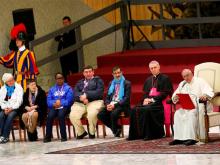
Pope Francis on [Nov. 11] made a surprise visit to meet several men who took the controversial step of leaving the priesthood and starting a family.
A Vatican statement said the pope left his residence in the afternoon and traveled to an apartment on the outskirts of Rome, where he met seven men who had left the priesthood in recent years. The pontiff also met their families.

After quietly removing panes bearing the Confederate flag from its stained-glass windows, leaders of the Washington National Cathedral are now wondering what to do about remaining images of Confederate generals Robert E. Lee and Stonewall Jackson.
"How can you justify having those windows in a house of God?" challenged Riley Temple, a former board member of the Washington National Cathedral's foundation.

Mary Campbell Cosby, cofounder of the Church of the Saviour movement she launched with her husband and partner Rev. N. Gordon Cosby in the 1940s, died this week in Washington, D.C. She was 93 years old.
News of her passing spread quickly on July 3. Kayla McClurg sent an email to family and friends saying, “I am writing to let you know that our dear Mary Cosby passed away very gently and suddenly this afternoon at Christ House.”
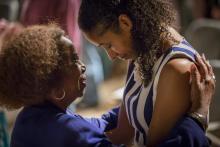
Jim turned to me and said: “We’re greedy — seeking a second blessing.”
I smiled wryly: “This is my third.”
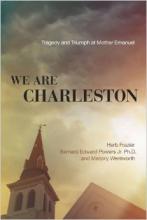
On June 17, 2015, a young white man walked into a Bible study at Mother Emanuel AME Church in Charleston, S.C., and sat quietly until the benediction, when he shouted racist statements and opened fire. The suspect, Dylann Roof, was arrested the next day. Killed were Rev. Clementa Pinckney, Rev. Sharonda Coleman-Singleton, Myra Thompson, Tywanza Sanders, Ethel Lee Lance, Cynthia Graham Hurd, Rev. Daniel L. Simmons Sr., Rev. DePayne Middleton-Doctor, and Susie Jackson. After the killings, some family members expressed their forgiveness.
There are cynics who assume these extraordinary expressions of forgiveness were only a trip of the tongue when these family members were put on the spot—but if that’s true they would have recanted their statements or qualified them somehow. Each said something distinctly different at the bond hearing, and all the complexities and contradictions that weave their anger and grief into the notion of forgiveness must be considered. This forgiveness is not easy; it is quite the opposite.
But not every family had a representative at the bond hearing, and not all the family members feel the same way about forgiveness. Forgiveness itself is as complex as any human action. These extraordinary expressions of forgiveness do not suggest acceptance, nor do they imply forgive and forget.

Will we sit and listen to a refugee mother talk about her family’s horrific life in her war-torn country, and realize we’re no longer afraid of her? Will we talk to the gay couple that needs a cake and hear their love story, and feel a bond because it reminds us of our own love story? Will we look into the eyes with the homeless person begging just outside our car window and see another human being in pain, and suddenly feel an urge to help them? Will we make ourselves divinely vulnerable?
In that moment, we reach beyond our fear. We’re finally freed by love. No longer hiding in a tiny room behind a locked door. That. We all need more of that.

The last days of Weiner’s mayoral campaign devolve into farce, with anxious aides running around and the candidate’s interactions with voters getting more and more contentious. While watching the ship go down is entertaining, what makes the story so fascinating is the boldfaced dishonesty at its core. Weiner the man misses what Weiner the film understands about his predicament: that being made a fool by trusting in the wrong person is an awfully hard thing to forgive.
1. WATCH: How Stealing Elections Became Legal

2. ...And Do Something About It
Are you as outraged as we are about the state of voting rights? Join us in calling on your governor to protect everyone’s right to vote in your state.
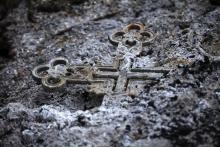
Without his community of his sisters and family, who have been mourning his death and questioning God for not saving their brother and friend, Lazarus would remain entombed. Without community, we remain bound and entombed. I’m not saying that our actions are as great as Jesus raising someone from the dead. But I am saying that God entrusts us with living into community, so that we may welcome our brothers and sisters out of death and into life.

After hours of deciphering the directions and gathering together the countless tiny parts, inevitably you discover that a piece is missing. Somewhere in the unpacking of the zillion elements, you have dropped a small part under the refrigerator or behind the radiator. And it’s never just a missing piece, it’s usually the missing piece: the key part that transforms the pile of random plastic into the one-of-a-kind, fabulous piece it was meant to be.
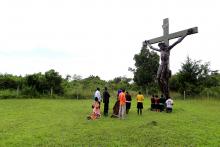
Francis marked the start of the jubilee on Dec. 8, when he opened the Holy Door at St. Peter’s Basilica in Rome. The yearlong celebration calls on Catholics to reflect on the theme of mercy and forgiveness and showcase a more inviting faith. That theme resonates in Africa, home to about 200 million Catholics. A sizable part of this population is tormented by war, violence from Muslim extremists, HIV/AIDS, and poverty.
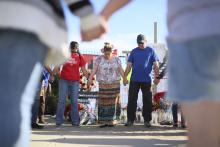
The murderous attacks in San Bernardino, Calif., are too fresh to address at any length.
The brutality and horror of the killings of the innocent and the bloody shootout, the indescribable grief of the families, and the sheer shock of such an incident occurring in an otherwise quiet community demand prayer, reflection, and comfort more than quick and inevitably inadequate pontification.
Sadly, these shootings are not unique. Too often, we have experienced the agony of slaughter in churches, homes, theaters, schools, and other venues of what has been the quiet commonplace.
Yet there is a striking facet of these tragedies that shines brightly amid their grim darkness: The witness of Christians who, in the face of evil, have displayed the love of their savior and the forgiveness he alone can bring.

We think it's wrong for a woman, much less a mother, to be angry. And so when anger inevitably, righteously, hits us — with its cousin fatigue and its brother frustration — we don't know what to do except to bury it beneath a smile that gets thinner and weaker as the day winds on.
We all get angry, though. It is a function of being human, and I daresay without anger we would never have won women the right to vote, school desegregation, or any other host of advances that came about when people got righteously angry and unleashed the power of justice and the Holy Spirit.
So be angry when you are angry. The Bible says so. Do not be ashamed to say, in the moment, "This is not right. I'm angry."
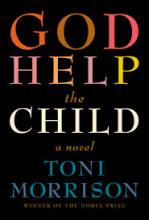
“WHAT YOU do to children matters. And they may never forget.”
This thread runs aggressively through Toni Morrison’s most recent novel, God Help the Child. The speaker is Sweetness, a woman who shares her family’s wounds from trying to pass for white, or “high-yellow,” for generations. Of trying to blend in well enough to drink at fountains, to try on hats in stores, to use the same Bible as whites during ceremonies. When her child and the novel’s focus, Bride, is born black, “midnight black, Sudanese black ... blue-black,” all the advancement Sweetness and her ancestors strove for dies. She loses her husband (who assumes she has been unfaithful), her social standing as a light-skinned woman, and any love for her child. “Her color is a cross she will always carry,” Sweetness says. “But it’s not my fault. It’s not my fault. It’s not my fault. It’s not.”
Bride grows up without the love of a mother’s touch and scorned for being so oddly dark, until she learns to use her color to make herself exotic and marketable. What may seem to be a character living into her identity as a black woman is really a façade in order to regain what was lost because of her skin. Of course, what Bride sees as progress is actually proof that she too has fallen into Sweetness’ obsession with what Morrison described in a recent NPR interview as “skin privilege—the ranking of color in terms of its closeness to white people or white-skinned people and its devaluation according to how dark one is and the impact that has on people who are dedicated to the privileges of certain levels of skin color.” But while race and color as social constructs are themes in the book, they are not explored as deeply or given as much emphasis as childhood trauma.
As in some of Morrison’s other novels, magical realism conveys the battle between the past and the present, the spiritual and the physical, playing a poignant, visceral part in Bride’s journey. Bride goes through a literal metamorphosis, assuming it is penance for gruesome choices she made as a child to feel alive and as an adult to feel powerful. She is numbed to what true progress and success are, constantly trying to put a fragmented identity together until she can no longer get up and must face her trauma and changing body.
The only people in the novel who allow themselves to truly heal are a child named Rain and an ex-convict named Sofia. They speak to the power of self-forgiveness. Too often we carry the shame and hate handed to us by other people’s evil, whether from childhood trauma and abuse or complacency and apathy as adults. While we can and must be held accountable for our own mistakes, we must also be willing to take off the shroud of self-loathing and guilt, and move forward past trauma into self-acceptance and healing. Both Rain and Sofia, young and old, can see the power of blame and regret and refuse to walk that path, while Bride, her lover Booker, and her mother Sweetness will arguably always drag the sins of their forebears behind them.
“What you do to children matters. And they may never forget.”

How could there have been people outside the South Carolina state house this weekend driving around in pick-up trucks with confederate flags attached to their beds, declaring "Heritage, not hate"? How could passerbys affirm these protests with shouts of "Long live the South"? How can people still deny that racism is deeply embedded in our culture? How can they not see that we must confront the harmful words and acts so that everyone may know they are beloved children of God and that their lives matter not just to God, but to their communities as well?
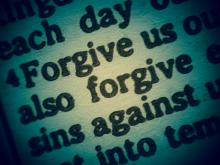
I'm afraid Christians too often have overemphasized Jesus’ commandment, "Go and sin no more!" at the expense of his earlier phrase, "...Neither do I condemn you." Could it be that Jesus' admonition to "sin no more" is a jab directed instead at the religious leaders? That Jesus is telling them if they don't quit their sinning, the sin police will have them killed? And Jesus might not be there next time to save them?

While there are no reliable figures, some church followers think the number of congregations using “church discipline” is growing among conservative congregations. As more cases come to light, they raise questions about the biblical basis and legal implications of such practices. Are these church shepherds just doing their best to care for their flocks, or are they crossing a line by shaming and shunning their so-called sinners?