trump
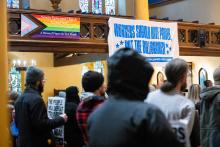
These first few weeks of President Donald Trump’s administration have already been grueling, with a blizzard of executive orders that run the gamut from trolling to hurtful to alarming. We all remember this feeling from the last time around — there are so many shiny objects of outrage for us to chase that after a little while it’s easy to just throw up our hands, admit defeat, and decide to wait out the maelstrom by streaming our favorite television series. So many people are hurt and scared; many are just exhausted.
During Trump’s inauguration in 2017, many responded by attending one of the hundreds of Women’s Marches around the country. Those who participated in these marches set the record for the largest single-day protest in United States history. During Trump’s inauguration this January, the protesters were sparse. It’s easy to feel isolated, alone, and hopeless. For us to get through Trump 2.0 together, we need to figure out new ways to organize.

At the first of what will be many funerals that appear in The Monkey, a young priest struggles to find the right words. After offering some half-hearted bromides about how everything happens for a reason, the priest can no longer pretend that there’s some divine plan behind the death that brought them together — an accident involving a hibachi chef’s knife getting too close to a diner.
“It is what it is,” the priest (Nicco Del Rio) finally declares, with the most conviction he can muster. “The words of the Lord.”
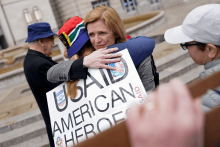
On Feb. 13, a federal judge ordered the Trump administration to unfreeze the billions of dollars in life-sustaining foreign aid suspended by executive order in January. The order, which cited “enormous harm” to global networks of relief agencies and the populations they serve, was met with relief by Christian anti-poverty and anti-hunger ministries. But even amid relief, the chaos of the last month has been relentless, say direct aid providers like World Vision and advocates like Bread for the World.
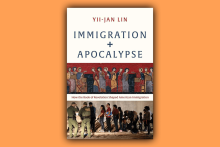
The U.S. has always considered itself as this New Jerusalem — a land specially blessed by God — but also one that is only available to those specially chosen. And from the establishment of the United States as a nation, as Lin discusses, this drive to only welcome certain individuals has been heavily focused on questions of race and national origin. The notion that the U.S. is a nation that welcomes immigrants is a myth that contradicts historical record. Instead, our “[i]mmigration and naturalization laws serve ultimately to create the ideal population as conceived by those who set policy and legislate,” Lin writes.

Even while wrestling with lament, I’ve wanted to move toward contributing to addressing injustice to counter the pervasive injustice that occupies so much of our news. But I’ve just not known how. I’ve felt that nothing in my sphere of direct influence is grand enough to move any kind of needle.
But being a faithful follower of Christ is, in fact, less about giving a virtuoso solo performance and more often playing a small part in a great work we cannot fully comprehend.
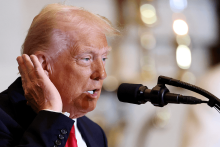
President Donald Trump said on Thursday he would create a White House faith office and direct Attorney General Pam Bondi to lead a task force on eradicating what he called anti-Christian bias within the federal government.
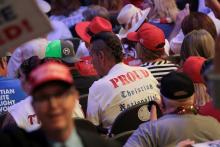
This January, Trump was once again sworn in as president of the United States, propelled to office by the unwavering support of countless evangelical Christians.
For me, the results of the 2024 presidential election felt like the punchline to an incredibly cruel joke. I grew up in the church and still remember the lessons taught to me by my old mentors. I was told that following Jesus meant that truth mattered, justice mattered, how I treated women mattered, and how I treated my neighbor mattered. Later, when I came out as a gay man, my Christian peers insisted that I put aside my personal feelings and desires in the name of biblical fidelity. I spent years of my life making painful and irreversible sacrifices in order to do what I thought was right at the time. Then Trump came along, and suddenly the narrative changed — truth was pliable, character was irrelevant, and justice was getting in the way of “winning.”

“It was chaos,” sighed Stacey Hall Burge, CEO of Found House Interfaith Housing Network, which provides emergency shelter and programs for families dealing with housing loss and insecurity in the Cincinnati area.
“From Monday to Friday, we had no specifics, no clarity,” said Burge, recounting the past week at her organization. “There are rents and supports for hundreds of families I am not sure how to pay right now. Families that worked hard to get off the streets, who may go right back. Many of them working, but unable to fully afford rent in the current housing crisis,” she told Sojourners in an interview over Zoom.
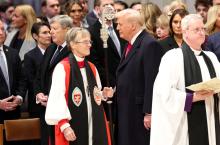
But before her sermon concluded, Budde addressed the president directly:
“Let me make one final plea, Mr. President: Millions have put their trust in you, and as you told the nation yesterday, you have felt the providential hand of a loving God. In the name of our God, I ask you to have mercy upon the people in our country who are scared now. There are gay, lesbian, and transgender children in Democratic, Republican, and independent families, some who fear for their lives.
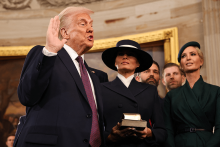
President Donald Trump’s inauguration as the 47th president was filled with religious imagery that often projected God’s blessing on Trump’s promises of American domination, expansion, and nationalism.
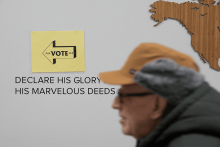
As countless Christians have expressed their disappointment with the results of the presidential election, many have heard in response platitudes such as “God is still on the throne” or “God is not Republican or Democrat.” Zach Lambert has heard those messages before. But as lead pastor of Restore Austin, he and his Texas team took a different approach. Instead of trying to “turn eyes heavenward,” his team worked to remind their church that God was with them in their grief and struggle.
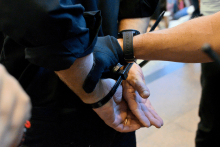
After news broke Wednesday that President-elect Donald Trump planned to nix a policy discouraging immigration arrests in places like churches and schools, Indiana pastor Zach Szmara fielded questions from churches across the country about how to prepare.
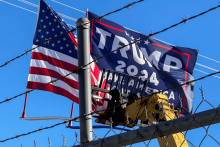
For a long time, I’ve wondered how, on a practical level, something like mass deportations would work. Specifically, I’ve wondered how churches providing shelter to immigrants will respond if and when Immigration and Customs Enforcement agents show up to deport people seeking refuge. What can faith communities, activists, and people of conscience do to tangibly help immigrants right now?
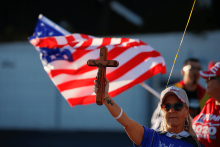
For faith activists and leaders committed to continuing their work to oppose and resist Christian nationalism, President-elect Donald Trump’s return to the White House is disappointing but not a sign of total defeat. Ahead of Inauguration Day, many activists are continuing their coalition-building efforts and sounding the alarm on specific policies they believe Trump may sign executive orders on, day one in office.

We are in for a difficult four years as a country. During the first four years of Donald Trump’s administration, I did not hesitate to call him a fascist, and looking ahead to his next four years, I am so worried about vulnerable people in this country. I am worried about immigrants. I am worried about queer people and trans kids. I am worried, yes, but I know that even in the most difficult time, miracles are possible.

Rev. Jes Kast started planning for the Sunday after the election in midsummer, before her three-month sabbatical. She’d timed her leave intentionally, wanting to return to her congregation well-rested, right before one of most contentious elections in U.S. history. “I had a sense in my spirit that this next phase in ministering, whatever the outcome of the election, would require me to be as spiritually grounded as possible,” said Kast, who pastors Faith United Church of Christ in State College, Pa.
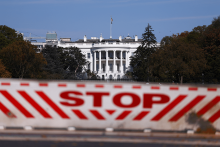
Trump’s campaign was marked by racist and misogynistic rhetoric, promises of authoritarian tactics including dramatic expansion of executive power and retribution for his political rivals, as well as policies that appealed to the anxieties of conservative religious communities, especially Christians.
As faith and justice leaders absorbed the news of a second Trump term, many pointed to the importance of fostering and caring for self and neighbor while figuring out what to do over the next four years.
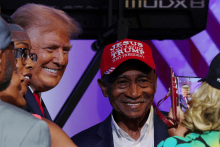
Armed with the message that Americans have become too morally liberal and strayed too far from God’s light, a few Black conservative Christians, like Pastor Lorenzo Sewell, are trying to upend the historic support of Black Protestants for the Democratic party.
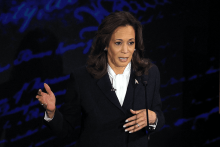
As Vice President Kamala Harris and former President Donald Trump discussed abortion policy during their first debate, Harris vigorously defended her vision for federal abortion rights. While she did, she returned to a talking point meant to appeal to religious voters.
“[Under Trump’s abortion bans] a survivor of a crime — a violation to their body — does not have the right to make a decision about what happens to their body next. That is immoral,” Harris said, before connecting morality and faith. “And one does not have to abandon their faith or deeply held beliefs to agree: The government, and Donald Trump certainly, should not be telling a woman what to do with her body.”
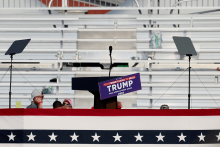
“It’s a shame he missed.”
That was the first thought I had when I saw that someone had attempted to assassinate former President Donald Trump. My second thought was, “You shouldn’t think that — you consider yourself a peacemaker and pacifist.” I wondered how my Christian commitments could erode so quickly.