Arts & Culture
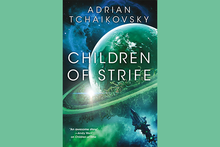
ADRIAN TCHAIKOVSKY’S Children of Time series begins with a premise so simple it sounds like a B-movie: What if we landed on a planet full of talking spiders? From that jumping-off point, he builds a story spanning star systems and thousands of years with remarkable insight and humanity. Four books in, with Children of Strife ’s 2026 arrival, he is still asking the question driving the whole series—Who is my neighbor?—and still finding ways to make the answer genuinely uncertain.
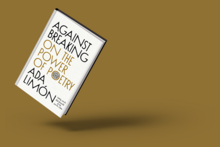
FOR MY GRANDFATHER’S first death anniversary, my mother wanted me to design a thank-you card for those who supported our family throughout the year. The card featured a poem I wrote recounting one of my treasured memories with him: feeding his chickens as a rooster crowed in the wee hours of the morning. Upon reading it, one of my uncles smiled and asked, “Did you include this because your Lolo was a poet?” I didn’t. The 8,441 miles between Dallas, Texas, and Daanbantayan, Cebu, Philippines, left me bereft of the more intimate details of my grandfather’s life, including that we shared an affinity for the written word. This unexpected link soothed my suffocating sadness at our now permanent separation, thanks to a medium that is often at the crossroads of mending what is broken.
AUGUST IS THE month of spider webs. Where I live in Chicago, they erupt and crackle from corners and streetlamps and porches, birthing and killing multitudes. It’s a month of green exploding and beginning to rot, a month of lingering heat and thunderstorms and frayed nerves and migraines, a stickiness that won’t go away. I’m uncomfortably alive.

ALFRED HITCHCOCK ONCE said, “In feature films the director is God; in documentary films, God is the director.” That’s true in a more theologically complex way than the director of Psycho and Vertigo meant. In a literal sense, a director controls a movie’s tone, guides actors’ performances, and chooses which shots make it into the final cut. In doing so, the finished product’s audience understands the story, characters, and themes through the director’s perspective. We see their creations as they see them, the same way God understands us entirely, beyond our actions and curated exteriors.

ACROSS SOCIAL MEDIA you’ll find sped-up videos of people sitting and doing nothing. They settle in alone, with no phones, and simply sit with their thoughts. The figures in these videos are trying to retrain their attention spans. After years of mindlessly scrolling through social media, they now film themselves, clasping their hands, tapping their thumbs, closing their eyes.
In The Sirens’ Call: How Attention Became the World’s Most Endangered Resource, author and political commentator Chris Hayes argues that technology firms are deliberately chipping away at our ability to focus. He details how our attention spans and value systems have been reoriented and commodified for financial gain. Attention “is the foundation for nearly all we do,” he writes, “from the relationships we build to the way we act as workers, consumers, and citizens.”
Our attention is precious and we need to protect it, to draw it close. As inherently curious individuals, the deep dive of doom-scrolling harms us. It cuts to the deepest part of us, the inquisitive part, which can’t contend with the infinite content overload of social media.
I was a Mary Oliver skeptic for a long time. The first time I read “The Summer Day,” with its lines about feeding sugar to grasshoppers and considering your “one wild and precious life,” I found it preposterously sentimental. At the time, I resented being told it was more honorable to spend my time strolling through fields and hand-feeding bugs than to pursue my preferred activities of browsing library bookshelves and hovering over record store discount bins.
Then, a few years ago, I was helping my uncle water his garden when I noticed something out of the corner of my eye. There, balanced on a hosta leaf, was the biggest grasshopper I’d ever seen, about the size of a field mouse. I knew, without a doubt, God had made that grasshopper. More than anything, I wanted to feed it some sugar. That was the moment Oliver’s poetry finally clicked for me—a divine nudge to notice the world’s natural beauty and its intricate systems.
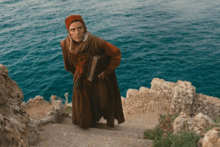
In the Hand of Dante is all over the place. The narrative advertised by its title, of medieval Italian poet Dante Alighieri’s struggle to write his epic poem, The Divine Comedy, competes for screen time with a neo-noir story in which a fictional version of Nick Tosches, the late author of the book on which this film is based, is recruited by a crime boss to authenticate the poem’s long-lost original manuscript.
Oscar Isaac plays both Dante and Tosches. Gerard Butler stars as an unpredictable, “I woke up and chose violence” hitman who accompanies Tosches to Italy, as well as Pope Boniface VIII, who exiles Dante from his native Florence. (The two belonged to opposing factions vying for control of the great Italian city-state, with Dante supporting civic independence from the Vatican.)
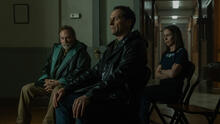
Sometimes I have to remind myself that I believe in the supernatural. I mean God, not ghosts. One reason I love horror is because the genre insists that for all of the world’s attempts to explain everything that happens to us, there are still some mysteries.
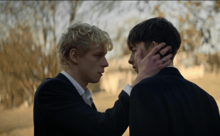
In 2026's Leviticus, a boy called Naim becomes convinced by religious believers that it is good to be alone. It’s not an unreasonable conviction; indeed, Naim believes being alone may be the only way to truly avoid the demonic entity that has plagued him since a forced attempt at conversion therapy by his church.
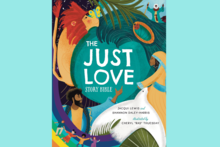
I don’t want to exaggerate, but my family are sort of kids’ Bible specialists. We’ve been through a fair many, both for independent reading for our 8-year-old daughter and for the family reading time we share every night. That’s why I greeted The Just Love Story Bible (Beaming Books) by Jacqui Lewis and Shannon Daley-Harris, with illustrations by Cheryl “Ras” Thuesday, with excitement—it offered just the sort of justice-centered telling of scripture that my wife and I are trying to expose our daughter to.
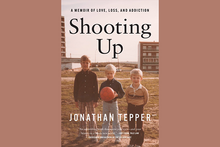
Clarity Amid the Noise
The Straight White American Jesus podcast believes “democracy depends on religious literacy.” Hosts Bradley Onishi and Daniel Miller, both former evangelical pastors, offer weekly Sunday interviews and refreshing insights on current events. Axis Mundi
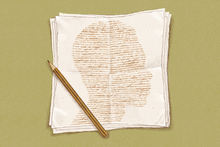
SHANDA MCMANUS HAD just finished her first semester of medical school when she found out her little brother, Monir Hall, had been struck down in a drive-by shooting. As she was becoming a doctor, Hall—an army veteran and father of two, just shy of his 21st birthday—was selling crack in their Philadelphia neighborhood. In a cold hospital room where Hall lay brain-dead, McManus pressed her hand to her brother’s chest and thought she felt faint beats of his heart. In her debut memoir Brother Epistles, McManus recounts the night when she walked out of that room. She “had the sense of facing two doors, one marked DIE and the other LIVE.” She “stepped, unfeeling, through the second.”
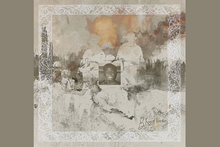
“REMEMBER, LIFE DOES not have to end with suffering,” writes Janjay Lowe in an Instagram caption promoting his latest album Bloodline. Performing under the moniker Mon Rovîa, the Chattanooga-based folk singer’s debut is a chillingly tender body of work. Tapping into the storytelling of his lineage through the sounds of his adoptive home, every strum, chord progression, and harmony is a cultural exchange.
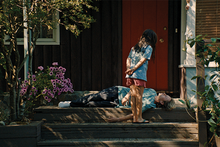
I didn’t expect to cry watching hash browns burn in a cast-iron pan, but that’s the shattering power of director Sophy Romvari’s Blue Heron, a semi-autobiographical drama that ruminates on the power and limits of our memories.
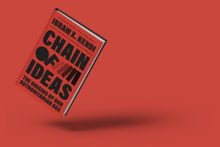
THE QUESTION IS no longer whether we live in a time of democracy’s collapse in the U.S. The question is how we got here. Historian Ibram X. Kendi might have uncovered that history.

I’ve been contemplating
going off-grid—
writing
a new Scripture
of fire and flood, the next
Revelation.

Resounding Love, a diverse interfaith choir, is bringing a message of love and hope to its Juneteenth concert in Seattle.
The group offers the most powerful and uplifting elements of church gospel music to people of many faith backgrounds, the Rev. Angela Farrar Small, director of chaplains, said. Resounding Love’s Juneteenth performance will center on African American identity, culture, history and social justice.
Juneteenth commemorates June 19, 1865, when enslaved African Americans in Texas learned of their freedom, more than two years after the Emancipation Proclamation. Now it’s a federal holiday celebrating the end of slavery in the United States.
African American gospel and spiritual music has brought people together “from the deepest depression to the biggest joys,” Small said.
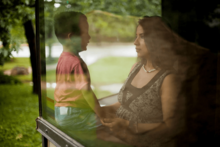
Theo Rigby’s new documentary Si Pudiera Quedarme/If I Could Stay follows sanctuary activists Jeanette Vizguerra and Ingrid Encalada Latorre as they resist deportation to stay with their families and communities. At its heart is a story of courage. Standing in front of a classroom in Denver, Vizguerra explains it like this: “Like all people I am afraid, but I also feel the moral duty to raise my voice as a person, mother, and woman. Because the problems I am facing are happening to thousands of others on the street. And someone has to be the person putting their finger on that problem.”
Sanctuary as a tactic emerged during the Vietnam War, when houses of worship shielded draft resisters from arrest. The 1980s saw the advent of the Sanctuary Movement, which focused on critiquing the Reagan administration and giving Central American asylum seekers platforms to speak about the violence happening in their countries of origin. After the success of that movement, Sanctuary saw a revival in the 2010s. The “New Sanctuary Movement” critiqued our unjust immigration system by housing undocumented immigrants and giving them a platform to share their experiences and build power.
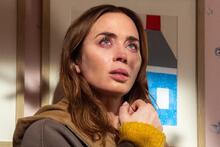
On my last day of college, I went to my chaplain’s office to ask her a final theological question. “In case this comes up in the next few years and I don’t have a trusted faith leader nearby to ask: What does it mean for Christianity if we learn definitively that aliens are real?”
I wish I could recall her exact response. But I only remember that she was amused—and not worried at all about the existential impact of the extraterrestrial. If I had asked her today, she probably would have directed me to see Steven Spielberg’s latest aliens-are-real epic, Disclosure Day.

The prediction market is booming. In April alone, it was estimated that Polymarket and Kalshi recorded nearly $24 billion in trades.