Faith
IN MY MEMORY from nearly 50 years ago, the great pitcher Sandy Koufax is going against my Phillies in the old Connie Mack Stadium in Philadelphia. The records show that such a game occurred on June 4, 1964, the right year for my memory, so it is possibly correct. But I cannot prove I was there that day, nor can anyone prove I wasn’t. For me, it has entered the realm of myth—I may not actually have been there, but in my memory I believe I was. In a similar manner in religious experience, historical events originally recorded as perhaps inexact memories come to be believed as literal truths.
In Baseball as a Road to God, John Sexton uses the categories of the study of religion to explore the meaning of baseball. Sexton, president of New York University, has taught a popular seminar on this topic for more than 10 years, and in this book collects the essence of those classes.
For a baseball fan, the well-told stories of historic players, games, and seasons are by themselves worth reading and will evoke many memories. But rather than a random collection of stories, Sexton groups them in topics—sacred place and time, faith and doubt, conversion and miracles, blessings and curses, saints and sinners—illustrating each with fitting examples. Underlying it all, he proposes, are two words and concepts that link baseball and religion. Both illustrate the significance of the ineffable, “that which we know through experience rather than through study, that which ultimately is indescribable in words yet is palpable and real.” And both have moments of hierophany—a term devised by religious historian Mircea Eliade to signify “a moment of spiritual epiphany and connection to a transcendent plane,” a “manifestation of the sacred in ordinary life.”
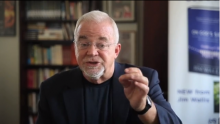
Jim Wallis sat down to discuss the government shutdown. His conclusion? It's unbiblical.

The top religion story of 2012 was the “rise of the ‘Nones’” — the one in five adults in the U.S. eschewing any religious label. That trend is now evidenced across the American religious spectrum, including in Jewish communities. About 22 percent of Jews now describe themselves as having no religion, according to a new Pew Research Center survey of U.S. Jews.
“Fully a fifth today of Jews in the United States are people who say they have no religion. They’re atheists, agnostics, or, the largest single subgroup, nothing in particular,” said Alan Cooperman, co-author of the study.
The trend of disaffiliation mimics that of other backgrounds, particularly by age. For example, 93 percent of Greatest Generation Jews (those born between 1914 and 1947) identified as being Jewish by religion, while only 68 percent of Millennial Jews (those born after 1980) say the same.

After reciting what we call the Lord’s prayer one Sunday, I got to thinking about how many times I’d said those words. Thousands? But how many times have I actually thought about what the words mean?
If we pay attention, it’s a prayer that makes us very uncomfortable.* These words of a peasant Jewish rabbi from 2,000 years ago challenge so much about the way we live — all of us, regardless of what religion we follow. If we’re honest, most of us don’t like it and have no intention of living by what it says.
Which presents a question: Isn’t it a problem if we pray one way and live another? Shouldn’t our prayers reflect how we actually try to live?
Along those lines, perhaps we should rewrite the Lord’s prayer and make it conform to what we really believe. In that spirit, here’s a rough draft of what it might sound like if the Lord‘s prayer was actually our prayer.
LAST YEAR on NPR’s “All Things Considered,” I heard the story of Teresa MacBain, a United Methodist pastor who came to the conclusion she was an atheist. The situation was scary and awkward for her. Who could she tell? What would she do now for a living?
She wasn’t trained for any other occupation, but neither could she continue her double life of preaching and public praying while knowing she didn’t believe in any of it.
Lacking someone to confide in, MacBain secretly confessed to her iPhone, “Sometimes I think to myself: If I could just go back a few years and not ask the questions and just be one of the sheep and blindly follow and not know the truth, it would be so much easier. I’d just keep my job. But I can’t do that. I know it’s a lie. I know it’s false.” Eventually, she left the ministry.
As I listened to MacBain’s interview, I empathized with her. After 30 years of serving as a Mennonite pastor, I often wonder whether I still believe the things I’ve always said I believed. My questions about God have become deeper, while my previous answers now sound shallow. The thought that I might not believe in God is frightening. It threatens my identity and worldview—not to mention my occupation. And yet I haven’t arrived at MacBain’s atheism. Instead, my doubts have been folded into my faith.

We live in a church context where so many embrace unbiblical either/or understandings of Christianity: Either evangelism or social action, either inward journey or outward journey. And on and on.
It is the widespread onesidedness that makes Rich Nathan’s new book so exciting.

Meet “Our Lady of Perpetual Exhaustion,” a saint everyone probably can relate to.
The chaos of everyday life and the methods we use to overcome it are on display at the “Our Lady of Perpetual Exhaustion” exhibit in two D.C. galleries.
“We all have coping mechanisms,” said Cynthia Farrell Johnson, creator of the exhibit’s theme. “And for most of us, part of our coping mechanism is our spiritual life.”

1) Jesus Avoided Labels
In fact, a large part of his ministry was breaking down preconceived titles, trying to bring about a world where there would be no differentiation between Jew or Gentile. He promoted the idea that loving God trumped racial, ethnic, social, religious, and political identities.
This doesn’t mean we’re simply “all the same underneath.” Jesus recognized that people had distinct differences, on both a personal and communal level. He embraced unique cultures and traditions and utilized them to reveal his glory, recognizing and valuin
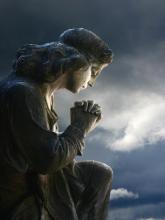
Any right-thinking stranger on our shores must read our daily news and think our nation has gone mad. We have cultivated the ability to end lives quickly; and yet we are continually surprised when our fellow citizens use the tools we have devised for exactly the purpose for which we invented them. Come to think of it, I think we’ve gone mad, too.
But our madness is not one that can be cured by laws alone. Laws can help to restrain us, and can help by making it a little less easy for us to find ourselves armed for murder. But we need something more, something that churches are better equipped to offer than legislatures are.
What we need right now is a richer moral imagination. We need better stories to tell ourselves, stories about the kind of people we could be. We need, more than anything, to learn to help one another to do the hard work of choosing not to pull the trigger.

I’m often asked about what trends I see within Christianity, both good and bad. So in my ongoing effort to help name trends and offer an alternative way of thinking about our faith, here are the five biggest things I’ve seen that tend to keep us from doing our best work as the living, breathing body of Christ in the world today.
1. Church Buildings — Many of our church buildings were established in a time when Christianity was booming numerically in the United States. We could hardly keep up with the growth happening all around us. Understandably, churches popped up where the people were too, drawing many away from their old downtown churches to a more convenient suburban community. But as our numbers have dwindled – combined with the fact the we’re a much more mobile society now that ever before – many churches are becoming monuments to what has long since passed. They have become an albatross rather than an asset.

The bearer of Good News, the one who carries the message of Resurrection, is not motivated by fear of punishment (either for herself or others) but by confidence in her experience of the love of God. She knows God's love is greater than anything in herself or in her hearers; that Jesus can conquer anything in them that is not controlled by holy love.
"Such love has no fear, because perfect love expels all fear. If we are afraid, it is for fear of punishment, and this shows that we have not fully experienced his perfect love." 1 John 4:18
God's love has the final word, for Jesus has conquered the sin of the whole world and has defeated the grave. Christ's best messengers know this love by its all-consuming redemptive activity in themselves and confidently carry this love to others, without fear.

Have we missed those moments where God is hitting us over the head by using people to continue the work of God in the world? Has the church been so focused on bodies, babies, and baptisms that we have failed to see the goodness of God outside the four walls of the church?
I talk to people nearly every day about the presence of God in the world. I speak of how God knows us, cares for us and is abiding with humanity in every time and place. But as with most things, they are easier said than done. Sometimes it takes something drastic to get our attention instead of trying to navigate this thing called life alone.
For one to actually contemplate the presence of God in the world is a bit overwhelming; For one to actually contemplate the presence of God in the world is a bit overwhelming; God is present in every aspect of human life — from the trees, to the clouds, to the faces of people we interact with each day. They are all created by the same hands of the same God.

Turning our faith into a set of rights and wrongs is partially based upon our own insecurities, but our fears are often warranted by how others respond to us.
“You attend that church?! Oh, that’s your pastor?! You went to that seminary?! You’re reading that book?! You like that theologian?! You belief that?! You like that type of worship?!”
It’s happened to us all at least once — someone labels our faith as wrong.
Question after question, one after another, on a daily — almost hourly — basis. If we aren’t careful, our faith and spirituality can quickly devolve into a set of distinct questions and responses.
In a corporate culture driven by hard data, statistics, evidence, trends, sales, surveys, and measurable information, our beliefs can be treated like a quarterly business summary — dissected, analyzed, and studied.
Our relationship with God turns into a cold and calculated set of methodologies, hypotheses, and professional-driven structures — the intimacy, raw communication, and love slowly disappears.
The mystery of God becomes something meant to be overcome, explained and defeated. And our church institutions become modeled after Fortune 500 companies instead of reflecting the vibrant early church communities of the New Testament.

Too much religion can harm a society’s economy by undermining the drive for financial success, according to a new study in the journal Social Psychological and Personality Science.
The study of almost 190,000 people from 11 religiously diverse cultures is raising eyebrows among some of England’s religious leaders for suggesting Judaism and Christianity have anti-wealth norms.

Recently I’ve been re-reading Susan Cain’s excellent book, Quiet: the Power of Introverts in a World that Can’t Stop Talking. Extroverts will want to take it with a grain of salt (although some of the book’s speculations suggest that extroverts are fairly thick-skinned about being taken down off their pedestals), but the book is a fascinating exploration of what it’s like to be an introvert in the world, including some analysis about how one gets to be an introvert, anyway, including how much is genetic, and how much comes from early environment.
It was in reading one of these “nature or nurture?” passages that I first encountered the “orchid hypothesis.” Taking its name from David Dobbs’ 2009 article, “The Science of Success,” published in The Atlantic, the orchid hypothesis essentially argues, as Cain puts it, that:
“… many children are like dandelions, able to thrive in just about any environment. But others, including the high-reactive types that [developmental psychologist Jerome Kagan] studied, are more like orchids: they wilt easily, but under the right conditions can grow strong and magnificent.” (Quiet, 111)
This jumped off the page at me.
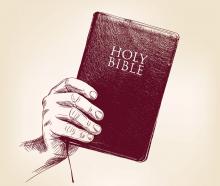
One Sunday morning, I was facilitating a discussion with the teenagers in my small group. The students were engaged. Most of them voiced their opinions. Some of them even backed their views up with Scripture. Others defended their stance based on personal experience. The discussion was going well, but we had veered so far off course that I wasn't sure how to make our way back to the original topic. Usually this didn't bother me, because those seemed to be the times their perspectives were broadened the most. But I could see things were beginning to get heated. The students were divided and beginning to make things personal.
I interrupted the students in hopes of bringing them back to the point at hand. It didn't help. The open dialogue on truth had taken a turn for the worse. It was now a full on assault in which denominational pride resorted to church bashing and religion hating. I knew that if I didn't intervene soon, all hell would break loose — the Crusades would be re-birthed and someone might get burned at the stake. After a while, my frustration got the best of me and I opened my mouth long enough to let a few unfiltered words fly. No, I didn't yell, swear at them, or lose my temper in any manner. Had that been the case, I'm sure the backlash would have been much quicker and less severe.
There, in the middle of what used to be the sanctuary, I told that small group of teenagers they could find truth in the Qur'an.
So, here's the thing. I just met Rev. Alfred Williams. He's a retired UCC pastor. At 81, he's still preaching and teaching. He's still asking great questions and pushing congregations to do the same. When I am his age, I hope to be as passionate. Hell, I wish I were as passionate now. With that introduction, I want to share this sermon that he preached on Aug.18 of at Ladera Community Church.
I think this sermon serves to blow apart some of our assumptions about generational differences within church leadership. He preached on Mark 8:27-33.

My children spend more time building with Lego than just about anything else. Almost always, what they make is surprising, unexpected, startlingly new.
I want to share some observations from when a totally different thing enters the picture: the Lego building challenges.
For days after they read about a new “challenge” (build a dream home, build some kind of robot, etc.) they’ll work and re-work a project and pester us to photograph them and worry about whether or not they’ll win. Here’s the surprising part:
When they are building for the contest — for that $100 gift card and their picture in the magazine — their creations are startlingly less creative. All of a sudden, they are timid and anxious about their creations. Honestly, their for-contest work is always inferior to their regular work.
Why does this matter? Because I think it shows us something important about motivation and its effect on creativity.

As a teacher, I tend to change the channel or radio station when the news turns to issues related to schooling and education. It is difficult to listen to people discuss aspects of my daily experience as if they were a part of it. When a news story involves an act of violence in a school or a natural disaster wreaking devastation on children and school employees, I am almost less likely to listen. It is too painful to think about what that would be like for me, my colleagues, and most importantly, my students.
When major news networks began playing a recording of suburban Atlanta school employee Antoinette Tuff’s 911 call reporting a shooter in her school’s building on Tuesday, I almost turned off the TV. Then, I heard Tuff’s calm voice interacting with the shooter as though as he was any distraught child in the office needing extra attention. I started to listen.

Out of nowhere, I felt an urge to listen to Willie Nelson’s epic album Stardust, a collection of pop standards that went platinum when it was released in 1978.
As I listened to “Blue Skies” and “On the Sunny Side of the Street,” I remembered buying this album for my father. I thought he would enjoy a fresh take on these songs of his youth, his travails during the Great Depression, and the war that defined his generation.
I don’t think he ever listened to it a second time. He loved the songs, but he couldn’t bear the fresh take. He wanted Gertrude Lawrence, the original voices of Tin Pan Alley and Depression-era hopefulness, the crooners that carried his generation to war and back home again.
I understand. The music we hear at our first dreaming, first love, first dance becomes the soundtrack of our lives.
For many people, the same is true of faith. Our images of God, songs of worship and language of prayer tend to be those we acquired at first awareness. Many more images, songs and words will come later, but none might resonate so deeply as those that were imprinted on us early on.