LGBTQ
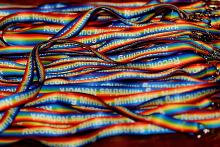
United Methodist Church delegates voted on May 1 to remove a ban on ordaining gay clergy and to allow LGBTQ+ weddings.

Standing hand in hand with my fellow classmates at St. Lawrence Catholic Church and School in North Miami Beach, Fla., I couldn’t help but notice how sweaty my hands were. It was 2006, and another 98-degree, humid day in my hometown was upon us. The old church’s air conditioner wasn’t very effective, and I remember I had a feeling I just couldn’t shake — even at the young age of 9: I felt as though something was deeply wrong with me.
I was raised in a primarily Caribbean Catholic tradition, where my family and community emphasized that adhering to the strict rules of the church was what made you a good person. Every morning, my dad would rush me and my sister out the door to school. We would line up with our classes and recite prayers before entering the building, no matter how hot it was outside. During the day, I took religion classes and memorized scriptures my teachers required me to recite at church twice a week. I hated it all.
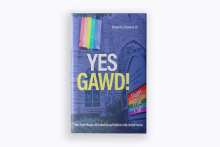
The effects of personal religious belief are everywhere in politics, from the rallying sermons of Rev. Martin Luther King Jr. to Christian nationalists citing biblical justice when Roe v. Wade was overturned. For queer people, R. G. Cravens argues, faith is more than a motivating factor — it can be a way into political engagement. His research shows religious LGBTQ+ people are more politically active than nonreligious LGBTQ+ people. In fact, religion often facilitated political activity, from congregations marching together at Pride events to organizing letter-writing campaigns to government officials.

IN THE GEN-Z romance XO, Kitty, Netflix platformed an uncommonly tender father-daughter exchange. “I have feelings for my friend Yuri, who’s a girl,” says Kitty, an American attending high school in Seoul, Korea. Speaking to her father across continents and generations, she’s visibly nervous to come out. He’s nervous too, but only because his daughter called him in the middle of the night. “Oh, thank God,” he exhales. Confused, she asks, “Thank God I’m bi? Or pan? Or fluid?” He smiles. “Whatever pan or fluid is, thank God you’re safe and healthy.”
I realize it’s doubtful the father is literally engaging the divine here — I don’t even know if he’s Christian — but I’ll take what I can get. Depictions of religious parents embracing their children’s queerness are rare. Christian coming-out stories are usually serious dramas, not binge-worthy rom-coms.

Payne details the creation, proliferation, and decline of CCM, tracing the industry’s relationship with conservative evangelical Christianity.

Posting a fake acceptance letter to Bible school is an unusual way to promote a rap single, but Lil Nas X’s self-proclaimed “Christian era” has brought just that.
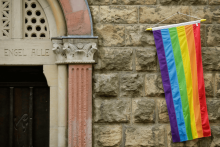
The Vatican on Thursday moved to calm Catholic bishops in some countries who have balked over last month's approval of blessings for same-sex couples, telling them that the measure is not “heretical” or “blasphemous.” In a five-page statement, the Vatican's doctrinal office also acknowledged that such blessings could be “imprudent” in some countries where people who receive them might become targets of violence, or risk prison or even death.

THE FIRST TIME I became conscious that I was carrying the effects of religious trauma, I had just moved to Seattle and was sitting in a church, sweating.
My heart was beating fast; I couldn’t understand what was happening. This church, one I had chosen expressly because of its progressive, LGBTQ+ affirming stance, was supposed to be safe for someone like me, a queer person who deeply valued my faith. But I didn’t feel safe. I looked at the faces in the room with suspicion, searching for any indication of a bait-and-switch, and left the building quickly once the service was over.
Despite what I knew about the church — they welcomed LGBTQ+ people at any level of leadership, were committed to anti-racism work, and weren’t afraid of doubt or theological exploration — my body told me another story. As I sat in the cold folding chair, I tried to reason with myself, repeating these facts to calm down. But I didn’t feel calmer; I felt worse. I sat on my hands, legs shaking, as I waited for the service to end.
Because I had moved to Seattle to work on a master’s degree in counseling psychology from an institution that specialized in trauma, I soon learned what had happened: In that moment, my body had experienced the effects of trauma. Even though I cognitively knew the church was supposed to be safe, my body couldn’t discern this church from all the churches I had been in before — churches filled with people who weren’t afraid to tell me I needed to become straight for God to save me from hell. My body was sending warning signs: Be careful, environments like this aren’t safe. Despite the years of work I had done to detach myself from the rigid belief system of my youth, despite the ways I had fought to find a more life-giving approach to theology, I was beginning to reckon with the reality that changing my beliefs didn’t mean I had healed from the environments in which I was raised.
Now, years later, I see more people waking up to the realities of lingering religious trauma. When I scroll through my streaming apps, I see documentaries such as Shiny Happy People, Pray Away, and Hillsong: A Megachurch Exposed that detail different forms of religious harm. I think this growing awareness of religious trauma is part of the driving force behind “deconstruction,” a buzzword that describes the process of reevaluating, changing, and sometimes abandoning one’s beliefs. But what I don’t see as often on Netflix — or on podcasts or on social media or at church — is honest talk about the process of healing. And as someone who now works as a therapist helping survivors of religious harm find healing, I know there is a lot more to say.

In a blow to LGBTQ+ rights, the Supreme Court on Friday ruled that the constitutional right to free speech allows certain businesses to refuse to provide services for same-sex weddings, ruling in favor of a web designer who cited her Christian beliefs in challenging a Colorado anti-discrimination law.
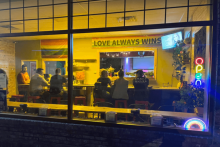
The working-class town of Bellefontaine (pronounced “bell-FOUNTain), nestled among the farm fields and hills of rural Ohio, in the heart of Rep. Jim Jordan’s legislative district, is not the easiest place to grow up queer. The churches are much more likely to hold to conservative views on sexuality than be LGBTQ+ affirming, and “Trump Won” flags far outnumber rainbow Pride flags.
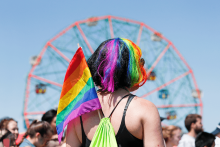
A Christian-owned wellness center is exempt from the federal law prohibiting employers from discriminating on the basis of sexual orientation and gender identity, a federal appeals court ruled on June 20.

“To live fully and authentically.” It’s a phrase that resonates for me as someone who came into their queerness later in life. For a long time, the possibility of living fully and authentically felt just beyond my reach; I felt I was skimming the surface of my being and longed to be fully immersed — soaked and drenched — in who I am. But I was afraid. What would living authentically mean for my place in the world? As a second-generation Korean American who has long struggled to be seen and accepted, I wondered if being queer would foreclose this possibility.
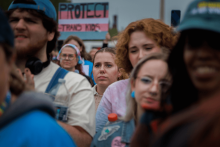
I know some Christians do not fully share my theological convictions about gender and sexuality, but on issues of human dignity and civil rights, the church should be firmly united: Transgender and nonbinary siblings are God’s children made in God’s very image and likeness. Prohibiting lifesaving medical care, tolerating discrimination, or denying someone the ability to use their name is wrong; you cannot deny people those rights because you disagree with their beliefs about gender or sexuality. Christians should be standing in the breach in defense of the full humanity, dignity, and rights of their trans siblings.
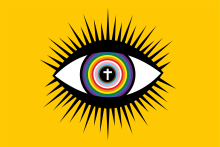
Asexuality and aromanticism describe those whose orientations are often defined by lack and rarity. We’re atypical in that we don’t experience sexual and/or romantic attraction, or when we do, it’s the exception to the rule or under certain conditions. We’re inconvenient to remember — on all sides of the political and religious spectrums.

Historically, there have been many Catholics who have pushed back against gender norms. But like modern conservatives who focus on the outrageous aspects of the Sisters of Perpetual Indulgence while ignoring the group’s tireless work caring for the sick, homeless, and poor, the Catholic hierarchy has also attempted to mute the stories of gender-nonconforming people throughout its history. And in doing so, the church hierarchy has often ignored the acts of mercy so central to Catholic teaching.

In short, the gospel demands that the church asks some basic sociological questions to help it navigate difficult social waters. In regard to trans people, our questions should be informed by the work of people like organizer and writer Dean Spade, who wrote the book Normal Life. How does our society, with all its norms, move trans people closer to vulnerability and death, or closer toward security and life?

In my last years of college before I started seminary, I was in the wilderness. I had to finally grapple with feelings I’d been trying to avoid for years: that I was attracted to women, and that something about the gender I’d been assigned wasn’t right.
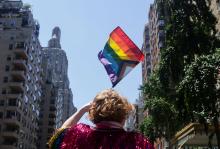
The current discourse around right-wing politics and religion has been focused on the phrase “Christian nationalism.” Christian nationalism is a catchall for a variety of beliefs that generally claim the U.S. is founded upon Christian ideas and that the country’s current laws ought to reflect those beliefs. Rep. Marjorie Taylor Greene (R.-Ga.) is perhaps one of the most well known politicians in the U.S. who identifies as a Christian nationalist, but, according to a survey done by Pew Research, “Eight-in-ten White evangelical Protestants (81 percent) say the country’s founders intended it to be a Christian nation.” Christian nationalism, as a term, is fine but imprecise. What we’re seeing from lawmakers, like those in Missouri but also in other states, too, is more properly defined as “Christofascism.”
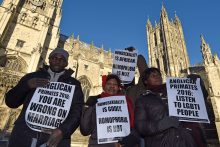
The Church of England will refuse to allow same-sex couples to get married in its churches under proposals set out on Wednesday in which the centuries-old institution said it would stick to its teaching that marriage is between a man and a woman.
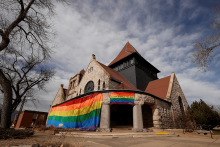
Thom Andreas was a gay Christian kid in the 1990s when his hometown of Colorado Springs, Co. was becoming known as the “evangelical mecca” or “evangelical Vatican.” And this gave Andreas a front-row seat as the movement advocated against LGBTQ rights and dignity in politics and faith.