LGBTQ
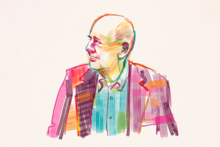
The late, great Wendell Berry found me at a unique time in my life: I was in the early stages of transitioning between genders.
Up until that point, part of me had always assumed that I wouldn’t connect with Berry’s writing because the people who recommended it to me were usually vaguely conservative men who wanted to live self-sufficient agrarian lifestyles. These people certainly had softer sensibilities than the more overtly militaristic conservatives I knew, but nonetheless, it sometimes felt that their idyllic worldviews and theologies didn’t have much room for people like me.

Churches are obsessed with doors. Churches bless these doors, paint them red, hold them open, photograph them, and put welcome signs on them. We tell the frightened person, the estranged child, the gay man, the addict, the doubter, the refugee, the person who has been made to feel impossible: Come in; there is a place for you here.
I believe in that sentence. But to the end of that greeting we should add: “and you can leave whenever you want.”
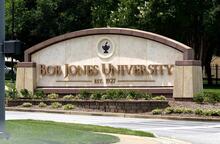
In the fall of 2013, my family drove from the city of Boston to Greenville, S.C. We visited Charleston, S.C., where Confederate flags could still be seen at government buildings and all over Fort Sumter. As I walked through the city in the humid southern heat, I thought about the negative aspects of white culture in the South—racism, misogyny, and homophobia. I continued thinking about those things as we pulled into the school my parents chose for me: Bob Jones University. A little less than a mile away, at a Jack in the Box, I had stepped into the restroom to trade my shorts and tank top for a tan maxi dress and sweater, well aware my knees and shoulders would not be a tolerated sight at the ultra-fundamentalist university. Besides knowing about the dress code, I went in unprepared for the dynamic cultural shift I was about to experience.
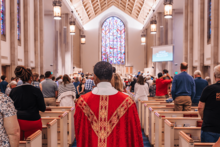
Citing dangers to LGBTQ+ and immigrant communities, the Oregon-Idaho Conference of the United Methodist Church voted last month to move next year's annual conference out of Idaho.
At this year’s annual conference — a meeting where representatives from Oregon and southern Idaho United Methodist churches gather to vote on and make decisions — held at the Cathedral of the Rockies in Boise, Idaho, the Rev. Heather Riggs of Montavilla United Methodist in Portland brought a motion to the floor to change the location of next year’s conference.
Dozens of clergy and laity gave public comment, arguing why they believed the event should remain in Idaho or move to Oregon in 2027. The vote was close, but the end result was that the conference would either move to Oregon or be held virtually.
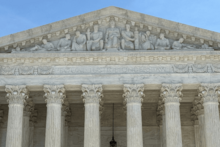
The Supreme Court agreed on Monday to hear a bid by the Archdiocese of Denver and other Catholic entities to be exempted from a Colorado preschool funding program’s nondiscrimination requirement.
The justices took up an appeal of a lower court’s decision that found that Colorado’s program did not violate the religious rights of the Catholic plaintiffs under the Constitution’s First Amendment.
The program provides state funds for preschools. The Catholic plaintiffs objected to the state’s requirement that schools receiving funding under the program give all children “equal opportunity” to enroll in preschool regardless of certain characteristics, including the sexual orientation or gender identity of students or their family members.
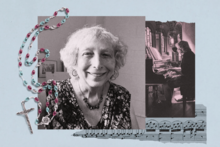
There are congregations that would brand her a sinner. But here at St. Cecilia’s Roman Catholic Church in Boston, Rachel Burckardt gives voice to the angels.
She’s 71, transgender, a civil engineer by day, and a composer of spiritual music by nights and weekends.
While religion has been used for decades to ostracize many transgender people, Burckardt has found that faith drives acceptance in her community. It has been the bedrock on which she has formed her closest friendships, found moral clarity in challenging times and built radically inclusive communities in greater Boston.
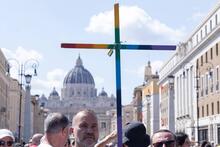
Queer liberation theology has largely been ignored in many Catholic circles. It’s often treated as something external to the church, disconnected from Catholic history, or framed as a political identity that is incompatible with one’s identity in Christ. This has a lot to do with the Catholic voices that are deemed trustworthy and authoritative (especially on social media). Today, these voices dictate what questions we’re allowed to ask, and which sexual experiences are considered theologically orthodox (hint: the straight ones).
But as I recently wrote for National Catholic Reporter, queer liberation theology can help the Catholic church remember itself, recovering a tradition of radical solidarity that transcends our culture wars.
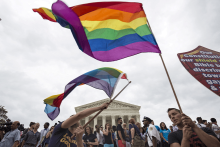
The Supreme Court rejected on Monday a bid by a former Kentucky county official to overturn its landmark 2015 ruling legalizing same-sex marriage nationwide, as the justices steered clear of the contentious case some 3.5 years after its conservative majority reversed abortion rights.
The court, which has a 6-3 conservative majority, turned away an appeal by Kim Davis, a former Kentucky county clerk who was sued by a gay couple after refusing to issue any marriage licenses after the 2015 decision recognized a constitutional right to same-sex marriage. Davis has said same-sex marriage conflicts with her religious beliefs as an Apostolic Christian.
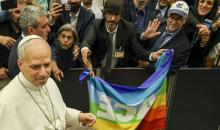
Over a grainy international phone call, I could hear people singing at St. Peter’s Square as I spoke with BBC journalist Mark Lowen about Pope Francis. It was April 21, and I, along with two other queer Catholic advocates, Max Kuzma and Simon Fung, were reflecting on what Francis had meant for each of us and our hopes for the future of the Catholic Church.
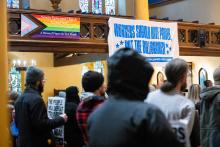
These first few weeks of President Donald Trump’s administration have already been grueling, with a blizzard of executive orders that run the gamut from trolling to hurtful to alarming. We all remember this feeling from the last time around — there are so many shiny objects of outrage for us to chase that after a little while it’s easy to just throw up our hands, admit defeat, and decide to wait out the maelstrom by streaming our favorite television series. So many people are hurt and scared; many are just exhausted.
During Trump’s inauguration in 2017, many responded by attending one of the hundreds of Women’s Marches around the country. Those who participated in these marches set the record for the largest single-day protest in United States history. During Trump’s inauguration this January, the protesters were sparse. It’s easy to feel isolated, alone, and hopeless. For us to get through Trump 2.0 together, we need to figure out new ways to organize.
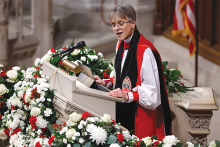
THE WORD “SERMON,” like “lecture,” is an ambiguous one: both a genre of speech and a shorthand for our worst ways of speaking to one another. Outside of a religious context (and to be honest, sometimes even inside one), who wants to be preached at?
Those connotations of arrogance and superiority likely come from authentic experience. But they also miss something important about the sermon as a genre: its foundation in humility, in the practices of reading, reflecting on, and speaking on someone else’s text.
In his 1990 farewell sermon as pastor of Concord Baptist Church in New York, Gardner C. Taylor, one of the great preachers of the civil rights era, asked for forgiveness “if I ever tried to make the Word of God mean what I wanted it to mean.” Sermons (in Christian tradition, as well as in my Jewish tradition) are public acts of commentary. And, as Taylor reminds us, serious commentary is a morally consequential act, because it requires putting one’s own priorities and intentions second to those of the text, an act which is always, at least a little, selfless. At the heart of a sermon is the tension between what the text seems to say and what the preacher wants to say with the text.
When I read or listen to a sermon — even one as politically memorable as Episcopal Bishop Mariann Edgar Budde’s sermon at the national prayer service following President Donald Trump’s inauguration in January 2025 — I try to keep that basic question in mind: What text is she preaching on?
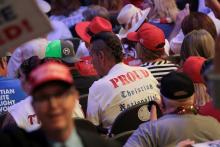
This January, Trump was once again sworn in as president of the United States, propelled to office by the unwavering support of countless evangelical Christians.
For me, the results of the 2024 presidential election felt like the punchline to an incredibly cruel joke. I grew up in the church and still remember the lessons taught to me by my old mentors. I was told that following Jesus meant that truth mattered, justice mattered, how I treated women mattered, and how I treated my neighbor mattered. Later, when I came out as a gay man, my Christian peers insisted that I put aside my personal feelings and desires in the name of biblical fidelity. I spent years of my life making painful and irreversible sacrifices in order to do what I thought was right at the time. Then Trump came along, and suddenly the narrative changed — truth was pliable, character was irrelevant, and justice was getting in the way of “winning.”
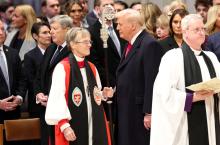
But before her sermon concluded, Budde addressed the president directly:
“Let me make one final plea, Mr. President: Millions have put their trust in you, and as you told the nation yesterday, you have felt the providential hand of a loving God. In the name of our God, I ask you to have mercy upon the people in our country who are scared now. There are gay, lesbian, and transgender children in Democratic, Republican, and independent families, some who fear for their lives.

I was listening to BBC’s Focus on Africa this summer when I first heard Dausab interviewed about his role in the landmark court case to overturn Namibia’s anti-LGBTQ+ legislation. In a throw-away line, the host indicated that Dausab was a Christian — and Dausab didn’t equivocate.
“As a born-again Christian, I always go back to Jesus …,” Dausab told the host.
Who was this born-again Christian that brought down Namibia’s sodomy laws? I wanted to meet this guy.
In the queer, young adult novel She Drives Me Crazy, author Kelly Quindlen employs a couple of my favorite romance tropes: A fake-dating scenario and an enemies-to-lovers story arc. But when I first read the novel a few years back, I was also delighted by all the plotlines and character traits I’d never encountered in a sapphic YA romance: The two main characters — high schoolers Scottie (star of the girls’ basketball team) and Irene (captain of the cheerleading squad) — are both Catholic, and, most significantly, their Catholicism is not in conflict with their sexuality. Both Scottie and Irene’s parents are affirming; their queerness is a nonissue for their families and their church.

“To me being Christian means f---ing s--- up,” Layshia Clarendon told ESPN’s Katie Barnes. “That’s what Jesus came to do. It means disrupting and fighting for the most marginalized people.” During the 2020 WNBA season, they helped lead players in protesting police violence against Breonna Taylor and other Black women. Clarendon helped launch the WNBA’s Social Justice Council, alongside players like Sydney Colson, Breanna Stewart, Tierra Ruffin-Pratt, A’ja Wilson, and Satou Sabally. Clarendon signed on to the Athletes for Ceasefire in Gaza, and they launched a foundation to provide grants that help transgender people access health care and other services.

By now, you may know that men, broadly speaking, are suffering. Despite the structure of a patriarchal society where men still reap various financial and social benefits, men are regularly facing disparate outcomes on a wide range of measures. Nearly four times as many men as women died by suicide in the U.S., 1 in 7 men report having no close friends, and men see disparate outcomes in mental health, premature deaths, and education.
For years, Dietz Osborne and his colleagues at Miriam’s Promise adoption agency in Nashville, Tenn. had quietly worked with LGBTQ+ couples looking to adopt children. It was not something the United Methodist-affiliated agency advertised or promoted, but when a same-gender couple came to them, Miriam’s Promise unassumingly welcomed them as clients.
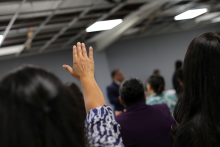
Walking into Iglesia La Gloria de Dios Internacional, a Latino Pentecostal church in the heart of Hialeah, Fla., I felt nervous to be on church grounds. I’m Mexican American, but I don’t speak Spanish; I’m an autistic person who really doesn’t like new situations. And even though it’s now been a year since I moved back home to Miami from Minnesota, I am still a bit self-conscious of my Midwestern accent. But most importantly, I am an atheist and an openly queer and trans person living in Florida.

I won’t impose my 21st-century language or conceptions on this person, and say that he was trans, non-binary, gender non-conforming, or queer, but it’s clear that he did not conform to the social understanding of gender binaries or sex in the ancient Greco-Roman or Jewish world. There’s no getting around that. He was also from one of the farthest-off places early Christian disciples had heard of. The Ethiopian in this text is likely not from the Ethiopia that we know today, and instead is likely from a place called Kush that today is now part of South Sudan.