Faith
Today is Black Friday, the unofficial holiday immediately following Thanksgiving. Today, businesses open very early, offering reduced prices on all manner of consumer items. Customers are encouraged to flood the aisles in search of a good deal on all kinds of things - from DVDs to appliances - but, above all, electronics.
I’ve learned that it’s especially important for those who are always trying to change the world, to remember what they are thankful for in their world as it is!
First I am thankful to God for his or her patience with us. Thankful that despite how much we human beings (perhaps especially we religious believers), so often disappoint, embarrass, and even hurt God with the things we say and do — even in God’s name; that God still continues to love us, forgive us, and call us to act more like God’s children, who should live together like brothers and sisters.
I am thankful to Jesus, who seems to have survived all of us Christians who name his name. Thankful that he is still so popular all over the world, even when Christians are, well, are not so much. But I’m also thankful for when Christians or others actually do the things that Jesus said, love their neighbors and even their enemies, just as he taught us to do, and when we do treat “the least of these” in the same way that we would treat him. I’m always most thankfully surprised by the unexpected and simple acts of love, grace, kindness, welcome, and justice that make people want to believe in and follow Jesus again....
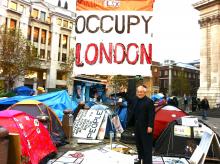
LONDON — It looks like the stage of a West End theater. The tents are gathered around and almost up against the steps of the historic St. Paul’s Cathedral. Each night, a General Assembly is held on those steps, and the sermons on inequality have a biblical ring to them.
This is Occupy London and the Occupiers were having their discussions with each other and visitors in the protective shadow of the Dome of St. Paul’s — as they should be. What a picture of the Incarnation, I thought, marveling at the scene.
What makes Christian faith most unique among all the religions of the world is, indeed, the incarnation. In Jesus Christ, God hits the streets — that’s what Incarnation means.
So here is the church in the midst of the international conversation that is changing the world — right where we should be.
Bread for the World has many recommendations in the new report, but I’d like to highlight just one for now: “Farm policies should lean more towards the production of healthy foods.”
Why this one? Most farm subsidies go to (wait for it) the largest, wealthiest producers (shocking, right?). Billions of dollars are spent subsidizing corn, wheat, soybeans, cotton and rice. Small and medium-size producers (many of whom grow vegetables — the foods that are supposed to make up half our dinner plate) receive little, if any, support from the current U.S. farm policy.
Securing affordable, healthy foods for our country’s poorest will in turn help us address other issues such as malnutrition and obesity, immigration, health care, and employment.
We crested the hill and there it was: a square little brick two-story that had been improved just a little, with a welcoming windowed front and a high, aerie-like upstairs. It was the cheapest house we’d seen, and because it was 2005 and things were crazy, we spent about twenty minutes deliberating and put in a contract with a modest escalation. When we found out later that the house was ours, we found out we'd beaten out another family. The house had been listed barely a day.
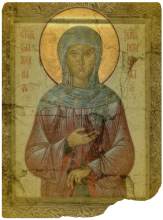
As we found out later, we’d put in the contract on the feast day of Saint Xenia of Petersburg, a nineteenth-century Russian “fool-for-Christ” who'd mourned her army colonel husband’s death by donning his uniform and living as a pauper in the city's streets, performing unasked acts of generous service.
It is said that at night she hauled bricks to hasten completion of a church’s construction, and on the internet you can find a copy of this wonderful icon, St. Xenia hoisting herself on a brick construction wall with her long grey hair swinging. One of the things for which St. Xenia is said to intercede is to help people in finding housing.
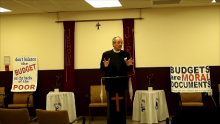
“The problems of homelessness and poverty are not self-inflicted, they are the result of priorities of our society and those priorities are not centered on people but on gathering more wealth for a small number of people. Many of us [homeless people] – despite the stereotypes – drew deeply on our faith and the fact that we’re all children of God and organized ourselves. We’re homeless, not helpless. That’s why our call is to work with us and not for us.”
— Willie Baptist, Scholar-in-Residence The Poverty Initiative at Union Theological Seminary
It’s time to invite the Occupy Movement to church!
And Thanksgiving is the perfect occasion. Have some of the young protesters — the “99ers” as they’re becoming known — from this rapidly growing movement over for a big holiday dinner!
Our faith communities and organizations should swing their doors wide and greet the Occupiers with open arms, offering them a feast to say “thank you” for having the courage to raise the very religious and biblical issue of growing inequality in our society.

This is true of any bad news, really. When I feel sick. When I don’t get my way. When I’ve had a bad day. You name it. If it’s negative, then I look forward to sharing it. I don’t mean to; I just do.
I sense this is normal, but it doesn’t make it right.

Arizona won a significant victory last week when Russell Pearce, author of Senate Bill 1070, lost in a first-ever recall election.
It was not without great effort. I’ve since been reflecting on the lessons of the work and how we traveled from the darkness of SB1070 to the hope we feel today.
The Rev. Martin Luther King Jr. and Archbishop Oscar Romero are our heroes. They shared much in common: Both ultimately were focused on being obedient to God and his call on their lives and as such they were both, first, ministers of the Gospel. King and Romero were fixated on justice — in love with poor people and hurting communities. Both searched for middle ground while others stayed safe inside comfortable margins; both were agents of reconciliation.
And, finally, both were martyred for their message.
Yet Romero and King have a seeming discrepancy I want to explore.
Romero called us to take the long view; King discussed the fierce urgency of now.
Romero essentially prays: Trust God, be faithful. King preaches: now is the time, act forcefully.
One year of prison costs more than one year at Princeton. Capitalism and social justice. OpEd: The values discussion we're not having. 'One Day's Wages' fights poverty two years on. Government aid helped cut U.S. poverty nearly in half. Religion-friendly democracy and democracy-friendly religion. And Newt Gingrich says God forgave him.

When the injustices of this world seems too much for us to handle, help us to remember that you fed 5,000 people with only five loaves of bread and two fish
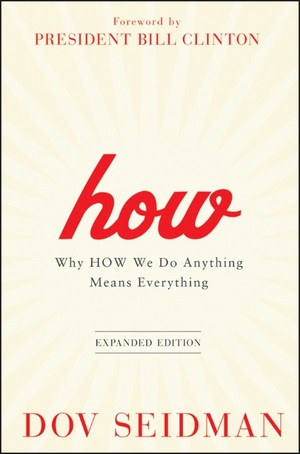
How helps us understand that principled behavior isn't merely something a PR/Corporate Social Responsibility staff or attorneys tell us is important. Rather it is the surest path to success and relevance in business and in life.
Social justice index: USA No. 27 of 31. Democrats in Congress attempt to eat on $4.50 a day to protest potential budget cuts. Republicans shift focus from jobs to God. OpEd: Obama, the G20 and the 99 percent. In Congress, the rich get richer. The Shadow Superpower. And the U.S. sues South Carolina over immigration law.

Is Halloween a prime time for evangelism?
Are religious tracks passed out along with (or in lieu of) "treats" really the best way to spread the gospel message?
Or do the roots and practices of Halloween run so deeply counter to Christian tradition that Halloween is best ignored by believers?
At times such as these, the church often finds itself wrestling with the big question H. Richard Niebuhr posed in his seminal 1951 work, Christ and Culture. That is, to what extent should Christians engage in and interact with the world around them?
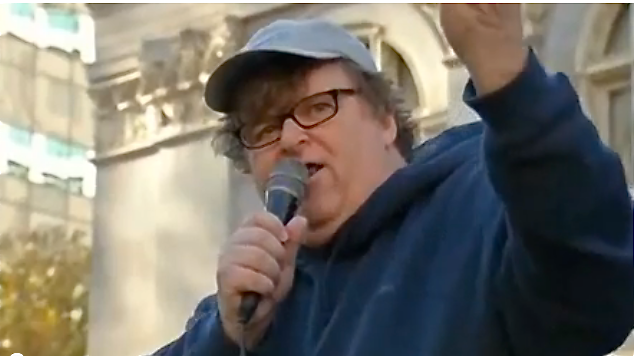
Filmmaker Michael Moore told anti-Wall Street protesters in Oakland that the Occupy movement -- which has spread to cities across America and overseas -- in inspiring millions who are angry about corporate excess, income inequality and the failure of politicians to address issues facing the majority of Americans.
"We've killed despair across the country and we've killed apathy," he said.
Watch the video of Moore's speech inside...
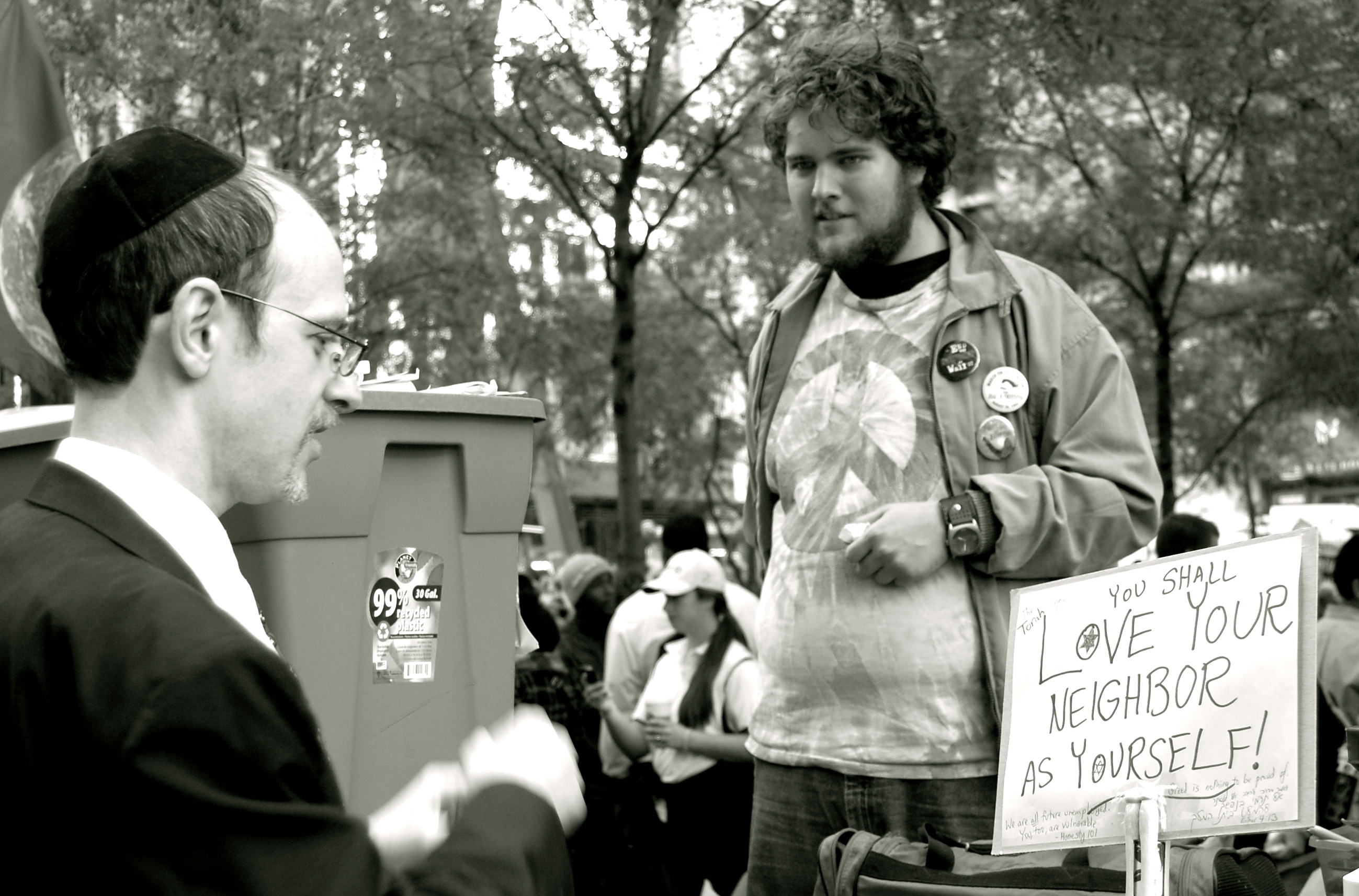 We're in this thing together or we're not in this thing at all.
We should all be marching in the streets.
We are the 100 percent.
We are poor. We are well-to-do. We are those somewhere in the middle. We are aware of the struggles and unfairness of this world and for this reason we are sensitive to one another's needs. So, we love our neighbors as ourselves.
What was most telling about the disagreement between the two men was their discussion of Luke 4. Mohler argued the passage should be understood in light of how he interpreted the preaching and teaching of Paul and the other apostles. This means that when Jesus said that he came to bring good news to the poor that good news was personal salvation.
Wallis argued that yes, personal salvation is one part of that good news, but that the other part is the Kingdom of God breaking into the world and transforming societal relationships as well. When the Gospel is proclaimed, it is good news for a poor person's entire being, community and world -- not just his or her soul.
First, it was encouraging to hear Mohler spend a lot of time emphasizing that working for justice is essential to fulfillment of the Great Commission. Throughout the night he repeated his concern that a lot of Churches are REALLY bad at making disciples who actually do the things Jesus told us to do. As the president of one of the largest seminaries in the world, it will be interesting to see if he is able to train a generation of pastors who will do things differently. My concern is that he is missing the connection between his theology and the failure of Christians to actually do justice.
"Where my feminists at?" on #OccupyWallStreet. Test your global hunger knowledge. Race and OWS. Poverty in your backyard. How to be a "1 Percenter." OWS to march on banks. Romney embraces climate change denial. Magicians say their craft makes them see faith as little more than "hocus-pocus." Catholic University sued by Muslim students. And faith, political leaders find out how far food stamps actually go.

One of my most vivid childhood memories of Halloween 1977, the year my family moved to a new town in Connecticut right after the school year had begun. I don't recall what my costume was, but I do remember going door-to-door with my father, meeting new neighbors and collecting a heavy bag of candy, as the suburban warren of Cape Cods and manicured lawns morphed into an other-worldly fairyland.
I was 7 years old and the new kid on the block, so when the cover of darkness fell at sunset, I hadn't a clue where I was. As my father deftly navigated our way home in the crisp autumn night, it felt like he had performed a magic trick. When the morning came, I couldn't believe that our adventure the night before had been on these same streets. To my young imagination (and heart) it felt as if we had been walking through Narnia or Rivendell rather than a sleepy New England suburb.
A few years after that, my family stopped celebrating Halloween. We had become born-again Christians and our Southern Baptist church frowned on the practice. Halloween, I was taught, was an occult holiday (or maybe even Satanic!) and good Christians should have nothing to do with it.
FoxNews shuns pro-immigrant voices. How do we repair souls returning from the war? Does Christianity translate into public policy? Lobbyists role in 2012 fundraising. Oakland mayor promises "minimal police presence" at OWS protests. Cain says he doesn't need to know foreign policy details. And only 40 percent of Americans correctly identify Romney as Mormon.