Faith
In 1884, Romney’s great-grandfather, Miles Parker Romney, fled to Mexico from Utah. Miles Parker Romney was a practicing polygamist and he wanted to protect his family from persecution. Mitt Romney’s father was born in Mexico, his family returned to the United States and took up residence in Michigan.
While Romney wouldn’t agree with his ancestor’s practice of polygamy, I am sure he understands his great-grandfather’s desire to do what he thought best for his family. Luckily for Miles Parker Romney, there was a country that allowed his family to settle and try and find a better life.
What is unfortunate is that candidate Romney doesn't seem to have that same kind of empathy for families today who are also in difficult positions.

The legacy of Martin Luther King, Jr., and the reality of climate change are both victims of western culture’s remarkable capacity to accommodate and neutralize that which is most critical of it.
Early in the civil rights movement, Bayard Rustin said to King, “I have a feeling that the Lord had laid his hand upon you. And that is a dangerous, dangerous thing.” Similarly, the FBI once described Martin King as the “most dangerous man in America” – and yet, as Martin Luther King Jr day rolls around again in the United States, we are often presented with a figure that seems more like a cheerleader for the status quo rather than a prophetic challenge to it. Somehow, it seems we have made this dangerous figure very safe.
For instance, in a speech at the Pentagon commemorating King’s legacy, the Defense Department’s general counsel Jeh C. Johnson remarked, “I believe that if Dr King were alive today, he would recognize that we live in a complicated world, and that our nation’s military should not and cannot lay down its arms and leave the American people vulnerable to terrorist attack.”
But to claim that Dr King would be pro-war today is as likely as him being pro-segregation. After all, this is the Dr King who said, “A nation that continues year after year to spend more money on military defence than on programs of social uplift is approaching spiritual death.” And this is the same Dr King who said in his speech on 4 April 1967 (a speech that turned three quarters of American public opinion against him), “To me the relationship of the ministry [of Jesus Christ] to the making of peace is so obvious that I sometimes marvel at those who ask me why I’m speaking against the war.” And this is the same Dr King who said, the night before he was murdered on 4 April 1968, “It is no longer a choice, my friends, between violence and nonviolence. It is either nonviolence or nonexistence.”

Ed Young and his wife, Lisa, have penned a new book called “Sexperiment: 7 Days to Lasting Intimacy with Your Spouse,” which is a sort of how-to guide for couples to rekindle intimacy in their marriage while remaining within the boundaries of biblical virtues, as interpreted by the authors.
First off, I’m glad evangelicals are joining the sexuality discussion. Having helped create a series of books whose first title was focused on faith and sex/sexuality, I believe it’s of great importance that faith leaders speak in open, healthy ways about sexuality, sexual expression, attraction, and so on.
One of the most hyped points made in the book is that it encourages married couples to engage in their own “Sexperiment,” where they commit to having sex each day for a week. The theory is that this will renew physical and emotional intimacy, and also help reduce the urge for things like pornography.
Hey, sex for Jesus sounds like a no-brainer to me. Sign me up!

In a recent column for USA Today, Gary Bauer (former GOP presidential candidate and President of a conservative political organization called American Values) makes a big biblical blunder. He addresses the issue of the role of faith in politics and uses Jim Wallis as an example of a Christian with whom he shares religious heritage but not political conviction.
Sojourners Editor Jim Wallis and I are both evangelical Christians. But we come to radically different conclusions about government's role in addressing poverty. Wallis thinks Republican tax cuts are unbiblical, and that more government spending and taxes are the main antidote. But nowhere in the Bible are we told that government should take one man's money by force of law and give it to another man. Jesus' admonition was a personal command to share, not a command for Caesar to "spread the wealth around."
First, Bauer mischaracterizes Wallis’ position. Sojourners and the entire Circle of Protection have called for a balanced approach to deficit reduction. This means that taxes should be on the table. But, the Circle acknowledges that there does need to be spending reductions and explicitly states that some of those reductions will need to come from entitlements.
Now, on to the biblical problem.

During all my reading about Robyn and Lady Gaga I came across some stuff about Lady Gaga that I found interesting, theologically speaking. As I told Jana over the summer, "I'm sort of developing a theological curiosity about Lady Gaga." Jana asked, "How so?"
Well, Lady Gaga calls her fans "monsters." Or "little monsters." And by that she means freaks--the odd, the weird, the lonely, the rejects, the nerds, the castoffs. And you can't help but wonder, in light of the gospels, about that demographic. In my book Unclean I have a chapter on monsters. And I've written about the theology of monsters on this blog. Consequently, Lady Gaga's use of the label "monsters" caught my attention.
Because as I've written, the category "monster" is charged with ambivalence. On the surface the monster is a normative threat--a defilement, a degradation, a location of moral and communal harm. Thus, monsters are expelled from community. And yet, most monster stories suggest that the monster is often a scapegoat. That the monster is more victim than victimizer. Underneath, if we could but see it, the monster is one of us.
So it's theologically apt that Lady Gaga uses the category monster for her fans. Because she's targeting a group that has been cast out of society. Again, she's explicitly embracing the freaks, weirdos and social outcasts. But Gaga, like in the monster stories, has flipped this and made the label "monster" a term of affection, welcome, embrace, community, inclusion and hospitality. (The diminutive "little" signals the playful affection.) This parallels my own interests in Unclean--Can we show hospitality toward monsters? So I'm intrigued by Gaga's community of "little monsters."
In this segment from his new CatholicTV series "Blinks," the Rev. Jim Martin (aka our favorite Jesuit) considers why Christianity is often considered so joyless, and why "religious" usually means serious.
Watch inside...

"How was all of this created? If the answer to that question is God created everything, there was a creator, than I say, great! What a great job. And I like the idea. I find it very, I don’t know, I find it comforting in some way. But if the answer to that is there is no God, I don’t feel like, well, what a jerk I’ve been. I feel, oh fine, so there’s another answer. I don’t know the answer. I’m just a speck of dust here for a nanosecond, and I’m very grateful." — Paul Simon in an interview that will air this weekend on the PBS program Religion & Ethics Newsweekly.
Watch the interview in its entirety inside ...

I have a number of identifiers on my various venues I write for and on my email signature: heretic, antagonist, father, son, instigator, pop culture junkie, theologian, social media guru, and so on. But one seems to resonate with folks more than any other: GOD NERD.
For some it’s just a funny juxtaposition of words. For others, there is something deeply relate-able in the moniker. Incidentally, the simple fact that I use words like “moniker” make clear the fact that I and a card-carrying, credentialed nerd.
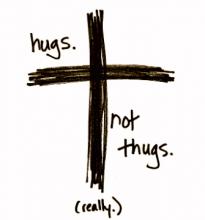
12. Do something really nice – that no one knows about.
11. Spend more money on other people than I spend on myself. Love my neighbor as I love myself. And love myself as I love my neighbor.
10. Laugh often… especially at advertisements that try to convince me that I must buy more stuff in order to be happy.
It’s been a bad year, and the 2012 election year looks to be even worse.
Don’t get me wrong — there were many good and even wonderful things about 2011. I can point to weddings, great things in our family lives, wonderful moments with our children, acts of courage in our local and our global communities, and heroic accomplishments by people of faith and others of good will.
But when it comes to politics and to the media, 2011 was an abysmal year.
Washington is a dysfunctional place where we make the most important decisions about how our public resources should be allocated amidst artificial deadlines set entirely by ideological politics instead of the common good. Rational, thoughtful ideas for reducing the national deficit (while at the same time protecting our vital social safety nets and producing needed jobs) have been replaced by the politics of blame and fear.
And winning — at seemingly any cost — has trumped governing. To disagree with the opposition isn’t enough. Now politicians and pundits feel compelled to destroy their opponents’ character, integrity, patriotism, and even attack their faith.
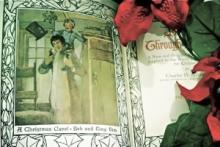
“Marley was dead, to begin with.”
So begins the classic tale of A Christmas Carol by Charles Dickens. It is a story that has been told and re-told through various mediums since the novella was published December 19, 1843.
I sat down recently to watch the new Disney version of the tale. It features a CGI rendition of Scrooge with the voice of Jim Carrey.
After 15 minutes I shut it off.
It wasn’t that it was particularly bad. I didn’t give the movie enough of a chance even to figure whether it was worth watching. What I realized is that I wasn’t much interested in hearing the same story again from a secular perspective.
A Christmas Carol, I would argue, is not ultimately about Christmas, but conversion.
Christmas is the stage and the catalyst through which transformation occurs. It is a leading character to be sure. But, it is the radical change that occurs in Ebenezer Scrooge that most compels me.

To start, a story.
A few years ago a female student wanted to visit with me about some difficulties she was having, mainly with her family life. As is my practice, we walked around campus as we talked.
After talking for some time about her family situation we turned to other areas of her life. When she reached spiritual matters we had the following exchange:
"I need to spend more time working on my relationship with God."
I responded, "Why would you want to do that?"
Startled she says, "What do you mean?"
"Well, why would you want to spend any time at all on working on your relationship with God?"
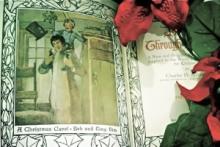
When I imagine Jesus telling his disciples, “Let the little children come to me,” I have a vision of the adults moving aside and Tiny Tim with his crutch crawling into the lap of Christ.
In the scene where Tiny Tim is introduced, his father tells this story of him:
“Somehow, he gets thoughtful, sitting by himself so much, and thinks the strangest things you ever heard. He told me, coming home, that he hoped the people saw him in the church, because he was a cripple, and it might be pleasant to them to remember upon Christmas-day who made lame beggars walk and blind men see.”
It is this child like faith that moves Scrooge to ask the Ghost of Christmas Present if the boy would live to see another Christmas. The spirit answers that he sees an empty chair at the next Cratchit Christmas. Scrooge begs for the future to be changed and the boy spared.
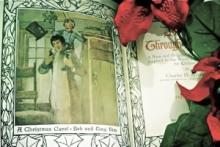
The Ghost of Christmas Past showed Scrooge a total of five visions. It is only the last two which are dark. The first three show the seeds of Scrooges own repentance.
The first vision shown to Scrooge by the Ghost of Christmas past is that of a young Scrooge reading alone, neglected by his peers, just before Christmas. Scrooge, watching his old self, begins to cry.
“What’s the matter?” asked the Spirit.
“Nothing,” said Scrooge. “Nothing. There was a boy singing a Christmas Carol at my door last night. I should have given him something: that’s all.”

I think of Mary, the young woman whose eyes were opened to God’s messenger, whose womb was opened to God in human flesh. The Greeks call her theotokos — the God-bearer.
She is the one who welcomed Jesus to make his home in her. Blessed among women, she is a model for us.
She’s not just an inspiration for a house of hospitality. She is one.
Two years ago, Leah was very pregnant during Advent. Because of high blood pressure, she was on bed rest for most of it. So we waited.
We waited for our daughter to come, and we waited for Christmas. We waited with Mary to greet face-to-face the One whom we invite into our lives every time we whisper a prayer.
Waiting, we learned, changes your relationship to time. You stop partitioning it into blocks, and you learn to receive it.


I’d like to share some Advent reflections from my former professor at North Park University, Scot McKnight. He is in the midst of a series that points to what Advent is supposed to remind Christians of. It’s a simple message with deep meaning: Jesus is King.

Failure to provide equal rights for LGBT people doesn’t just hurt those who are gay or lesbian, it also hurts the nearly 2 million children who now live in LGBT households.
Contrary to many stereotypes, children living in LGBT households are 50 percent more likely to live in poverty than those living in heterosexual households. Societal prejudice and discriminatory policies both have something to do with it. A recent report sponsored by the Movement Advancement Project, Family Equality Council and the Center for American Progress, explains why.

It's that time of the year again, the joyful season when Jeff, my iTunes DJ, starts spinning holiday music when I choose "random" from the play options on my keyboard.
I almost always have headphones on with music playing as I work each day, and the surprise of what Jeff, as I call him, comes up with — especially when he reaches into the way-back machine for sonic fodder — is a daily delight.
First thing this morning, Jeff decided to play the tune "Miracle" by Ashville, N.C., singer-songwriter David Wilcox.
Oh joy! It's long been one of my favorite unconventional Christmas songs but I'd forgotten about its many charms until I was taking my first sip of coffee today.
The song, which appears on David's 2006 album Vista, is a take on the Natvity story seen through David's remarkably creative, often childlike sensibilities. Here's a taste of the lyrics:
Few will chose to follow
Out of all the star invites
Most will hide safe inside
With the lantern turned up bright
Waiting for a miracle

Ron Santo, former Chicago Cubs third baseman and radio announcer, was finally inducted into Baseball’s Hall of Fame on Monday, just over a year after his death.
As many now know, Santo had type 1 diabetes and endured many hardships during his baseball career, as well as every year that followed. In a Guideposts article he wrote about his diagnosis, “Diabetes? I didn't even know what that was. I had just one concern: "Can I still play baseball?"”